Best Horror Fiction Books in 2026: 12 Novels That Will Make You Afraid of the Dark
Horror fiction has a reputation problem. Critics spent most of the twentieth century treating it as a low-status genre written for readers who wanted to be startled rather than moved. That reputation was always wrong, but it is harder to maintain now. The books that define horror at its best are not primarily interested in jump scares: they are interested in what people are actually afraid of, which turns out to be more interesting and more varied than the genre's surface suggests.
This list covers the best horror fiction books in 2026, from the canonical Stephen King titles that still hold up after decades to the newer literary horror that has forced a reappraisal of the whole genre. It covers haunted-house horror, psychological horror, ecological horror, cosmic horror, and the literary short fiction that proved the genre could do things longer forms could not.
The Foundations: Horror That Defined What the Genre Could Do
1. The Shining by Stephen King
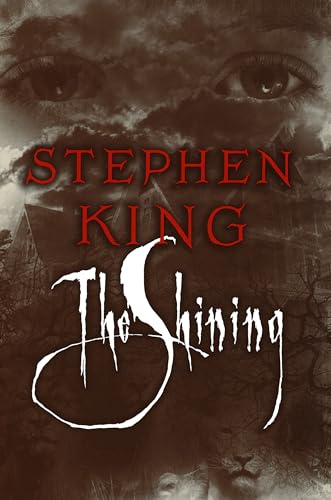
Jack Torrance takes a caretaker job at the Overlook Hotel over a Colorado winter. His wife Wendy and his son Danny come with him. The hotel does the rest. Published in 1977, The Shining is King's best early novel because its actual subject is alcoholism, domestic violence, and the way childhood fear imprints on the psyche, with a haunted hotel as the mechanism that strips away the civilised behaviours masking all of it. The Kubrick film is a masterpiece of different intentions; the novel is more intimate and more disturbing in its final effect.
The Shining by Stephen King is the starting point for any serious reading of American horror fiction.
2. We Have Always Lived in the Castle by Shirley Jackson
Shirley Jackson is the most important American horror writer of the twentieth century and this, her last novel, is her best. Merricat Blackwood narrates from inside the family home she shares with her sister Constance, having poisoned the rest of her family some years earlier. Jackson never treats Merricat as a villain; she writes from inside her logic, which is internally consistent and disturbingly sympathetic. The horror in the book is not supernatural but social: the village that surrounds the Blackwood house, the cousin who arrives, the cruelty that ordinary people are capable of when they decide an outsider deserves it.
We Have Always Lived in the Castle by Shirley Jackson is the novel that made literary fiction pay attention to what horror could do.
3. Ghost Story by Peter Straub
Five elderly men in upstate New York share a secret from fifty years earlier. Something that looks like a woman has been following them ever since. Peter Straub's 1979 novel is a deliberate meditation on the horror tradition itself, drawing on Henry James, Nathaniel Hawthorne, and the ghost story as a form. It is slower and more literary than most horror novels of its era and more rewarding for it. The central idea, that the stories you tell about your past can come alive to destroy you, gives the novel an intellectual coherence most haunting narratives lack.
Contemporary Horror: The Genre at Its Current Best
4. A Head Full of Ghosts by Paul Tremblay
A family agrees to let a TV crew film their teenage daughter's apparent demonic possession for a reality show. Fifteen years later, a journalist interviews the surviving sister to write the definitive account of what happened. Tremblay's novel is structurally clever: it leaves open until the last possible moment whether the possession was real or a performance, and its treatment of how media attention distorts trauma is more unsettling than any of the supernatural elements. The novel won the Bram Stoker Award and is the contemporary horror title that gets most frequently cited by other writers in the genre.
5. Heart-Shaped Box by Joe Hill
Joe Hill (Stephen King's son, though he published under a pseudonym for years to avoid the comparison) wrote this debut novel about an aging rock star who buys what is advertised online as a genuine ghost and receives exactly what he paid for. The setup sounds like black comedy and the first fifty pages play with that expectation, before the novel turns into something considerably more frightening. Hill is less interested in gore than in dread, and the ghost in this book is one of the most effectively horrible presences in recent horror fiction.
6. Bird Box by Josh Malerman
Something has appeared in the world. Anyone who sees it immediately loses their mind and kills themselves or others. The solution is to never open your eyes outdoors. Malorie navigates a river blindfolded with two young children in the opening chapters; the novel then alternates between the present journey and the flashbacks explaining how the world reached this state. The premise demands to be explained away and Malerman never explains it. That sustained refusal to rationalise is what makes the novel's horror work.
Literary Horror: When the Genre Became Something Else
7. Her Body and Other Parties by Carmen Maria Machado
This debut short story collection announced a new kind of horror fiction: one that used the genre's conventions to write about female experience, bodily autonomy, and the specific texture of being afraid in ways that have nothing to do with monsters. The title story is about a woman who wears a green ribbon around her neck; you know the folklore it references, and Machado knows you know. What she does with that reference is the point. The collection's central novella is structured as episode synopses for a Law and Order-style procedural that gradually becomes something stranger. One of the most inventive horror works published this century.
8. Annihilation by Jeff VanderMeer
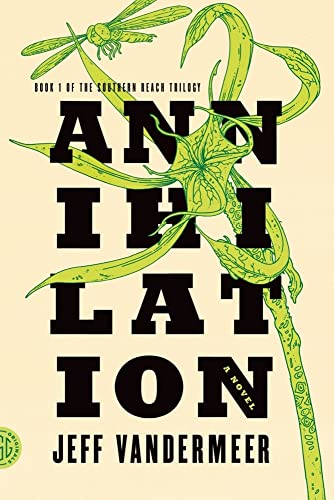
A biologist enters Area X, a region of wilderness that has been sealed off from the outside world after something changed there. She is part of the twelfth expedition. The previous eleven all ended badly in different ways. VanderMeer's novel is ecological horror, concerned with what happens when the natural world becomes radically alien and what that alienness reveals about the observers trying to describe it. It won the Nebula Award, spawned two sequels, and was adapted by Alex Garland into a film that matches the novel's disorienting quality. The book is short, dense, and deeply strange.
Annihilation by Jeff VanderMeer is the best ecological horror novel in print and an essential read for anyone interested in what contemporary literary fiction can do with the genre. It also sits at the entry point of a wider movement; see our best New Weird fiction books list for where VanderMeer's work fits among Miéville, Harrison, and Ligotti.
Psychological and Cosmic Horror: The Deep End
9. The Silence of the Lambs by Thomas Harris
FBI trainee Clarice Starling visits incarcerated serial killer Hannibal Lecter to help catch another killer who is still active. Harris's novel is technically a thriller but its effect is horror: the dread comes not from blood (though there is blood) but from the sustained psychological pressure of Lecter's intelligence and the vulnerability of Starling inside the prison. The novel won the Edgar Award and produced a film that won all five major Academy Awards. The book is better than the film, which is not always true with Thomas Harris.
10. The Face That Must Die by Ramsey Campbell
Ramsey Campbell is the most literary of British horror writers and the most underread. The Face That Must Die is narrated from inside the deteriorating perspective of a paranoid man who becomes convinced his neighbour is a murderer. Campbell never signals clearly whether the neighbour is guilty or whether his narrator is reliable. The novel is disturbing in the specific way that good psychological horror is disturbing: it makes you question whose version of reality you are reading.
11. The Fisherman by John Langan
Two widowers who have found solace in fishing together hear a story about a stretch of river in the Catskills that connects to something ancient and malevolent. Langan's novel is structured as nested narratives, each pulling deeper into the cosmic horror beneath the surface story. It is often compared to H.P. Lovecraft's work but with the emotional depth Lovecraft consistently lacked. The horror here is not tentacular but metaphysical, concerned with what it costs to keep going after loss and what the universe actually owes grieving people, which is nothing.
The Psychological Outlier
12. The Woman in the Window by A.J. Finn
Anna Fox has agoraphobia and cannot leave her house. She watches her neighbours from the window and believes she has witnessed a crime. Her testimony is unreliable. Whether the unreliability is medical or something else is the question the novel spends its considerable length investigating. Finn's debut sits at the border between thriller and psychological horror and the ambiguity is handled with enough control to justify the comparison to Hitchcock that publishers printed on every edition.
Three Horror Books Worth Buying Today
- The Shining by Stephen King — the novel that established what American horror fiction could do at its best, still frightening decades after publication.
- We Have Always Lived in the Castle by Shirley Jackson — literary horror at its most controlled, narrated by a poisoner you find yourself rooting for.
- Annihilation by Jeff VanderMeer — ecological horror that dissolves the boundary between the natural world and pure dread.
For more fiction reading lists, see our fiction collection. If you want to explore the darker side of nonfiction, our true crime collection covers the real cases that horror fiction has been drawing on since the genre began.
Your next good book, in your inbox
We only write when we find a book worth your time. Hand-picked recommendations across history, mythology, true crime and more.
Are you an author?
Get your book in front of readers like these, for free.
- Free book listing →Your own book page with an Amazon button
- Author page →Photo, bio and links to your site
- Featured placement →A spot in our best-of lists, from €29
Free tools we recommend
Get free honest reviewsReview exchange on iWrity, free to join
Books You Might Like

It Ends with Us: A Novel
Colleen Hoover

The Seven Husbands of Evelyn Hugo: A Novel
Taylor Jenkins Reid

The Song of Achilles
Madeline Miller
