Best Indigenous North American Literature in 2026: 12 Books That Have Always Been Here
Indigenous North American literature is not a minority tradition within American literature. It is the original literature of this continent, produced by cultures with continuous oral traditions going back fifteen thousand or more years, and the written literature we have now is only the surface of something much older. When Tommy Orange writes about urban Native Americans converging on a powwow in Oakland, he is working within a tradition that predates the nation he is writing in by an order of magnitude. When Joy Harjo writes in the voice of the Muscogee Creek nation, she is carrying a worldview that has survived everything the last five centuries have attempted to do to it.
The written tradition in English is, by historical necessity, recent, but it is extraordinarily rich. The novels, poetry collections, and works of political nonfiction produced by Indigenous North American writers since 1969 constitute one of the major bodies of literature in the language. These are the best Indigenous North American literature books available now, covering fiction, poetry, political writing, and the category-defying work that fits none of those labels cleanly.
The Defining Novels
1. There There by Tommy Orange
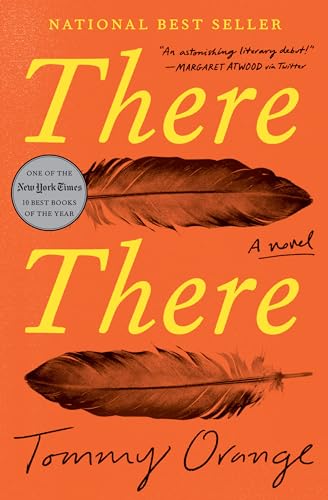
Tommy Orange's debut novel follows twelve characters, all urban Native Americans in Oakland, all converging on the same powwow for different reasons. The opening section, a compressed history of the relationship between Native Americans and the United States told in the second person, is one of the most startling openings in recent American fiction. The novel refuses the reservation-centered version of Native American experience that much earlier fiction defaulted to; its characters are urban, complicated, variously connected to their traditions, and brought together by a violence that Orange makes feel both inevitable and preventable. It was a finalist for the Pulitzer Prize and the National Book Award. It is the most important debut in Indigenous North American fiction since the 1990s.
There There by Tommy Orange is the novel that redrew the map of what contemporary Indigenous North American fiction could address.
2. Love Medicine by Louise Erdrich
Erdrich's debut, published in 1984 and revised and expanded in 1993, follows members of an Ojibwe (Chippewa) community across multiple decades through interconnected stories. The structure is non-linear and the voices multiply across generations, building a picture of community that no single narrator could provide. Erdrich has been publishing fiction about this community and its descendants since then; the sequence now runs to fourteen novels. The entry point is Love Medicine, but the prize-winning The Night Watchman (Pulitzer, 2021), set during the 1950s federal termination policy, is the one that brought her to the widest audience. Read Love Medicine first to understand where the world she has been building comes from.
3. Ceremony by Leslie Marmon Silko
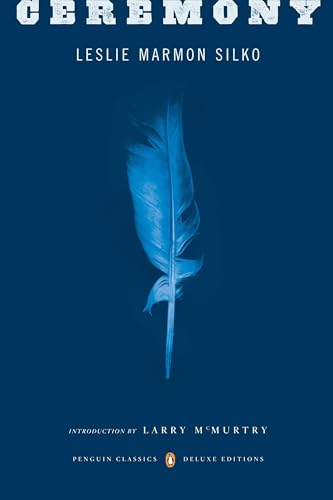
Silko's 1977 novel is the defining work of twentieth-century Native American fiction. Tayo, a Laguna Pueblo man, returns from World War II unable to function. The healing he needs is not medical but ceremonial, and the novel traces his recovery through a ceremony that weaves Laguna oral tradition into the narrative structure of the book itself. The formal innovation here is genuine: the novel does not merely describe the ceremony, it performs one. The prose shifts between realist fiction and the older forms without announcing the shift, asking the reader to hold both simultaneously. It has been taught in universities for forty years and has not dated.
Ceremony by Leslie Marmon Silko is the novel that established that Indigenous formal traditions and the contemporary novel could exist in the same work without one of them losing.
4. House Made of Dawn by N. Scott Momaday
Published in 1969 and winner of the Pulitzer Prize, this was the first novel by a Native American writer to win the award and the book that is credited with launching the Native American Literary Renaissance. Abel returns to his Kiowa pueblo after World War II, unable to integrate back into either the traditional world or the world that sent him to war. Momaday's prose is spare and precise in a way that influenced every subsequent writer in the tradition. The novel is also about language itself, about what happens when the language in which your identity is embedded is not the language of the society you live in.
Short Stories and Poetry
5. The Lone Ranger and Tonto Fistfight in Heaven by Sherman Alexie
Alexie's debut short story collection, published in 1993, established the voice that has made him the most widely read Native American writer of his generation. The stories are set on and near the Spokane Indian Reservation and are dark, funny, and devastating in a combination that is specifically Alexie's. He writes about poverty, alcohol, basketball, failure, and survival with a directness that does not sentimentalize and does not despair. The title story is the best American short story about race written in the 1990s. Several stories in the collection became the basis for his screenplay for the film Smoke Signals.
6. An American Sunrise by Joy Harjo
Harjo was appointed United States Poet Laureate in 2019, the first Native American to hold the position. She is Muscogee Creek and her poetry carries that nation's relationship to land, displacement, and memory. An American Sunrise, published in 2019, was written in part at the site in Minnesota where the Muscogee Creek people were forcibly relocated after the Indian Removal Act. The poems are not only elegiac; they are also full of jazz and love and survival. Harjo is a saxophonist and her poems have rhythms that feel musical rather than prosodic in the conventional sense.
7. WHEREAS by Layli Long Soldier
In 2009, the United States Congress passed an Apology to Native Peoples of the United States, which President Obama signed quietly, without ceremony, as a rider to a Defense Appropriations Act. Long Soldier, an Oglala Lakota poet, wrote her collection in direct response to that document, using its bureaucratic language, its sentence structures, and its particular evasions as both subject and form. The poems are formally inventive in the way Conceptualist poetry is formally inventive, except that the concept here is political rather than aesthetic, and the stakes are personal. WHEREAS won the National Book Critics Circle Award and PEN Open Book Award.
Nonfiction: Political and Scientific
8. Custer Died for Your Sins by Vine Deloria Jr.
Published in 1969, the same year as House Made of Dawn, this was the book that changed how America talked about Indigenous rights. Deloria, a Standing Rock Sioux activist and lawyer, wrote a political manifesto that was also genuinely funny: he took apart the anthropologists who had made Native American culture their research subject without asking permission, the federal bureaucracy that administered Native American life with catastrophic incompetence, the Christian missionaries who had been at it for centuries, and the white liberal sympathizers who were nearly as bad. The book is fifty years old and has not lost its edge.
Custer Died for Your Sins by Vine Deloria Jr. is the political text that gave the Native American Literary Renaissance its intellectual foundation.
9. Braiding Sweetgrass by Robin Wall Kimmerer
Kimmerer is a Potawatomi botanist and professor whose book weaves Indigenous plant knowledge with Western plant science in a way that neither tradition anticipated. She writes about the grammar of animacy in the Potawatomi language, which has grammatical forms for living beings that English does not, and about what it means to do science on the land your people were removed from. The book became one of the most passed-around nonfiction titles of the 2020s, read by people who would not normally describe themselves as interested in either botany or Indigenous knowledge. The writing is precise and patient and earns its emotional conclusions.
The Broader Tradition
10. Fools Crow by James Welch
Welch's 1986 novel is set among the Blackfeet Nation in Montana in the 1870s, as the culture faces the combination of smallpox and the U.S. Army that would effectively destroy it within a decade. The novel is written entirely from inside the Blackfeet world: there are no white-character perspectives, no narrative condescension toward traditional belief, no sense that the reader needs to be told what things mean. The effect is immersive in a way that historical fiction rarely achieves, and the grief in the novel's second half is cumulative and earned. Welch died in 2003 and is underread relative to his importance in the tradition.
11. Trickster Drift by Eden Robinson
Robinson is from the Haisla and Heiltsuk nations of British Columbia. Her Trickster series begins with Son of a Trickster and continues in Trickster Drift, following Jared Martin, a teenager from Kitimat who discovers that the Trickster Wee'git is his biological father. The novels are contemporary in setting, funny, dark, and rooted in Haisla oral tradition in ways that do not require the reader to understand that tradition in advance. Robinson is one of the best fiction writers working in Canada and almost unknown outside it.
12. The Round House by Louise Erdrich
Erdrich's 2012 novel won the National Book Award and is the most tightly plotted of her works. A thirteen-year-old boy investigates the rape of his mother on the Ojibwe reservation, a crime that exists in a legal gray zone because the reservation's jurisdictional boundaries make prosecution almost impossible. The novel is a crime novel, a coming-of-age story, and a work of legal and political analysis about the ways federal law has structured Native American sovereignty to make crimes against Native women effectively unpunishable. It is the most accessible entry point to Erdrich's work and the one that makes the political argument most explicitly.
Three Indigenous North American Literature Books Worth Buying Today
- There There by Tommy Orange — the most important debut in Indigenous North American fiction in a generation, recentering the conversation on urban experience.
- Ceremony by Leslie Marmon Silko — the defining twentieth-century Native American novel, where formal innovation and oral tradition become the same thing.
- Custer Died for Your Sins by Vine Deloria Jr. — the political manifesto that gave the Native American Literary Renaissance its intellectual architecture, still as sharp as it was in 1969.
For more reading lists in this area, see our fiction collection. If you are interested in the nonfiction tradition specifically, our history collection covers related ground in the history of the Americas.
Your next good book, in your inbox
We only write when we find a book worth your time. Hand-picked recommendations across history, mythology, true crime and more.
Are you an author?
Get your book in front of readers like these, for free.
- Free book listing →Your own book page with an Amazon button
- Author page →Photo, bio and links to your site
- Featured placement →A spot in our best-of lists, from €29
Free tools we recommend
Get free honest reviewsReview exchange on iWrity, free to join
Books You Might Like

It Ends with Us: A Novel
Colleen Hoover

The Seven Husbands of Evelyn Hugo: A Novel
Taylor Jenkins Reid

The Song of Achilles
Madeline Miller
