Best Leadership Books 2026
Leadership is not authority. Authority is assigned. Leadership is earned. The best leaders make people want to follow them, often despite the chaos around them. These books separate the myth of leadership from its practice.
What Makes Great Leadership Writing?
Real leadership books are written by people who've faced genuine pressure: lost money, fired people, made terrible decisions, and had to recover. They don't offer platitudes. They offer frameworks for the moments when everything is ambiguous and your decision will cost someone something. Look for authors who examine failure as much as success, who question their own assumptions, and who understand that context matters more than universal rules.
1. Turn the Ship Around by L. David Marquet
David Marquet took command of a nuclear submarine that was failing. It had high turnover, low morale, and a captain before him who used the traditional submarine model: centralized decision-making, the captain knows, everyone else obeys. Marquet flipped the model entirely. He pushed decision-making down, made crew members explain their thinking before executing orders, and created a structure where the best information rose to whoever needed it, regardless of rank.
The result: the worst-performing submarine became the best. Marquet shows that the traditional "command and control" hierarchy, where authority comes from title, fails under stress. When the crew can only think if the captain thinks for them, they freeze when the captain is overwhelmed. But when you teach people to take ownership and make decisions within a framework, the organization scales. Marquet's book is a masterclass in changing organizational culture through deliberate structure. It's technical enough to be useful and narrative enough to be gripping.
Get it here: Turn the Ship Around on Amazon
2. The Advantage by Patrick Lencioni
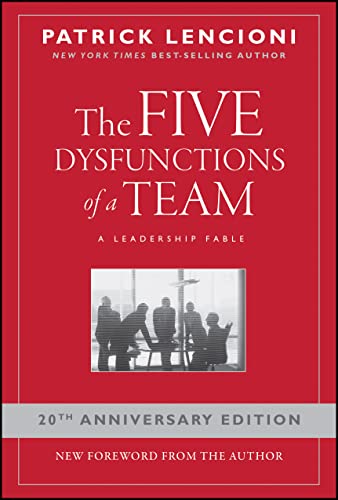
Patrick Lencioni has spent his career studying why some organizations succeed while others self-destruct despite having talented people. His conclusion: it's about organizational health, not about competence. A healthy organization with less talented people will beat an unhealthy organization with superstars.
What makes organizations healthy? Clear strategy, aligned values, good culture, and effective execution. But more specifically, it's about removing politics, confusion, and misalignment. Lencioni breaks this down into practical components: a compelling vision that everyone can repeat, a strategy that prioritizes ruthlessly, a structure that clarifies who does what, and processes that actually enforce accountability. The book is full of case studies and includes worksheets you can use immediately. If your organization feels like people are working at cross purposes despite everyone being smart, this book diagnoses the real problem.
Get it here: The Advantage on Amazon
3. Extreme Ownership by Jocko Willink & Leif Babin
Jocko Willink led a Navy SEAL team that hunted ISIS in Iraq. He's been through scenarios where decisions have immediate, lethal consequences. Extreme Ownership is his philosophy: the leader owns everything. A mistake? Your fault. A missed deadline? Your fault. An underperforming team member? Your fault (because you hired them or failed to develop them).
This sounds harsh and it is, but Willink argues that this mindset is liberating. Once you accept that you own the outcome, you stop blaming. You start solving. You examine your own behavior. You take responsibility for your team's culture. Willink applies combat lessons to business: decentralized command structures, prioritizing and executing decisions, checking ego, and maintaining discipline under pressure. The book includes stories from combat and from business leaders who've applied his principles. It's not for everyone (some find it too militaristic), but if you've ever felt like you're failing because of circumstances beyond your control, Willink forces you to ask: what can I control? What am I not doing?
Get it here: Extreme Ownership on Amazon
4. Dare to Lead by Brene Brown

Brene Brown studies vulnerability for a living. "Dare to Lead" applies her research to leadership. Her argument: leaders who pretend to have all the answers fail. Leaders who admit uncertainty, ask for help, and show up authentically inspire loyalty and effort.
Brown explores how courage (not fearlessness, but moving forward despite fear) shapes leadership. She examines shame, perfectionism, and the armor leaders build to protect themselves. She shows how these defenses backfire. A leader who can't be vulnerable can't build trust. A leader obsessed with perfection can't take the risks innovation requires. Brown's work is backed by research but presented through stories and concrete exercises. If you've ever felt like leadership requires becoming harder and more distant, Brown offers a different path: one where strength includes admitting what you don't know.
Get it here: Dare to Lead on Amazon
5. Good to Great by Jim Collins

Jim Collins studied companies that made the leap from good performance to great performance and sustained it for over 15 years. What separated them from competitors that didn't make the jump? Collins discovered recurring patterns: getting the right people on the bus, a culture of discipline, confronting brutal facts while maintaining faith, and what he calls "the hedgehog concept" (finding the intersection of what you're passionate about, what you're good at, and what drives your economic engine).
"Good to Great" is dense with data but readable. Collins uses vivid metaphors (the flywheel, the smash and grab of a failed turnaround) to make the ideas stick. The book's main insight: greatness requires getting fundamentally better at the game you're in, not abandoning the game for something sexier. It's a corrective to the "disrupt everything" mentality. Sometimes great leadership is about doing the core business better than anyone else, with discipline and patience.
Get it here: Good to Great on Amazon
Key Takeaways
These books reveal something crucial: leadership is not a personality trait, it's a practice. Marquet shows how structure creates leadership capability throughout an organization. Lencioni shows how alignment and clarity multiply effectiveness. Willink shows how ownership of outcomes transforms results. Brown shows how vulnerability creates trust. Collins shows how discipline separates sustained greatness from temporary success.
Start with the book that matches your current challenge. If your organization feels confused and misaligned, read Lencioni first. If you're struggling with self-doubt, start with Brown. If you're leading a team through chaos, Marquet or Willink will serve you. If you're looking for the big picture, Collins is the frame.
Frequently Asked Questions
Q: Is leadership different in startups vs. large companies? A: The principles are the same (clarity, ownership, trust) but the context is different. In startups, you're often fighting for survival. In large companies, you're fighting entropy. Pick the book that matches your environment.
Q: Which book is best for first-time managers? A: Start with Marquet's "Turn the Ship Around." It gives you a framework for thinking about command structure and decision-making that works at any level.
Q: Do these books conflict with each other? A: No. They're complementary. Marquet handles structure. Lencioni handles alignment. Willink handles ownership and discipline. Brown handles emotional intelligence. Collins handles long-term strategy. Read them as a set.
Q: Are these books specific to any industry? A: No. Marquet's example is the Navy, Willink's is combat, but the principles apply to tech, manufacturing, nonprofits, and anywhere humans work together.
Q: What if my boss isn't reading these books? A: You don't need your boss's buy-in to apply Marquet's principles with your team or to focus on the elements of your organization you can control.
Skriuwer Editorial recommends returning to leadership books annually. What you need from them changes as you grow.
Your next good book, in your inbox
We only write when we find a book worth your time. Hand-picked recommendations across history, mythology, true crime and more.
Are you an author?
Get your book in front of readers like these, for free.
- Free book listing →Your own book page with an Amazon button
- Author page →Photo, bio and links to your site
- Featured placement →A spot in our best-of lists, from €29
Free tools we recommend
Get free honest reviewsReview exchange on iWrity, free to join
Books You Might Like

It Ends with Us: A Novel
Colleen Hoover

The Seven Husbands of Evelyn Hugo: A Novel
Taylor Jenkins Reid

The Song of Achilles
Madeline Miller

Educated: A Memoir
Tara Westover