Best Memoirs and Autobiographies in 2026: 12 Lives That Read Like Novels
Memoir is the most democratic of literary forms. Anyone with an unusual life or an unusual perspective on an ordinary life can write one. But the best memoirs are not confessional therapy. They are acts of interpretation. The writer is trying to understand not just what happened but why it happened and what it means. That requires craft and intelligence as much as any other literary form.
The difference between memoir and autobiography is mostly a matter of scope. An autobiography tries to cover the whole life. A memoir focuses on a particular period or a particular aspect. Both require the same thing: the ability to see your own life from the outside, as if you are a character in someone else's story.
1. I Know Why the Caged Bird Sings by Maya Angelou
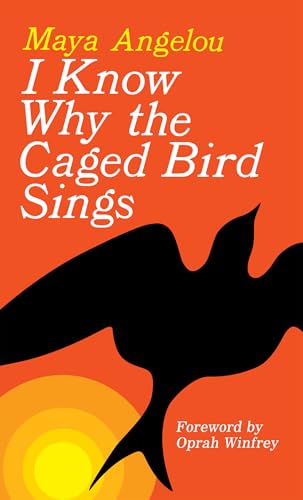
Maya Angelou grew up in the American South after her parents separated. She was sexually abused as a child. She stopped speaking. For years, she did not talk to anyone. The book is about that silence and about how she found her voice again.
Angelou writes with clarity and beauty. You live inside her childhood. You feel the weight of racism and poverty. You feel the shock of violence. But you also feel the moments of grace and the people who loved her. By the end, you understand not just what happened to her but how she became herself. This is one of the greatest American memoirs.
Available on Amazon.
2. Angela's Ashes by Frank McCourt
Frank McCourt grew up in Limerick, Ireland, in poverty so extreme you have to read it to believe. No money. No heat in winter. His father was a drunk. His mother was desperate. He was hungry. The book is about survival and humor in the face of suffering.
What makes this memoir powerful is McCourt's tone. He does not ask for your pity. He is not bitter. He is observant. He notes the absurdity. He watches his mother hold together. He watches his father disappear. He watches Ireland. This book won the Pulitzer Prize and it is the most widely loved memoir of its generation.
3. The Liar's Club by Mary Karr
Mary Karr grew up in Texas with an alcoholic mother and a volatile father. Her childhood was chaos. Her mother was beautiful and cruel. Her father was violent and unreliable. Karr writes about it with an unreliable narrator's eye. She is telling you what she remembers and sometimes what she remembers turns out to be wrong.
This book revived the literary memoir. Before it, memoirs were either hagiography or tell-all confessions. Karr showed that a memoir could be literature. It could have the uncertainty and complexity of fiction while still being true. The prose is stunning. The honesty is brutal.
4. Speak, Memory by Vladimir Nabokov
Nabokov was a Russian exile writing in English about his lost world. Speak, Memory is his autobiography and it is also a work of art. The prose is precise and beautiful. The structure is not chronological but musical. Nabokov circles back. He returns to memories and sees them differently each time.
Nabokov understood that memory is not a record of events. It is a creative act. You construct your past as you remember it. The book is about exile and loss and the impossibility of ever really returning home. It is also about the power of art to preserve what has been lost.
5. Homage to Catalonia by George Orwell
George Orwell went to Spain in 1936 to fight in the Spanish Civil War. He fought against the fascists. He believed he was part of a working-class revolution. Homage to Catalonia is his account of what actually happened. The revolution was betrayed. Communists killed fellow revolutionaries. Orwell escaped with his life.
The book is a political memoir and a personal memoir combined. Orwell is documenting a historical moment and he is also recording his disillusionment. His idealism is shattered but his commitment to telling the truth is strengthened. This is memoir as political witness.
6. Narrative of the Life of Frederick Douglass by Frederick Douglass
Frederick Douglass was born enslaved. He taught himself to read by watching other people write. Learning to read was his path to freedom. His autobiography is the founding text of African American autobiography and American autobiography generally.
Douglass writes with eloquence and precision. He describes slavery not as something done to him but as something he survived and transcended. He shows how literacy is freedom. He shows how a person can claim dignity even when the system denies it. His narrative is an argument for human equality.
7. The Words by Jean-Paul Sartre
Jean-Paul Sartre wrote about his childhood in Paris. He was an intellectual from the beginning. He loved reading more than he loved people. His mother was distant. He invented playmates. He lived in his imagination.
The Words is Sartre examining how he became a writer and a philosopher. He shows how his childhood shaped his alienation from the world. He also shows how that alienation became productive. His distance from normal life was what allowed him to think as he did. This is memoir as philosophical self-examination.
8. Out of Place by Edward Said
Edward Said's autobiography shows a man caught between cultures. He was Palestinian but educated in Cairo and Jerusalem and New York and Cambridge. He was Arab but he was also Western. He wrote theory about the relationship between culture and power. His life was the proof.
Said writes about his childhood in colonial Egypt. He writes about identity confusion. He writes about intellectual awakening. The autobiography is also an argument. It shows what it means to be from somewhere and yet not from anywhere. It shows why Said devoted his life to understanding culture and power.
9. Man's Search for Meaning by Viktor Frankl

Viktor Frankl was a psychiatrist imprisoned in Auschwitz. His book is about that experience and about what he learned from it. Frankl argues that meaning is what allows people to survive suffering. Even in the camps, people could choose their attitude. They could choose to find meaning in their suffering.
Frankl's book is both memoir and philosophy. It is personal and also universal. His theory of logotherapy, the idea that life has meaning even in the worst circumstances, emerged from his experience. This is memoir as spiritual teaching.
10. Memoirs of a Dutiful Daughter by Simone de Beauvoir
Simone de Beauvoir wrote about becoming an intellectual woman. She grew up in a bourgeois family. She was supposed to marry and be respectable. Instead, she became a philosopher and a writer. Her memoir traces how she escaped her family's destiny.
De Beauvoir writes about her education and her early love affairs and her intellectual awakening. She writes about Sartre and how she formed her relationship with him. The memoir is about the possibility of freedom for women. It is about refusing the life that is expected of you.
11. If This Is a Man by Primo Levi
Primo Levi was a chemist who ended up in Auschwitz. This is his account of the camps and it is the most measured Holocaust memoir. Levi does not reach for metaphor or perform emotion. He observes. He documents. He thinks.
He notes the logic of the camps, the way the Nazis tried to destroy human dignity, the way some people maintained dignity anyway. He describes starvation and cold and fear in precise, almost clinical language. That precision makes it worse, not better. You feel his clarity. The book is a masterpiece of witnessing.
12. Just Kids by Patti Smith
Patti Smith and the photographer Robert Mapplethorpe were young and poor and hungry to make art in New York in the 1970s. Just Kids is her memoir of that time. She and Mapplethorpe lived in the same room. They were broke. They were in love in the way young artists are in love. Completely devoted to each other and to their art.
Smith writes about this period with tenderness and precision. She brings you into the details of their life. Where they slept, what they ate, how they thought about art. It is one of the great love stories even though it is a love between two people who could not be together romantically. The prose is beautiful. The devotion is complete.
The Power of Lived Experience
The best memoirs and autobiographies have something in common. They do not simplify the past to make sense of it. They show the complexity and the contradiction. The writer was wrong about something and then later understood differently. The writer did things they regret. The writer also survived.
Memoir is powerful because it allows you to live inside someone else's consciousness. You get to see the world through their eyes and understand what it felt like to be them in that moment. That empathy is what memoir uniquely offers. It is the chance to know another person completely.
Your next good book, in your inbox
We only write when we find a book worth your time. Hand-picked recommendations across history, mythology, true crime and more.
Are you an author?
Get your book in front of readers like these, for free.
- Free book listing →Your own book page with an Amazon button
- Author page →Photo, bio and links to your site
- Featured placement →A spot in our best-of lists, from €29
Free tools we recommend
Get free honest reviewsReview exchange on iWrity, free to join
Books You Might Like

Educated: A Memoir
Tara Westover


The Hiding Place
Elizabeth Sherrill, John Sherrill Corrie ten Boom

Leonardo Da Vinci
Walter Isaacson