Best Memoirs and Autobiographies in 2026: 12 Lives Worth Reading About
The best memoirs are not about the events of a life. They are about the way a consciousness moves through time. They work because they make you feel the specific quality of being someone else. That is the most intimate gift that writing can give. You come away not just knowing what happened to them, but understanding what it was like to be them.
These 12 books do that. Some are about famous people and unknown lives. Some are about surviving the unsurvivable. Some are about the artist's life as complete devotion. All of them offer the thing that memoir uniquely can: the chance to live inside another person's mind.
1. I Know Why the Caged Bird Sings by Maya Angelou
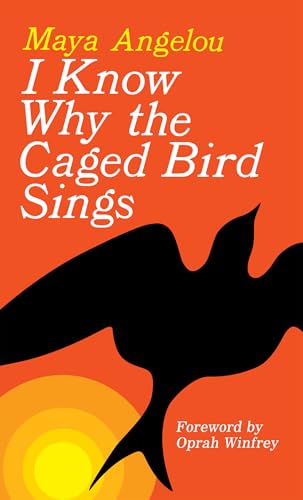
Maya Angelou grew up in the American South after her parents separated. She was sexually abused. She stopped speaking. For years, she did not talk. The book is about that silence and about how she found her voice again.
Angelou writes with such clarity and beauty that you live inside her childhood. You feel the weight of racism and poverty. You feel the shock of violence. But you also feel the moments of grace and the people who loved her. By the end, you understand not just what happened to her, but how she became herself. This is one of the greatest American memoirs.
Available on Amazon.
2. The Liar's Club by Mary Karr
Mary Karr grew up in Texas with an alcoholic mother and a volatile father. Her childhood was chaos. Her mother was beautiful and cruel. Her father was violent and unreliable. And Karr is writing about it with an unreliable narrator's eye: she is telling you what she remembers, and sometimes what she remembers turns out to be wrong.
This book revived the literary memoir. Before it, memoirs were often either hagiography or tell-all confessions. Karr showed that a memoir could be literature, that it could have the uncertainty and complexity of fiction while still being true. The prose is stunning. The honesty is brutal. She shows you what it was like to be a child in a home that was not safe.
3. Angela's Ashes by Frank McCourt
Frank McCourt grew up in Limerick, Ireland, in poverty so extreme that you have to read it to understand. No money. No heat in winter. His father was a drunk. His mother was desperate. He was hungry. The book is about survival and humor in the face of suffering.
What makes this memoir powerful is McCourt's tone. He does not ask for your pity. He is not bitter. He is observant. He notes the absurdity. He watches his mother hold together. He watches his father disappear. He watches Ireland. This book won the Pulitzer Prize and it is the most widely loved memoir of its generation.
4. The Kiss by Kathryn Harrison
Kathryn Harrison grew up with a father who was absent. When she was 20, he reappeared. And he began a sexual relationship with her. The Kiss is her account of that incest and the obsession and shame and longing that accompanied it.
This book was controversial. People asked why she would write about something so private. The answer is that by writing about it, she transformed shame into meaning. She also made it possible for other people who had been through similar things to understand they were not alone. This is memoir as confession and as confrontation.
5. This Boy's Life by Tobias Wolff
Tobias Wolff grew up with an abusive stepfather. His mother was beautiful and deluded. His stepfather was mean. Young Tobias was smart and he knew it and he was angry. The book is about how a boy survives by inventing himself, by creating a version of himself that is better than the life he lives.
Wolff is a writer first, so the prose is controlled and precise. He does not use sentimentality. He just shows you the situation and lets you feel its weight. By the end, you see how his stepfather's cruelty and his mother's blindness shaped him, but not in the way you might expect. He turned it into ambition.
6. The Woman Warrior by Maxine Hong Kingston
Maxine Hong Kingston's mother told her Chinese legends and stories. The book blends those stories with Kingston's own life and memory. Is it memoir or is it mythology? Kingston does not separate them. She shows how a Chinese-American girl learns to navigate two worlds by mixing the real and the mythical.
The book is experimental. It does not follow a straight line. It moves between past and present, between truth and legend. It works because Kingston is writing about the exact experience she has: growing up between cultures where neither the myths nor the reality quite fit. This is one of the most influential memoirs in American literature.
7. If This Is a Man by Primo Levi
Primo Levi was a chemist who ended up in Auschwitz. This is his account of the camps. It is the most measured and measured and therefore the most devastating Holocaust memoir. Levi does not reach for metaphor. He does not perform emotion. He observes. He documents. He thinks.
He notes the logic of the camps, the way the Nazis tried to destroy human dignity, the way some people maintained dignity anyway. He describes starvation and cold and fear in precise, almost clinical language. That precision makes it worse, not better. You feel his clarity. The book is a masterpiece of witnessing.
8. Long Walk to Freedom by Nelson Mandela

Nelson Mandela spent 27 years in prison for fighting apartheid. Long Walk to Freedom is his autobiography. He writes about his childhood, his marriage, his political awakening, his imprisonment, and his presidency.
What matters about this book is the patience. Mandela does not rage. He does not hate. He writes about his enemies with the same dignity he writes about his friends. He is the most patient revolutionary ever. By the end, you understand how someone becomes willing to spend 27 years in prison and then forgive the people who imprisoned him. The autobiography is a moral argument.
9. Just Kids by Patti Smith
Patti Smith and the photographer Robert Mapplethorpe were young and poor and hungry to make art in New York in the 1970s. Just Kids is her memoir of that time. She and Mapplethorpe lived in the same room. They were broke. They were in love in the way that young artists are in love: completely devoted to each other and to their art.
Smith writes about this period with tenderness and precision. She brings you into the details of their life: where they slept, what they ate, how they thought about art. It is one of the great love stories, even though it is a love between two people who could not be together romantically. The prose is beautiful. The devotion is complete.
10. Confessions by Augustine
Augustine wrote this at the end of the 4th century. He was a Christian bishop reflecting back on his life. He had been a heretic, a libertine, a philosophy student. Now he was a believer. The book is his examination of how he got from there to here.
Augustine invented the modern autobiography. Before Confessions, people wrote history or hagiography. Augustine wrote about the internal life, about his doubts and his reasoning and his spiritual struggle. He was examining his own past to understand his present self. Every memoir written since is in his shadow.
11. Dreams from My Father by Barack Obama
Barack Obama wrote this before he was president or even famous. He was a community organizer and he was thinking about who he was. His father was Kenyan. His mother was from Kansas. He was born in Hawaii. He grew up in Indonesia. His book is about trying to reconcile those pieces of himself.
The memoir shows that Obama is a writer first. The prose is good. The thinking is clear. You see him working through identity and race and ambition. You see him trying to understand his father. It is not just a political memoir. It is a real reckoning with who you are.
12. The Years by Annie Ernaux
Annie Ernaux wrote a memoir that is also a history. She moves through the decades from 1941 to 2006 and at each stage she intersects her personal life with the public events of France. Her lovers, her politics, her work, her family, the social movements, the television shows, the advertisements, the music.
Ernaux writes in the collective voice sometimes, as if she is speaking for her whole generation. The book is experimental. It is fragmented. But it captures something true about how individual lives are woven into historical change. This won the Nobel Prize in Literature.
Going Deeper Into Lives Worth Knowing
If you are looking for more in this territory, Skriuwer curates memoirs and autobiographies ranked by reader reviews. The best memoirs have something in common: they are written by people who understand that their life belongs partly to history or partly to understanding a struggle that is larger than themselves. That consciousness is what makes them matter to readers who will never meet them.
Your next good book, in your inbox
We only write when we find a book worth your time. Hand-picked recommendations across history, mythology, true crime and more.
Are you an author?
Get your book in front of readers like these, for free.
- Free book listing →Your own book page with an Amazon button
- Author page →Photo, bio and links to your site
- Featured placement →A spot in our best-of lists, from €29
Free tools we recommend
Get free honest reviewsReview exchange on iWrity, free to join
Books You Might Like

Educated: A Memoir
Tara Westover


The Hiding Place
Elizabeth Sherrill, John Sherrill Corrie ten Boom

Leonardo Da Vinci
Walter Isaacson