Best Noir Fiction in 2026: 12 Novels Where the City Is Always Guilty
NOIR FICTION IS NOT REALLY ABOUT CRIME. It is about the moment of discovery that the world you live in operates on corruption and self-interest, that the rules are written by the people who own power, and that moral clarity is a luxury only the wealthy and connected can afford. Every noir novel carries the same central revelation: the hero thought he understood how things worked, and he was wrong. The discovery breaks something in him that never really heals.
Noir emerged as a distinct American form in the 1930s and 1940s, but the sensibility persists because the fundamental truth at its center has never been disproved. These 12 novels represent the form at its best and most honest. They show you why noir still matters and why readers keep coming back to stories about men and women discovering that the deck is permanently stacked against them.
The Big Sleep by Raymond Chandler (1939)
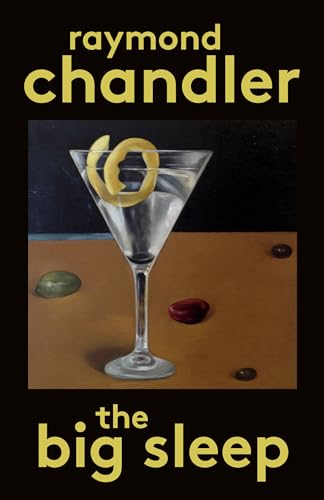
Raymond Chandler's debut introduces Philip Marlowe, the private detective who becomes synonymous with American noir. The plot involves a missing person, blackmail, murder, and a wealth of red herrings, but what matters is not the plot. What matters is Marlowe's voice, his refusal to be corrupted by the money and power that move through Los Angeles, and his quiet insistence on treating everyone, the wealthy and the powerless alike, with the same level of respect. Chandler's Los Angeles is not just a setting. It is a character itself, a city of class division where the rich live in fortified houses and everyone else lives in the gaps they create. Marlowe moves through it without losing his integrity, which is precisely what makes him noir rather than hard-boiled. He sees the corruption and does not pretend it is anything else. Find The Big Sleep on Amazon.
The Postman Always Rings Twice by James M. Cain (1934)
James M. Cain's masterpiece is the shortest and most brutal noir novel ever written. A drifter arrives at a roadside diner, seduces the owner's wife, and together they plot to murder her husband. The plan succeeds but brings no happiness, only escalating catastrophe. Cain's prose is spare and exact. There is no philosophizing, no reflection. Things happen, consequences follow, and the characters are trapped in the logic they set in motion. It is noir distilled to its absolute essence: desire, murder, and the unstoppable machinery of justice grinding toward a predetermined end. The book is under 200 pages. It has been adapted into a film, an opera, and the template for every noir that follows. Find The Postman Always Rings Twice on Amazon.
The Maltese Falcon by Dashiell Hammett (1930)
Dashiell Hammett's San Francisco detective Sam Spade investigates the death of his partner and finds himself caught in a hunt for a legendary jeweled falcon. The plot is complicated. The book is not. Spade moves through the story with a kind of contained precision, trusting nobody, playing angles, and maintaining control even when control is theoretically impossible. Hammett's dialogue is sparse and fast. His characters are defined by their actions more than their descriptions. The book invented the template for the American detective novel, and it has yet to be bettered. Spade is noir's purest hero because he acts without illusions. Find The Maltese Falcon on Amazon.
The Killer Inside Me by Jim Thompson (1952)
Jim Thompson's psychotic first-person narrative is the most disturbing noir novel in print. Lou Ford, a deputy sheriff in a Texas town, is a functioning psychopath who has learned to hide his nature beneath a facade of small-town charm and civility. When he is asked by a woman to help her con a wealthy man, he agrees, and the book spirals into escalating violence and psychological horror. Thompson does something noir rarely attempts: he invites the reader into the mind of the killer, showing the complete disconnect between Ford's internal reality and his external persona. The effect is deeply unsettling because Thompson makes you complicit in Ford's perspective. It is noir stripped of any moral framework whatsoever, a complete portrait of a man without conscience. Find The Killer Inside Me on Amazon.
The Talented Mr. Ripley by Patricia Highsmith (1955)
Patricia Highsmith's Tom Ripley is not a detective or a man forced into crime by circumstance. He is a con artist who murders to maintain his position in a world of wealth and beauty. He kills Dickie Greenleaf, assumes his identity, and disappears into Italy with his money and his life. Highsmith is interested not in the mechanics of crime but in the aesthetics of it, the pleasure Ripley takes in deception and the ease with which he adapts to his new identity. The novel is a portrait of successful evil, a man who gets away with murder and continues his existence without significant consequence. It is noir inverted: the hero is the villain, and Highsmith makes you understand his logic from the inside. Find The Talented Mr. Ripley on Amazon.
L.A. Confidential by James Ellroy (1990)
James Ellroy's Los Angeles police force in the 1950s is a machine of corruption in which three detectives with very different methods work toward and against the same case. One is a publicity hound willing to manufacture evidence to close cases. One is violent and racist, operating on rage and instinct. One is caught between them, trying to do honest work in an institution designed to prevent it. Ellroy's prose is fragmented and electric. His story moves across multiple timelines and perspectives. What emerges is a portrait of an institution that has abandoned any pretense of justice and operates purely on power and control. L.A. Confidential is noir in its modern form, acknowledging that corruption is not a character flaw but a structural feature. Find L.A. Confidential on Amazon.
Get Shorty by Elmore Leonard (1990)
Elmore Leonard's neo-noir is comedy, which means it is also truth. A loan shark from Miami finds himself in Los Angeles trying to collect a debt, and instead gets drawn into Hollywood. The book is a portrait of two criminal underworlds, the organized crime world and the film industry, and Leonard's discovery that they operate on exactly the same principles: power, negotiation, and the ability to manage perception. The prose is light and fast. The characters are vividly drawn in a few lines of dialogue. Leonard's noir is funny because the world is funny once you stop pretending it operates according to the rules it claims to follow. Find Get Shorty on Amazon.
Devil in a Blue Dress by Walter Mosley (1990)
Walter Mosley's Easy Rawlins is a Black private detective in Los Angeles in 1948, moving through a city where race and class intersect in every transaction. Easy is hired to find a missing woman, but the case spirals into murders, blackmail, and the casual racism of a legal system that treats his race as a form of guilt. Mosley is a historian as much as a novelist, and his Los Angeles is detailed in its racial geography and its social structure. Easy survives not through integrity like Marlowe but through pragmatism and the support of his community. Devil in a Blue Dress is noir that sees the full scope of the corruption it describes, which includes racism as a central rather than peripheral feature. Find Devil in a Blue Dress on Amazon.
Queenpin by Megan Abbott (2007)

Megan Abbott's Queenpin is female noir, a rarity in the tradition. A woman working small-time gambling rackets in 1950s Los Angeles meets Gloria, a powerful woman running a sophisticated mob operation, and becomes her protege. Abbott's prose is sharp and precise. Her portrait of female power operating through seduction and manipulation and psychological control is a counterpoint to the male noir tradition. Gloria is no femme fatale. She is a genuine criminal power, and the novel tracks the narrator's slow understanding that Gloria is using her exactly as any male crime boss would use anyone. Abbott shows that noir corruption does not discriminate by gender, which is its own kind of horror. Find Queenpin on Amazon.
Double Indemnity by James M. Cain (1943)
James M. Cain's second masterpiece is a locked room of desire and murder. An insurance salesman and a woman plot to kill her husband and make it look like an accident so they can collect the insurance. The plan succeeds but then everything spirals into paranoia and betrayal. What separates Double Indemnity from pulp fiction is Cain's understanding that the horror is not the crime itself but the logic that enables it. Once you accept that insurance fraud is possible, then murder becomes possible, then betrayal becomes possible, then everything becomes possible. The fatalistic logic of noir is that once you step off the edge, there is nothing to stop your fall. Find Double Indemnity on Amazon.
Down There by David Goodis (1956)
David Goodis's Down There follows a jazz pianist who has snitched on his criminal friends to the police and has been cast out by the only community he belonged to. He spirals into the Skid Row underworld of Philadelphia, trying to find a way back or a way out. Goodis is a writer of pure descent. His novel has almost no plot. What it has instead is atmosphere and the slow recognition that there are places people go from which they do not return. Down There is the ultimate noir of decline, the portrait of a man who had a choice and made the wrong one, and now spends his existence in the gaps between criminal underworlds trying not to think about what he lost. Find Down There on Amazon.
The Long Good-bye by Raymond Chandler (1953)
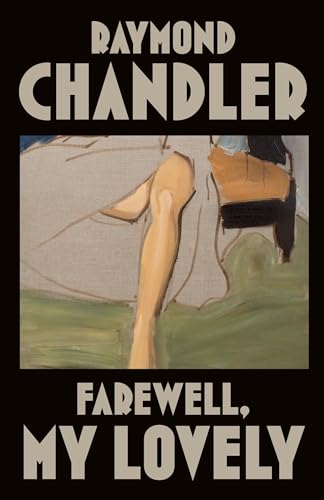
Raymond Chandler's masterpiece is longer and more complex than The Big Sleep, and it shows Marlowe older and wearier. A drunk comes to Marlowe asking for help, Marlowe helps him, and years later the drunk is found dead. Marlowe investigates and finds himself in a maze of wealthy people and criminal networks that stretch from Los Angeles to Mexico to Europe. Chandler's prose is philosophical in a way that separates it from other noir. Marlowe thinks about morality and honor and what a man owes. The Long Good-bye is not noir as crime story. It is noir as meditation on what it means to maintain integrity in a world designed to destroy it. Find The Long Good-bye on Amazon.
The Grifters by Jim Thompson (1963)
Jim Thompson's portrait of three con artists, a mother and two lovers who work different angles, is a novel about family and betrayal and the con as a way of life. Thompson's style is tighter and faster than in The Killer Inside Me. His characters are vivid and damaged and entirely lacking in sentimentality. The grift becomes a metaphor for all human interaction, the idea that everyone is always working an angle and nobody is ever being honest. The Grifters is noir's logical conclusion: if everyone is conning everyone else, then morality becomes meaningless and the only thing that matters is skill and nerve. Find The Grifters on Amazon.
Where to Start
If you are new to noir, start with The Big Sleep or The Maltese Falcon, both short classics that show you the form without requiring a commitment to the harder work of Thompson or Highsmith. If you want to understand noir's moral core, read The Long Good-bye. If you want to see the form used to tell a story about race and power, read Devil in a Blue Dress. If you want to see noir at its most extreme, read The Killer Inside Me. The form has survived and evolved because it captures something true about how the world actually works, something that optimistic stories cannot acknowledge. Noir is not fashionable. It is necessary.
Your next good book, in your inbox
We only write when we find a book worth your time. Hand-picked recommendations across history, mythology, true crime and more.
Are you an author?
Get your book in front of readers like these, for free.
- Free book listing →Your own book page with an Amazon button
- Author page →Photo, bio and links to your site
- Featured placement →A spot in our best-of lists, from €29
Free tools we recommend
Get free honest reviewsReview exchange on iWrity, free to join
Books You Might Like

It Ends with Us: A Novel
Colleen Hoover

The Seven Husbands of Evelyn Hugo: A Novel
Taylor Jenkins Reid

The Song of Achilles
Madeline Miller
