Best Nordic Noir Books in 2026: 10 Scandinavian Crime Novels That Redefined the Genre
Nordic Noir is a subgenre of crime fiction from Scandinavia in which a murder investigation exposes cracks in a country's celebrated welfare state. The best Nordic Noir books pair bleak northern settings with damaged, persistent detectives: Stieg Larsson's Lisbeth Salander, Jo Nesbo's Harry Hole, and Henning Mankell's Kurt Wallander remain the genre's defining figures.
Nordic Noir arrived in English translation at a particular moment in the genre's history and changed what crime fiction was allowed to do. Where much Anglo-American crime fiction treats the social order as the thing being protected by a successful investigation, Scandinavian crime fiction treats the social order as the thing being examined, often as the thing being indicted. The welfare state, its promises and its hidden violences, runs beneath almost every novel in the tradition. That political substrate is what gives the books their weight, and what made them feel like something new when they crossed into English in the early 2000s.
This list covers the novels that defined the genre and the ones still generating readers twenty years after the initial wave. Every entry earns its place by doing something more than delivering a competent murder mystery.
The genre's influence now runs well beyond Scandinavian publishing. American and British crime writers routinely cite Larsson, Nesbo, and Mankell as the models that pushed the genre toward social critique rather than pure puzzle-solving, and the wave of Nordic Noir television, from the Swedish Wallander series to Netflix's Dept. Q, has kept introducing new readers to the source novels years after their original publication.
Skriuwer ranks each entry on this Nordic Noir list by how much it shaped or extended the genre, not just by sales, so newer titles sit alongside the 2000s originals that defined the tradition.
| Book | Author | Country | Detective | Best For |
|---|---|---|---|---|
| The Girl With the Dragon Tattoo | Stieg Larsson | Sweden | Mikael Blomkvist / Lisbeth Salander | First-time readers wanting the biggest scope |
| The Snowman | Jo Nesbo | Norway | Harry Hole | Readers who want a tighter, faster plot |
| Faceless Killers | Henning Mankell | Sweden | Kurt Wallander | Readers who want the archetype the genre was built on |
| The Ice Princess | Camilla Lackberg | Sweden | Erica Falck / Patrik Hedstrom | Readers who prefer a domestic, small-town setting |
| Don't Look Back | Karin Fossum | Norway | Konrad Sejer | Readers who want a quieter, more psychological register |
| 1222 | Anne Holt | Norway | Hanne Wilhelmsen | Readers who want a locked-room mystery structure |
What Makes Nordic Noir Distinctive
The landscape is real: the long winters, the particular quality of Scandinavian light, the small communities where everyone knows everyone and the secrets are therefore harder to keep and harder to expose. But it is not just atmosphere. The best Nordic Noir invests in the social machinery that produces crime. These books are interested in who gets protected by institutions and who gets ground up by them, in the gap between a country's self-image and its actual treatment of its most vulnerable citizens. The detective is usually someone who sees that gap and cannot stop looking at it.
How Is Nordic Noir Different From British and American Crime Fiction?
Nordic Noir detectives are almost always official police working inside a bureaucracy, not the private-eye loners common in American noir, and the crimes trace back to institutional failure rather than a single villain's evil. British crime fiction tends to restore order by the final page. Nordic Noir is more interested in showing that the order was never as solid as the country believed.
The contrast shows up in how each tradition treats its criminals. American noir grew out of the Western and its instinct for quick, individual justice, so its villains are often simply evil, a problem to be shot or arrested and closed. Scandinavian crime fiction treats its perpetrators as products of the same system that produced the detective: childhood abuse, institutional neglect, and economic precarity recur as causes, not excuses. British crime fiction, especially the classic cozy tradition, usually restores the social order the murder disrupted. Nordic Noir rarely offers that comfort. The investigation exposes the rot, but the rot was already there before page one and stays there after the last page too.
Landscape does more work in Nordic Noir than in either tradition. The cold, flat light and the isolation of small Scandinavian towns are not backdrop, they are pressure, the same way London fog operates in classic British mystery but pushed further into the plot itself. A Nordic Noir novel set in summer, like several of the Wallander books, still carries the emotional register of winter because the genre's real subject is institutional decay rather than weather.
The Girl With the Dragon Tattoo by Stieg Larsson
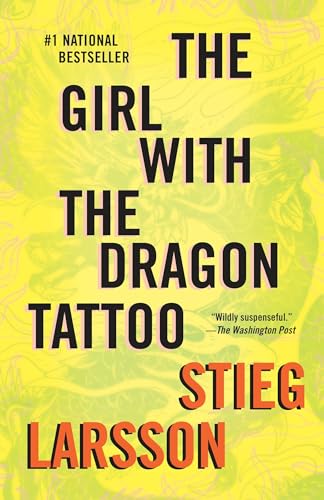
Larsson's novel is the book that made Nordic Noir a global publishing phenomenon. Disgraced journalist Mikael Blomkvist is hired by a wealthy industrialist to investigate the forty-year-old disappearance of a family member. The investigation leads him into a collaboration with Lisbeth Salander, a brilliant hacker and researcher with a history of institutional abuse behind her and a capacity for retribution that operates entirely outside the law.
The novel's Swedish title translates as "Men Who Hate Women," which is a more accurate description of its subject matter than the English title. Larsson worked as an investigative journalist covering right-wing extremism in Sweden, and his anger at the treatment of women by Swedish institutions runs through every page. Salander is one of crime fiction's genuinely original protagonists. Find The Girl With the Dragon Tattoo on Amazon.
The Snowman by Jo Nesbo
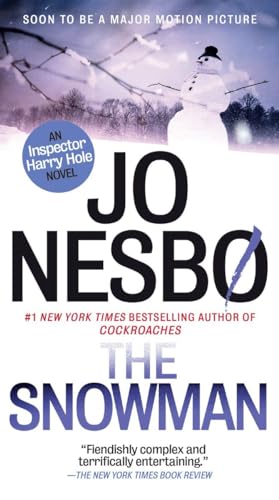
The seventh Harry Hole novel is the one that broke Nesbo internationally, and it works as a standalone for readers new to the series. A serial killer constructs snowmen at crime scenes and targets married women. Hole, Oslo's most effective and most self-destructive detective, takes the case while fighting his own alcoholism and the accumulated damage of the previous six novels' worth of losses.
Nesbo's plotting is tighter than Larsson's and his procedural detail is more precise, but what distinguishes the Hole series is its portrait of a detective who is genuinely broken and who keeps working anyway, not through heroism but through something closer to compulsion. Find The Snowman on Amazon.
Faceless Killers by Henning Mankell
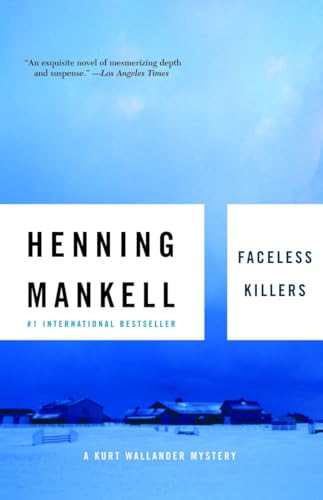
Mankell's first Kurt Wallander novel begins with the brutal murder of an elderly farming couple in rural Sweden. The only clue is a single word spoken by the dying woman: "foreign." When that word leaks to the press, the investigation becomes tangled with a wave of xenophobia in a Sweden that had built its identity around being a tolerant, open society.
Wallander is the model that most subsequent Nordic Noir detectives were built against or in response to. He is middle-aged, divorced, diabetic, politically confused, genuinely troubled by the violence he investigates, and entirely incapable of leaving it alone. The novels' social criticism is carried through his confusion as much as through the plots. Find Faceless Killers on Amazon.
The Ice Princess by Camilla Lackberg
Lackberg's debut introduces crime writer Erica Falck returning to her small Swedish coastal hometown after her parents' death, only to find that her childhood friend has been found dead in a bathtub, staged to look like suicide. The investigation ties into the town's history in ways that the community would prefer stay buried.
Lackberg's novels operate in a more domestic register than Larsson or Nesbo, and the Fjallbacka setting is as much character as location. The series has sold over 30 million copies worldwide, which is a reasonable indicator that the formula works, but the appeal is also specific: these books are interested in the violence that communities do to their own members to maintain a surface of normality.
Don't Look Back by Karin Fossum
Fossum's Inspector Sejer series occupies a different space from most Nordic Noir. The crimes are smaller, the communities tighter, and Sejer himself is a quieter presence than Wallander or Hole. Don't Look Back opens with the body of a teenage girl found on a mountainside near a small Norwegian village. What follows is less a puzzle than a character study of a community under the pressure of a violence it produced itself.
Fossum is often described as the most psychological of the Nordic Noir writers, and that is accurate. The question her novels keep asking is not who but why, and the answer is usually something the community does not want to face about itself.
Linda: As in the Linda Murder by Leif GW Persson
Persson spent decades as a criminologist and police consultant before writing crime fiction, and the distance from the genre's conventions shows in the best possible way. The novel is based on a real murder case and follows a police investigation in a way that is deliberately procedural: slow, bureaucratic, reliant on the accumulation of small details rather than the dramatic breakthrough. The detective Evert Backstrom is deliberately unsympathetic, a lazy, prejudiced, self-serving officer who stumbles toward the truth through accident as much as skill.
The novel is a critique of the Swedish police institution as much as it is a crime story. Persson's forensic knowledge makes the investigation feel genuinely real, and the refusal to make the detective heroic is its own kind of argument.
1222 by Anne Holt
Holt's novel is a locked-room mystery set on a Norwegian mountain, where a train derailment strands a group of passengers in a hotel during a blizzard and someone begins killing them. The investigator is Hanne Wilhelmsen, a retired detective who uses a wheelchair and has made a policy of not helping anyone with anything.
Holt, a former Norwegian Minister of Justice, brings genuine institutional knowledge to her fiction. The novel is more playful than most Nordic Noir, the locked-room setting has an almost Agatha Christie quality, but the critique of Norwegian social complacency underneath the puzzle is characteristically sharp.
The Petrona Award: How to Judge Nordic Noir in Translation
Not every Nordic Noir novel gets the same care in translation, and the gap between a good and a mediocre English edition can be the difference between a book that grips you and one that reads flat. The Petrona Award, established in 2013 in memory of crime fiction blogger Maxine Clarke, gives UK readers a working shortcut: it recognizes the best Scandinavian crime novel of the year published in English translation, judged specifically on how well the translation preserves the original's tone and social detail, not just its plot.
Translators matter more in this genre than in most. Don Bartlett, who has translated the bulk of Jo Nesbo's Harry Hole series into English, is widely credited with preserving Nesbo's dry, procedural voice rather than smoothing it into something more conventionally thriller-paced. When a Nordic Noir novel feels flat in English, the translation is worth checking before writing off the author. Sticking to major publishers and award-shortlisted translations, rather than smaller-press releases with less editorial oversight, is the safest way to judge the genre fairly on a first read.
Three More Nordic Noir Novels Worth Reading
The tradition has expanded well beyond the founding generation. These three belong on any serious shelf.
- The Keeper of Lost Causes by Jussi Adler-Olsen: the first Department Q novel follows a Copenhagen detective reassigned to cold cases and forced to reopen a disappearance everyone else has accepted as closed. Darker and funnier than most Scandinavian crime fiction.
- The Man Who Smiled by Henning Mankell: the fourth Wallander novel, and arguably the best, built around a case that exposes the way wealthy institutions use legal structures to commit crimes that would destroy an individual who tried the same thing.
- The Redbreast by Jo Nesbo: the third Harry Hole novel follows a murder investigation that leads into Norway's wartime collaboration history. The best single entry point into the Hole series after The Snowman.
Is Nordic Noir the Same as Scandi Noir?
Scandi Noir and Nordic Noir describe the same genre. Scandi Noir emphasizes the Scandinavian countries specifically (Sweden, Norway, Denmark), while Nordic Noir also covers Finland and Iceland, whose crime fiction shares the same cold settings, institutional skepticism, and morally compromised investigators. Reviewers and publishers use the two terms interchangeably.
What Order Should You Read the Harry Hole Novels?
Start with The Redbreast (book three) rather than book one; it is the entry point Nesbo's own publishers recommend, and it stands alone. Readers who want strict chronology should begin with The Bat, then follow with Cockroaches, The Redbreast, Nemesis, The Devil's Star, The Redeemer, The Snowman, and onward.
Nordic Noir Books and Their Screen Adaptations
Several of the books on this list reached an even wider audience through film and television. The adaptations vary wildly in quality, but they are a reasonable way to test whether the genre appeals to you before committing to a full novel.
| Book | Adaptation | Year |
|---|---|---|
| The Girl With the Dragon Tattoo | Swedish film trilogy; David Fincher's English-language film | 2009 / 2011 |
| The Snowman | Film starring Michael Fassbender | 2017 |
| Faceless Killers (Wallander series) | Swedish TV series with Krister Henriksson; BBC series with Kenneth Branagh | 2005-2013 / 2008-2016 |
| The Keeper of Lost Causes (Department Q) | Danish film series; Netflix's Dept. Q, relocated to Edinburgh | 2013-2018 / 2025 |
New Nordic Noir Releases to Watch in 2026
The tradition is not slowing down. Karin Smirnoff, who took over the Millennium series after Stieg Larsson's death and David Lagercrantz's continuation, has a ninth Millennium book due in 2026. Jo Nesbo's Harry Hole returns in Kill Shot, the fourteenth novel in the series, publishing November 5, 2026. Icelandic author Eva Bjorg Aegisdottir publishes The Last Tenant, the sixth entry in her Forbidden Iceland series, on September 10, 2026. All three extend franchises already covered on this list, which makes them a low-risk way to test whether a series has stayed sharp.
Two further 2026 releases are worth flagging for readers who want the newest voices rather than established series. The Murder Pool by Stella Blomkvist, published March 5, 2026, continues the pseudonymous Icelandic author's run of legal-thriller-adjacent crime fiction. Norwegian writer Gunnar Staalesen, whose Varg Veum series has run since the 1970s, publishes Face to Face on December 3, 2026, giving readers a chance to see one of the genre's longest-running detectives still working decades after the tradition he helped originate.
Where to Start
New readers should begin with The Girl With the Dragon Tattoo. Its scale and ambition make it the best introduction to what the genre can do at full stretch, and Salander remains the most original creation in Scandinavian crime fiction. Readers who want a more tightly plotted entry point should go directly to The Snowman. For the tradition's quieter, more psychological register, start with Fossum's Don't Look Back. The Wallander novels reward reading in order, but Faceless Killers stands alone if you just want to see where the archetype came from.
For more Scandinavian crime fiction beyond this list, see our full guide to the best Scandinavian crime fiction books, and for the genre's roots in the wider noir tradition, read the best crime noir fiction books.
Frequently Asked Questions About Nordic Noir Books
What is Nordic Noir?
Nordic Noir is a subgenre of crime fiction from Scandinavia in which a murder investigation exposes cracks in a country's celebrated welfare state. The genre pairs bleak northern settings with damaged, persistent detectives, and treats the social order as something to be examined rather than simply protected.
Is Nordic Noir the same as Scandi Noir?
Yes, reviewers and publishers use the two terms interchangeably. Scandi Noir technically points at Sweden, Norway, and Denmark, while Nordic Noir also covers Finland and Iceland, but the books share the same cold settings, institutional skepticism, and morally compromised investigators.
Which Nordic Noir book should I read first?
The Girl With the Dragon Tattoo by Stieg Larsson is the strongest starting point for most readers. It has the biggest scope and the genre's most original protagonist. Readers who want a tighter plot should start with Jo Nesbo's The Snowman instead.
What order should I read the Harry Hole novels in?
Start with The Redbreast (book three) rather than book one. It is the entry point Nesbo's own publishers recommend and it stands alone. Readers who want strict chronology should begin with The Bat, then Cockroaches, The Redbreast, Nemesis, and onward.
Are Nordic Noir books translated well from the original languages?
The major titles have strong English translations, and several, including Don Bartlett's work on Jo Nesbo, are widely praised in their own right. Quality varies more on smaller-press releases, so sticking to major publishers is the safer bet for new readers.
Are Nordic Noir books very violent?
Most are violent but rarely gratuitous. The violence tends to serve the social critique rather than exist for shock value, though Stieg Larsson and Jo Nesbo both include scenes that are genuinely difficult to read.
What TV shows are based on Nordic Noir books?
The Girl With the Dragon Tattoo has a Swedish film trilogy and David Fincher's 2011 English-language adaptation. The Wallander novels became both a Swedish series and a BBC series starring Kenneth Branagh. Netflix's Dept. Q (2025) adapts Jussi Adler-Olsen's Department Q novels, relocated to Edinburgh.
What makes Nordic Noir different from British or American crime fiction?
Nordic Noir detectives are almost always official police working inside a bureaucracy, not the private-eye loners common in American noir, and the crimes trace back to institutional failure rather than a single villain's evil. British crime fiction tends to restore order by the final page. Nordic Noir is more interested in showing that the order was never as solid as the country believed.
Is Nordic Noir a good starting point for readers new to crime fiction?
Yes, with one caveat: start with a self-contained entry point like The Girl With the Dragon Tattoo or Faceless Killers rather than a mid-series book. The genre rewards patience with slower pacing and social detail than typical airport thrillers, but the strongest titles are still built around a real mystery, so new readers are not sacrificing plot for atmosphere.
Your next good book, in your inbox
We only write when we find a book worth your time. Hand-picked recommendations across history, mythology, true crime and more.
Are you an author?
Get your book in front of readers like these, for free.
- Free book listing →Your own book page with an Amazon button
- Author page →Photo, bio and links to your site
- Featured placement →A spot in our best-of lists, from €29
Free tools we recommend
Get free honest reviewsReview exchange on iWrity, free to join
Books You Might Like

It Ends with Us: A Novel
Colleen Hoover

The Seven Husbands of Evelyn Hugo: A Novel
Taylor Jenkins Reid

The Song of Achilles
Madeline Miller
