Best Poetry Collections of All Time: 10 Books That Will Change How You Read Words
Updated June 2026. Poetry is the most efficient literary form. A novel takes three hundred pages to do what a good poem does in fourteen lines. That efficiency is also why so many readers find it difficult at first: there is no slack. Every word is doing at least two things. The compression that rewards rereading is the same quality that makes the first read feel like a closed door.
The list below is ordered as a reading path. It starts with Neruda, who is probably the easiest entry point for readers who do not already read poetry regularly, and moves through the tradition to Ocean Vuong, who published his debut collection in 2016 and is the poet who most clearly answers what contemporary poetry can do that no other form can. The collections are also chosen for range: love, grief, politics, nature, identity, war, and the problem of being alive in a body that will eventually stop.
The Place to Start
Twenty Love Poems and a Song of Despair by Pablo Neruda. Neruda wrote these twenty poems when he was nineteen years old, living in Santiago, and they were published in 1924. The translation most readers encounter is by W.S. Merwin, who captured the directness of Neruda's Spanish without smoothing out the strangeness. The poems are about desire and loss, and they work because Neruda was not writing in metaphor: the body is the body, the night is the night, and the absent woman is absent in a way that has physical weight. If you have not read poetry since school, this is where to start. The book is 48 pages and you can read it in an hour, but the poems return on their own for days afterward.
Twenty Love Poems and a Song of Despair on Amazon
The Book That Contains Everything
 Leaves of Grass by Walt Whitman. Whitman self-published the first edition in 1855 and kept revising it for the rest of his life. The final "deathbed edition" from 1891 is the one most readers encounter today. The opening poem, "Song of Myself," is 52 sections that perform a complete philosophy of democratic selfhood: the self is not bounded, it contains multitudes, it is connected to every other self by the body and the breath. Whitman was not widely celebrated during his lifetime. He is now considered the central figure in American poetry. Read "Song of Myself" first. Read "When Lilacs Last in the Dooryard Bloom'd," his elegy for Lincoln, second. The rest of the collection is worth exploring but those two poems are the core of what Whitman built.
The Voice That Would Not Be Contained
Ariel by Sylvia Plath. Plath wrote the poems collected in Ariel during the last months of her life in London in the winter of 1962 to 1963. She died in February 1963 and Ted Hughes, her estranged husband, edited and published the collection in 1965. The poems are formally precise and emotionally extreme. "Lady Lazarus," "Daddy," "Fever 103," "Death & Co." are not confessional in the sense of being unmediated autobiography: they are carefully constructed performances of psychological states that happen to correspond to a real life. The collection is regularly cited as one of the most influential bodies of poetry written in English in the 20th century. Robert Lowell's introduction to the first edition calls it "one of those terrible wonders that are hardly a work of art at all, but exist as a report from the edge of the edge." That is accurate.
The Poem That Mapped Modernity
The Waste Land and Other Poems by T.S. Eliot. Eliot published The Waste Land in 1922 and it is the most discussed poem in the English language. The poem is about the spiritual and cultural desolation of postwar Europe, structured as a series of fragments in multiple languages and voices, shifting between London, myth, Arthurian legend, Buddhist scripture, and the Thames. It is not easy and Eliot designed it not to be: the poem demands that you bring things to it. But the payoff is proportionate to the effort. The Faber edition includes The Love Song of J. Alfred Prufrock, Ash Wednesday, and the Four Quartets, which are Eliot's later attempt to answer the desolation of The Waste Land with something closer to acceptance. Read The Waste Land twice before moving to the Quartets.
The Waste Land and Other Poems on Amazon
Attention as Spiritual Practice
 Upstream by Mary Oliver. Oliver is not strictly a collections poet in the same way as the others on this list. Upstream, published in 2016, is a book of prose essays about attention, the natural world, and the act of looking carefully at things that most people walk past. But it belongs here because Oliver's essays teach the practice that her poems assume: the discipline of noticing. If you find poetry difficult because it feels distant from ordinary experience, read Upstream first and then go back to her collected poems with a different set of eyes. Oliver lived in Provincetown, Massachusetts, walked in the woods and marshes every morning for decades, and wrote down what she saw. Her work is the sustained argument that paying attention is not a hobby but a vocation.
Mystical Poetry for Non-Mystics
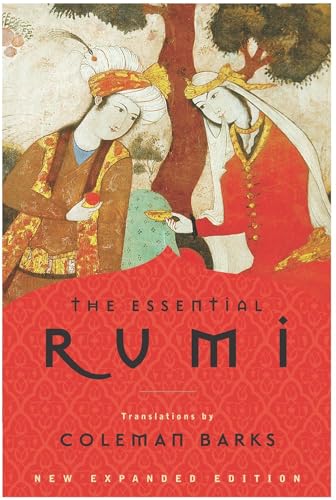 The Essential Rumi translated by Coleman Barks. Jalal ad-Din Rumi was a 13th-century Persian Sufi mystic whose poetry has been continuously in print in the Islamic world for eight centuries. Coleman Barks began translating him into contemporary American English in the 1970s and the Barks translations became the best-selling poetry book in the United States in the 1990s. The poems are about love, longing, the relationship between the soul and the divine, and the discipline of surrender. Barks is not a scholar of Persian and his translations are controversial in academic circles, but they communicate the emotional register of the originals in a way that more literal translations do not. If you want the scholarly approach, look at the Arberry or Lewis translations. If you want to understand why Rumi has been read for eight hundred years, start with Barks.
The Contemporary Collection That Changed the Standard
 Night Sky With Exit Wounds by Ocean Vuong. Vuong published this debut collection in 2016 when he was 28 years old and it won the T.S. Eliot Prize, among other awards. The poems move between Vietnam, the United States, his mother's body, his father's absence, his own queer desire, and the violence of the American war. What makes Vuong unusual is the formal range: the poems borrow from lyric, documentary, and narrative modes without settling into any of them, and the imagery is consistently surprising without being obscure. The collection is also short, 88 pages, which means it is possible to read it in a single sitting and then go back and read it again more slowly. Do exactly that.
Night Sky With Exit Wounds on Amazon
Three More Worth Reading
The Collected Poems of Emily Dickinson. Dickinson published fewer than a dozen poems in her lifetime and left 1,800 poems in handwritten fascicles found after her death in 1886. She is the most technically radical poet on this list: dashes, slant rhyme, unconventional capitalization, compression that anticipates modernism by thirty years. Start with "Because I could not stop for Death," "I heard a Fly buzz when I died," and "Tell all the truth but tell it slant."
Howl and Other Poems by Allen Ginsberg. Ginsberg read "Howl" at Six Gallery in San Francisco in October 1955 and it defined the Beat movement before the movement had a name. Lawrence Ferlinghetti published it through City Lights in 1956 and was prosecuted for obscenity. He won. The poem is the Whitman tradition absorbed, accelerated, and applied to postwar American conformity.
The Collected Poems of Langston Hughes. Hughes was the central poet of the Harlem Renaissance and the writer who most successfully brought jazz rhythm and vernacular African American speech into formal poetry. His range across a 40-year career is wider than most readers realize. Start with "The Weary Blues" and "A Dream Deferred."
Where to Go After Poetry
The poets on this list connect to several adjacent Skriuwer subjects. Plath and Eliot both appear in the context of the most banned books in history. For the broader literary tradition that these collections came out of, the best magical realism novels cover the fiction that shares poetry's commitment to the non-literal. And for reading that extends the attention-as-practice theme from Mary Oliver, the dark history category covers the same discipline of careful looking applied to the past.
Your next good book, in your inbox
We only write when we find a book worth your time. Hand-picked recommendations across history, mythology, true crime and more.
Are you an author?
Get your book in front of readers like these, for free.
- Free book listing →Your own book page with an Amazon button
- Author page →Photo, bio and links to your site
- Featured placement →A spot in our best-of lists, from €29
Free tools we recommend
Get free honest reviewsReview exchange on iWrity, free to join
Books You Might Like

It Ends with Us: A Novel
Colleen Hoover

The Seven Husbands of Evelyn Hugo: A Novel
Taylor Jenkins Reid

The Song of Achilles
Madeline Miller
