Best Polish Literature in 2026: 12 Books From a Nation That Has Survived Everything
Poland spent 123 years erased from the map. Partitioned between Russia, Prussia, and Austria-Hungary in 1795, it ceased to exist as a state until 1918. Then, in 1939, it became the first country invaded by Nazi Germany, followed immediately by Soviet invasion from the east. By 1945, Poland had lost approximately six million citizens, half of them Jewish. Then came four decades of Soviet-backed communist rule. Then finally, fragile democracy.
This is the pressure that shaped Polish literature. When history presses that hard on a culture, the literature that survives tends to be extraordinary: urgent, darkly funny, philosophically serious about the absurdity of existence, and unwilling to make comfortable arguments. The twelve books below are the ones you need. Most of them are available in excellent English translations. All of them will change how you think about what literature is for.
The Essential Fiction
Solaris by Stanislaw Lem (1961)
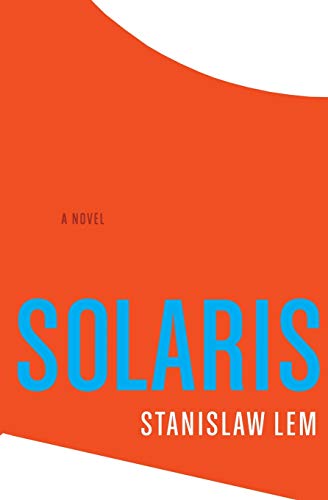
Solaris is the greatest Polish novel of the twentieth century and a strong argument for the greatest science fiction novel in any language. A team of scientists orbits a planet covered entirely by a vast ocean that may be a single living organism. The ocean has started producing physical manifestations of the researchers' deepest psychological wounds, people long dead appearing in their quarters as perfect, bewildered replicas. Lem uses this setup to make an argument that is still devastating: that humanity's entire concept of "first contact" is narcissistic, that we cannot conceive of an intelligence genuinely alien to our own, that we will always project our own psychology onto the unknown rather than confronting actual otherness. Two film adaptations exist (Tarkovsky's 1972 version is a masterpiece in its own right). Neither captures the full weight of the novel.
Flights by Olga Tokarczuk (2017, translated 2017)
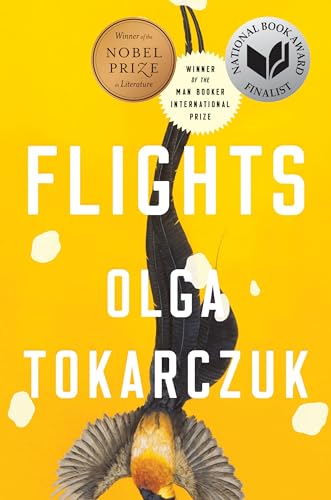
Flights won Tokarczuk the Nobel Prize in Literature in 2018. It is a fragmented novel built from short meditations, stories, and observations, all organized around the idea of movement: travel, the anatomy of the human body, the transit of time. Tokarczuk refuses conventional narrative and the effect is cumulative rather than linear. By the end, you have been inside a sustained argument about what it means to be a self in motion through the world. Her later novel The Books of Jacob (about an eighteenth-century Jewish mystic who claimed to be the Messiah) is even more ambitious, but Flights is the right entry point.
Ferdydurke by Witold Gombrowicz (1937)
Published two years before the Nazi invasion, Ferdydurke is a savagely funny novel about a thirty-year-old man who wakes up to find himself transformed back into a schoolboy and forced to attend school again. The satire targets every form of social coercion: the school, the progressive bourgeois family, the country gentry, and especially the way culture forces people into roles and "immaturity" as a form of social control. Gombrowicz spent most of his adult life in exile in Argentina and his work remained banned in communist Poland, which tells you everything about how threatening his ideas were to authority. He is one of the great comic writers of the century and still underread outside of literary circles.
The Street of Crocodiles by Bruno Schulz (1934)
Schulz was a Jewish Polish writer who worked as an art teacher in a small town in eastern Galicia (now Ukraine). His two story collections, The Street of Crocodiles and Sanatorium Under the Sign of the Hourglass, describe a mythologized version of his childhood town through a child's hallucinatory perception. The father is a recurring figure, a deranged visionary who experiments with creating life from mannequins and cloth. The prose is dense and transformative in a way that influenced magical realism far beyond Poland's borders. Schulz was shot dead in the street by a Gestapo officer in 1942. The manuscripts he left behind were largely destroyed. What survived is among the most extraordinary fiction in the language.
This Way for the Gas, Ladies and Gentlemen by Tadeusz Borowski (1948)
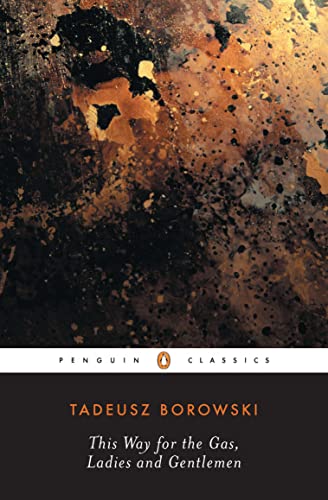
This Way for the Gas, Ladies and Gentlemen is the most brutal book on this list. Borowski survived Auschwitz and wrote these stories from the perspective of a prisoner who has accommodated himself to survival in the camp's terms: helping to process incoming transports, stealing food, looking away. The narrator is not heroic. He is alive. The book's moral horror is exactly that point: that the camp system was designed to implicate its victims in their own degradation, to destroy the possibility of clean conscience along with everything else. These are essential documents. They are also very hard to read.
The Captive Mind by Czeslaw Milosz (1953)
Milosz won the Nobel Prize in 1980. This is his masterwork of non-fiction, written after he defected from communist Poland in 1951. It analyzes how four Polish intellectuals, described under pseudonyms, accommodated themselves to Stalinist ideology, the psychological mechanisms that make intelligent people capable of self-deception at scale. Milosz calls the central mechanism "Ketman," borrowed from a Persian concept of dissimulation: the practice of publicly espousing one belief while privately holding another. Written in 1953, The Captive Mind is still the most precise analysis of intellectual collaboration with authoritarianism ever written. You will recognize every pattern in it from contemporary politics.
The Poetry and Non-Fiction
View With a Grain of Sand by Wislawa Szymborska (1995)
Szymborska won the Nobel Prize in 1996. Her poems are short, precise, and quietly devastating: they approach enormous subjects (death, history, human self-importance) through small specific observations, and the gap between the observation and the implication is where the poetry happens. "We Know Ourselves Only Insofar as We Have Been Tested" begins with a small domestic scene and ends somewhere else entirely. "Nothing Twice" is one of the most affecting poems written in Polish in the century. This collection, translated by Stanislaw Baranczak and Clare Cavanagh, is the best English-language introduction to her work.
The Emperor by Ryszard Kapuscinski (1978)
The Emperor is Kapuscinski's documentary account of the court of Ethiopian emperor Haile Selassie, assembled from interviews with former servants and courtiers after his overthrow. It reads as a meditation on absolute power, on the rituals that maintain it, and on what happens when those rituals collapse. Kapuscinski was the greatest Polish journalist of the twentieth century and he understood that the most revealing way to write about power was from the perspective of the people whose entire existence was organized around serving it. The book was also widely read in communist Poland as an allegory for the Polish government, which was not accidental.
Pan Tadeusz by Adam Mickiewicz (1834)
Poland's national epic, written in exile by the country's greatest Romantic poet. Set in Lithuania in 1811 and 1812, it describes the life of the Polish-Lithuanian noble class in the final years before Napoleon's Russian campaign, which the Poles had hoped would restore their lost country. The verse is formal and ornate and the best English translation (by Kenneth Mackenzie) preserves its music. Pan Tadeusz is the book every Polish child reads in school. It is also genuinely great literature: the scenes of daily life, the descriptions of landscape, and the comic subplots involving property disputes and mushroom-gathering are as vivid as anything in the Romantic tradition.
Shielding the Flame by Hanna Krall (1977)
Marek Edelman was the last surviving leader of the 1943 Warsaw Ghetto Uprising, the insurrection by Jewish fighters that held German forces at bay for nearly a month with improvised weapons. Krall conducted long interviews with him, and the result is a documentary novel that refuses to mythologize the uprising or its survivors. Edelman is precise, unsentimental, and sometimes deliberately deflating about heroism. He wanted to survive, he says, not because he expected it to matter, but because he was not ready to die. The book is short. It is one of the most important documents of the Holocaust in any language.
The World of Yesterday by Stefan Zweig (1942)
Zweig was Austrian, not Polish, but his memoir of the Jewish Central European world before 1914 is essential context for understanding Schulz, Borowski, Milosz, and the entire Central European literary tradition that was destroyed by the war. He describes a world of shared culture, multilingualism, and cosmopolitan ambition that existed across Vienna, Warsaw, Prague, and Krakow. That world was comprehensively eliminated. Zweig finished the memoir in Brazilian exile in 1942, mailed it to his publisher, and killed himself with his wife the same night. Reading it alongside the Polish literature above gives you the full shape of what was lost.
Quo Vadis by Henryk Sienkiewicz (1896)
Sienkiewicz won the Nobel Prize in 1905, the first Polish writer to do so. This novel, set in Nero's Rome and following the early Christian community through the persecution and fire, was enormously popular across Europe at the time of publication and was read in Poland as an allegory for Polish resilience under partition: a people whose culture and faith outlast the empire trying to destroy them. It is a more conventional historical novel than everything else on this list, but it is beautifully constructed and the Rome Sienkiewicz builds feels as real as anything in Hilary Mantel.
Where to Start
If you have not read any Polish literature, start with Solaris. It requires no prior context, it is the most purely pleasurable reading experience on the list, and its central argument about the limits of human understanding is the argument that runs through all of Polish literature in different forms.
Then read This Way for the Gas and The Captive Mind together. They are the two poles of the twentieth century Polish experience: what the Nazi system did to bodies, and what the Soviet system did to minds. Everything else on the list becomes richer once you have those two reference points.
Flights is where to go after that, if you want to see what Polish literature looks like when it has processed all of that history and arrived somewhere genuinely new.
Your next good book, in your inbox
We only write when we find a book worth your time. Hand-picked recommendations across history, mythology, true crime and more.
Are you an author?
Get your book in front of readers like these, for free.
- Free book listing →Your own book page with an Amazon button
- Author page →Photo, bio and links to your site
- Featured placement →A spot in our best-of lists, from €29
Free tools we recommend
Get free honest reviewsReview exchange on iWrity, free to join
Books You Might Like

It Ends with Us: A Novel
Colleen Hoover

The Seven Husbands of Evelyn Hugo: A Novel
Taylor Jenkins Reid

The Song of Achilles
Madeline Miller
