Best Postmodern Literature Books 2026: Fragmented Narratives and Reality Unraveled
Postmodern literature demands active reading. These novels do not offer comfortable escape into imaginary worlds; instead, they force readers to confront how meaning is constructed through language and narrative convention. They feel fragmented because they mirror the fragmentation of modern consciousness itself. They are playful because they refuse the pretense that art offers truth separate from the act of creation.
Gravity's Rainbow by Thomas Pynchon
THOMAS Pynchon's Gravity's Rainbow is the canonical American postmodern novel. Published in 1973, it follows multiple characters across continents in the final months of World War II and its aftermath, tracking the development of rocket technology and the paranoid systems of control it represents. The novel is encyclopedic, digressive, sometimes incomprehensible, and dazzling.
Pynchon's prose moves between high seriousness and absurdist comedy. Sentences spiral into footnoted asides. Plot dissolves into pattern recognition and conspiracy thinking. The novel never fully resolves what is happening or why. But this disorientation is the point. Pynchon captures the texture of modern consciousness, where systems are too complex to grasp, information is fragmented, and paranoia seems like the only rational response. Gravity's Rainbow is difficult, but it is a towering achievement that continues to reward careful reading. It is the summit of postmodern fiction.
Buy Gravity's Rainbow on Amazon
If on a winter's night a traveler by Italo Calvino
ITALO Calvino's novel directly addresses you as "reader" and plunges you into the beginning of ten different novels. The second chapter returns to the first novel, the fourth chapter goes deeper into the second novel, and so forth, interleaving multiple stories across multiple genres. The frame narrative concerns your struggle to read and understand, constantly interrupted by textual glitches and false starts.
Calvino's novel is playful rather than dark. It is an exploration of what reading is and how narrative structure shapes experience. It celebrates the pleasure of stories even as it deconstructs them. Unlike the difficult opacity of Pynchon, Calvino invites the reader to enjoy the puzzle. The novel becomes a game you play with the author, and the entertainment comes from the game itself. If you want to experience postmodern literature that is experimental yet genuinely fun, Calvino is your entry point.
Buy If on a winter's night a traveler on Amazon
Ficciones by Jorge Luis Borges
JORGE Luis Borges's short story collection contains some of the most influential postmodern fiction ever written. The stories are brief but densely packed with ideas. "The Library of Babel" describes an infinite library containing all possible books, most of them gibberish. "The Garden of Forking Paths" presents a detective story that is also a meditation on parallel narratives and time. "Tlön, Uqbar, Orbis Tertius" imagines an imaginary world becoming real through the power of language.
Borges invented many techniques that later postmodern writers adopted. His stories are metafictional and philosophical. They play with narrative perspective and the boundary between fiction and reality. They are short enough to read quickly but dense enough that rereading reveals new layers. Borges influenced Pynchon, Calvino, and virtually every postmodern writer who followed. His work proves that postmodern experimentation can be elegant rather than ponderous.
House of Leaves by Mark Z. Danielewski

MARK Danielewski's House of Leaves is a postmodern novel in physical form. The story concerns a man living in a house that is larger on the inside than on the outside, producing impossible spaces. The narrative is told through multiple narrators including the narrator, the narrator's girlfriend, and a scholar investigating a documentary about the house. The text itself is fractured across multiple columns, footnotes extend for pages, and the novel includes appendices of information.
House of Leaves is challenging in ways both intellectual and physical. Reading it requires constantly flipping between main text and footnotes, sometimes reading footnotes that reference other footnotes. This structural difficulty mirrors the disorientation of the protagonist exploring impossible spaces. The novel asks whether language itself can represent experiences that exceed normal perception. It is an ambitious, sometimes frustrating, deeply rewarding work that uses the form of the book itself as a primary artistic medium.
The Pale King by David Foster Wallace
DAVID Foster Wallace's unfinished novel (completed posthumously by editors) follows IRS agents navigating bureaucracy, consciousness, and the search for meaning in American administrative systems. Like Gravity's Rainbow, it is encyclopedic and digressive, filled with footnotes and asides that rival the main text in length. Wallace moves between narrative third-person and direct address to the reader, multiple perspectives on consciousness, and extremely long sentences that track the architecture of human thought.
The Pale King is Wallace's meditation on attention itself. He argues that the capacity to pay attention to boring, bureaucratic reality is where genuine freedom and self-awareness reside. The novel is deliberately tedious because Wallace insists that literary beauty can emerge from the quotidian. It is difficult, but the difficulty is intentional and connected to his philosophical argument. Wallace represents postmodern literature as an ethical project, not merely formal experimentation.
Molloy by Samuel Beckett
SAMUEL Beckett's trilogy beginning with Molloy presents consciousness fragmenting in real time. The novel is narrated by an old man in a ditch trying to remember his life. His memories are unreliable, his narrative interrupts itself, and he frequently contradicts what he said before. The narrative form matches the content: if consciousness is fragmentary, then the novel should be fragmented.
Beckett's work comes before much postmodern theory and anticipates it. His novels show that modernist consciousness, which sought to represent the stream of mind, still pretended to capture something. Beckett's narrators are more honest about the impossibility of representation. They know they are lying, forgetting, and distorting, and they tell you so. The spare, repetitive prose creates a reading experience that resembles despair, confusion, and dark comedy all at once. Beckett is the dark prophet of postmodern literature.
Slaughterhouse-Five by Kurt Vonnegut
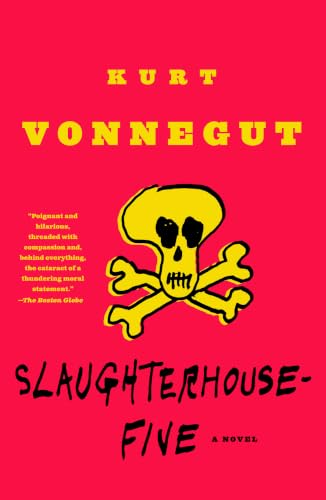
KURT Vonnegut's novel about bombing Dresden is postmodern in structure if not in explicit self-consciousness. Billy Pilgrim becomes "unstuck in time," experiencing moments from his life in random order: his present moments, his past, his presumed future on an alien planet. The novel refuses to organize these moments into a linear narrative or give them coherent meaning.
Vonnegut uses this fractured narrative to represent trauma. The randomness is not clever formal experimentation but a representation of how catastrophic experience scrambles time and consciousness. The novel is funny and heartbreaking, accessible and deeply profound. It shows that postmodern form need not be difficult or self-congratulatory but can serve profound emotional and ethical purposes. Vonnegut's famous line "And so it goes," repeated throughout, becomes a postmodern shrug at meaning and mortality.
Buy Slaughterhouse-Five on Amazon
Making Meaning From Fragmentation
Postmodern literature is not for everyone, and that is part of its integrity. These novels refuse to be comfortable or universally accessible. They are experiments in form that force readers to participate in meaning-making rather than passively receiving stories. They can be frustrating, bewildering, occasionally infuriating. But they also capture something true about modern consciousness: that experience is fragmented, that meaning is constructed rather than discovered, and that literature should acknowledge these facts rather than pretend otherwise. If you are willing to be challenged, postmodern literature offers rewards that conventional narrative cannot match.
Your next good book, in your inbox
We only write when we find a book worth your time. Hand-picked recommendations across history, mythology, true crime and more.
Are you an author?
Get your book in front of readers like these, for free.
- Free book listing →Your own book page with an Amazon button
- Author page →Photo, bio and links to your site
- Featured placement →A spot in our best-of lists, from €29
Free tools we recommend
Get free honest reviewsReview exchange on iWrity, free to join
Books You Might Like

It Ends with Us: A Novel
Colleen Hoover

The Seven Husbands of Evelyn Hugo: A Novel
Taylor Jenkins Reid

The Song of Achilles
Madeline Miller

Educated: A Memoir
Tara Westover