Best Psychology Books That Will Change How You Think (2026)
There is a specific kind of reading experience that good psychology books produce: you finish a chapter and then think about everyone you know differently. The mechanisms that drive human behaviour, the shortcuts your brain takes under pressure, the ways social context overrides rational thought without you noticing, these are not abstract ideas once a good writer gets hold of them. The books on this list are not self-help. They are evidence-based psychology, written for general readers, that changes the questions you ask about why people do what they do.
Why Most Psychology Bestsellers Disappoint
The category has a serious quality problem. Pop psychology shelves fill quickly with books that cherry-pick one striking study, build an entire worldview on top of it, and never mention the replication crisis that undermined half of social psychology between 2010 and 2020. The books that hold up are the ones grounded in robust, replicated findings or in the author's own clinical or research work across decades. This list applies that filter. You will not find the Stanford Prison Experiment cited uncritically here, because the original study was methodologically compromised in ways its author did not disclose at the time. Good psychology reading means learning to notice that kind of gap.
Start With Thinking, Fast and Slow
Daniel Kahneman's Thinking, Fast and Slow is the single most important psychology book published in the last thirty years. Kahneman, a Nobel laureate in economics, lays out the two-system model of human cognition: System 1 (fast, automatic, pattern-based) and System 2 (slow, deliberate, effortful). Every cognitive bias you have ever heard about, anchoring, the halo effect, availability bias, fits into this framework. The book is long, but every chapter adds something. If you read only one book on this list, this is the one.
Social Influence: How Other People Shape Your Decisions
- Influence: The Psychology of Persuasion by Robert Cialdini. Cialdini spent years studying compliance professionals, salespeople, fundraisers, and con artists. The six principles he identified (reciprocity, commitment, social proof, authority, liking, scarcity) are the most widely applied framework in behavioural science. The 2021 revised edition adds a seventh principle (unity) and updates the research throughout.
- The Tipping Point by Malcolm Gladwell. Some of Gladwell's research claims have aged poorly, but as an introduction to how social change spreads, the connectors-mavens-salespeople framework still generates useful questions. Read it alongside Kahneman to know when to trust Gladwell's anecdotes and when to push back.
Decision-Making Under Uncertainty
Richard Thaler and Cass Sunstein's Nudge applies Kahneman's framework to policy and personal decision-making. The central claim is that default choices do most of the work in shaping behaviour, and that changing defaults (opt-out organ donation, automatic pension enrolment) changes outcomes far more reliably than education campaigns. Thaler won the Nobel Prize in 2017 partly based on the research in this book.
Annie Duke's Thinking in Bets is the practitioner's companion. Duke is a former professional poker player and decision coach, and her core argument is that good decisions and good outcomes are not the same thing. Learning to separate process from result is the skill most people never develop because the feedback loops in ordinary life are too slow and noisy.
The Dark Side: When Psychology Explains Cruelty
Philip Zimbardo's The Lucifer Effect: Understanding How Good People Turn Evil revisits the Stanford Prison Experiment with the benefit of hindsight, including the critiques of his methodology. It is less a defence of the study than a serious examination of situational factors in human cruelty. Paired with Stanley Milgram's classic obedience research and Hannah Arendt's concept of the banality of evil, it belongs on every serious psychology reading list even if the original experiment was flawed.
For the neuroscience of violence and psychopathy without sensationalism, Robert Hare's Without Conscience: The Disturbing World of the Psychopaths Among Us is the standard clinical text written for a general audience. Hare developed the PCL-R psychopathy checklist still used in courts and prisons worldwide.
The Books That Fix Everyday Blind Spots
- The Intelligence Trap by David Robson. Robson's central finding is counterintuitive: higher measured intelligence correlates with a greater tendency toward certain reasoning errors, because intelligent people are better at rationalising conclusions they already hold. The book changed how I think about expertise.
- Think Again by Adam Grant. Grant's research on rethinking and intellectual humility is the most practically useful psychology book published since Kahneman. The chapter on the confident-not-certain mindset is worth the price of the book alone.
How to Use This Reading List
Start with Kahneman for the framework, then Cialdini for social mechanisms, then Nudge for real-world application. If you want the dark end of the spectrum, add Hare. If you want practical decision improvement, add Duke and Grant. The books layer. Each one makes the previous ones richer. For the historical and social dimensions of group behaviour, the Skriuwer history shelf has dozens of titles that show these psychological principles playing out across centuries.
Your next good book, in your inbox
We only write when we find a book worth your time. Hand-picked recommendations across history, mythology, true crime and more.
Are you an author?
Get your book in front of readers like these, for free.
- Free book listing →Your own book page with an Amazon button
- Author page →Photo, bio and links to your site
- Featured placement →A spot in our best-of lists, from €29
Free tools we recommend
Get free honest reviewsReview exchange on iWrity, free to join
Books You Might Like
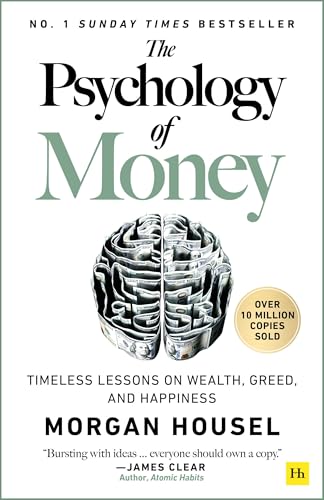
The Psychology of Money
Morgan Housel

Thinking, Fast and Slow
Daniel Kahneman

Man's Search for Meaning
Viktor E. Frankl

The Body Keeps the Score
M.D. Bessel van der Kolk