Best Psychology Books 2026: Understanding Mind and Behavior
Psychology reveals why we think, feel, and act. These books take you inside the human mind, showing the mechanics of decision-making, memory, trauma, and connection. They answer questions about yourself and others.
Thinking, Fast and Slow by Daniel Kahneman

Kahneman won the Nobel Prize for work on cognitive psychology. This book breaks down how our minds work in two systems: fast, intuitive thinking and slow, deliberate reasoning. You'll discover why you make predictable mistakes, how your brain shortcuts can deceive you, and the psychology behind risk-taking.
The book is research-dense but deeply rewarding. Kahneman shows why we trust people who remind us of ourselves, how anchoring numbers affect judgment, and why you overestimate your own abilities. Perfect for anyone who wants to understand their own biases.
Link: Thinking, Fast and Slow on Amazon
The Man Who Mistook His Wife for a Hat by Oliver Sacks
Sacks was a neurologist who became a storyteller. This collection of case studies explores people with extraordinary neurological conditions: a man who loses all sense of his own body, a woman who hears music that isn't there, a child who cannot grow beyond the intellectual age of five. Each story is a window into how the brain constructs reality, identity, and meaning.
The power lies in how Sacks treats his patients. He never mocks or sensationalizes. Instead, he finds the logic, the creativity, the humanity inside each condition. You'll finish the book with new respect for how fragile and miraculous the mind is.
Link: The Man Who Mistook His Wife for a Hat on Amazon
Emotional Intelligence by Daniel Goleman

Goleman argues that IQ is not destiny. Your emotional intelligence, your ability to recognize feelings and handle them wisely, predicts success better than any test score. He explores self-awareness, managing impulses, empathy, and social skill, and shows how these capacities develop.
The book challenges the myth of the purely rational thinker. Goleman shows how emotions guide survival, that suppressing feelings damages you, and how emotional literacy can transform relationships and careers. It's practical psychology with immediate application to your own life.
Link: Emotional Intelligence on Amazon
Attached by Amir Levine and Rachel Heller
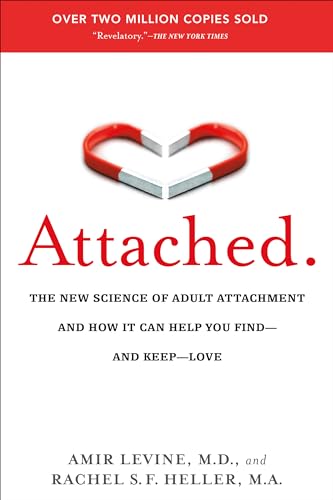
This book applies attachment theory, originally developed to explain how infants bond with parents, to adult romantic relationships. The authors identify three attachment styles: secure, anxious, and avoidant. Your style shapes who you choose, how you argue, and whether relationships thrive or collapse.
Unlike pop psychology, Attached is grounded in 25 years of research. It explains why you sabotage good relationships, how to recognize incompatible attachment styles early, and why some couples fight but never truly disconnect. If you've ever wondered why you repeat the same patterns in love, this answers why.
Link: Attached on Amazon
Games People Play by Eric Berne
Berne created Transactional Analysis, a system for understanding social interactions. Every conversation is a "game," a predictable set of hidden motives and responses. He names them: NIGYSOB (Now I've Got You, You Son of a Bitch), Kick Me, Rapo. Understanding these games reveals why people sabotage themselves and how to stop playing.
The book is slim but loaded. You'll recognize patterns in your own arguments, friendships, and workplace drama. Once you see the game, you can choose not to play. It's armoring for your psychology, a how-to for spotting manipulation, including your own.
Link: Games People Play on Amazon
The Lucifer Effect by Philip Zimbardo

Zimbardo conducted the Stanford Prison Experiment. He wanted to understand how ordinary people become perpetrators of evil. This book revisits that infamous study, explains why it happened, and then extracts the psychology that applies to torture, war crimes, and everyday cruelty.
Zimbardo's thesis is radical: there is no "evil person," only a situation designed to evoke evil behavior. He shows how institutions, group pressure, and dehumanization transform good people into willing participants in harm. For anyone trying to understand history, politics, or human nature, this is essential.
Link: The Lucifer Effect on Amazon
Influence by Robert Cialdini

Cialdini spent years observing people who persuade for a living: salespeople, con artists, recruiters, fundraisers. He extracted six principles they all use: reciprocity, commitment and consistency, social proof, authority, liking, and scarcity. Once you know these, you see them everywhere.
This is a defense manual against manipulation, but also a guide to ethical persuasion. Cialdini shows how these principles work on you, why your brain falls for them, and how to protect yourself. Essential reading for anyone navigating marketing, politics, or relationships.
Link: Influence on Amazon
The Righteous Mind by Jonathan Haidt

Haidt asks: why do people with opposite political views seem so morally blind to each other? He discovered that moral psychology is not about reason but about intuition. We feel first, then rationalize after the fact. The book maps the moral foundations that divide Left and Right, and shows why each side is partially right but incomplete.
It's a bridge book, designed to help liberals understand conservatives and vice versa. Haidt shows that fairness, loyalty, sanctity, and authority trigger moral outrage differently depending on where you sit. If you want to understand polarization, this is the best map.
Link: The Righteous Mind on Amazon
Why These Books Matter
Psychology books do more than explain behavior. They arm you with language for your own experience. When you read about attachment styles, you recognize yourself. When you learn about cognitive biases, you spot them in your own thinking. When you understand how groups create conformity, you resist it more consciously.
The books above span different branches: cognitive psychology, neurology, social psychology, moral psychology. Each one deepens your literacy in human nature. Together, they form a toolkit for understanding yourself and others more clearly.
Your next good book, in your inbox
We only write when we find a book worth your time. Hand-picked recommendations across history, mythology, true crime and more.
Are you an author?
Get your book in front of readers like these, for free.
- Free book listing →Your own book page with an Amazon button
- Author page →Photo, bio and links to your site
- Featured placement →A spot in our best-of lists, from €29
Free tools we recommend
Get free honest reviewsReview exchange on iWrity, free to join
Books You Might Like

It Ends with Us: A Novel
Colleen Hoover

The Seven Husbands of Evelyn Hugo: A Novel
Taylor Jenkins Reid

The Song of Achilles
Madeline Miller

Educated: A Memoir
Tara Westover