Best Psychology Books in 2026: 12 That Explain Why We Do What We Do
Psychology has never resolved a fundamental tension: between the scientific tradition, which values controlled experiments and replicable findings, and the humanistic tradition, which values the depth and complexity of individual experience. The books that have most influenced how ordinary people think about themselves tend to come from the humanistic tradition, even when the scientific tradition's findings are more reliable.
Here are 12 essential psychology books that illuminate both approaches.
1. William James's The Principles of Psychology (1890)
The founding text of modern psychology. James writes with clarity and sophistication about consciousness, emotion, habit, and the self. He introduces the concept of the stream of consciousness, the flowing, continuous nature of thought. Find The Principles of Psychology on Amazon.
James is pragmatist. Psychology should explain how the mind actually works in the world, not reduce it to component parts. The book remained the standard psychology textbook for decades. James's insights about habit (we are creatures of habit, and habits shape our lives) remain more useful than most modern psychological research.
2. Sigmund Freud's The Interpretation of Dreams (1900)
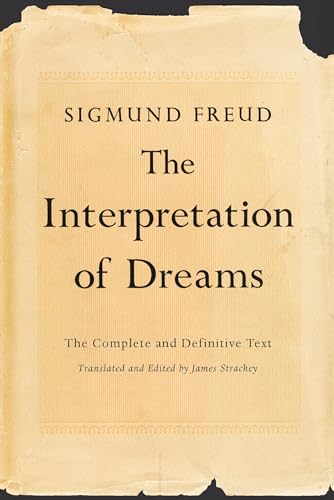
The most important wrong book in psychology. Freud argues that dreams are wish fulfillment, that they express unconscious desires in disguised form. The dream-work is the process by which unconscious wishes are transformed into dream imagery. Find The Interpretation of Dreams on Amazon.
Freud's theory is now understood to be mostly false. But the book introduced the concept of the unconscious mind, the idea that much of mental life is hidden from consciousness. This is true and important even if Freud's specific theories about what is in the unconscious are wrong. The book remains worth reading as a founding text of depth psychology.
3. Carl Jung's Memories, Dreams, Reflections (1962)
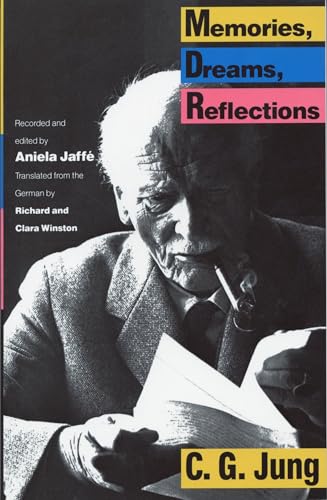
Jung's autobiography, in which he discusses the collective unconscious, archetypes, and the deeper meaning of psychological symbols. Jung believed that humans share psychological patterns beyond personal experience, inherited from humanity's past. Find Memories, Dreams, Reflections on Amazon.
Jung is more speculative than Freud, less tied to empirical verification. But his insights about meaning, symbolism, and the necessity of psychological integration remain influential. The book is less a scientific work than a philosophical meditation on the human psyche.
4. B.F. Skinner's Beyond Freedom and Dignity (1971)
The most controversial psychology book. Skinner is a radical behaviorist. He argues that concepts like freedom and dignity are illusions. Human behavior is determined by reinforcement and punishment. We are shaped by our environment. Find Beyond Freedom and Dignity on Amazon.
Skinner's conclusions are disturbing: if behavior is entirely determined, then punishment and moral responsibility make no sense. But his observations about how behavior is shaped by reinforcement are accurate. The book provokes because it challenges cherished assumptions about human autonomy. Whether we are as determined as Skinner claims is still debated.
5. Abraham Maslow's Motivation and Personality (1954)
Maslow proposes the hierarchy of needs: physiological, safety, belonging, esteem, self-actualization. Lower needs must be satisfied before higher ones. Self-actualization (becoming your fullest self) is the highest need. Find Motivation and Personality on Amazon.
Maslow's hierarchy is presented in textbooks as gospel. The original version is more nuanced. But the idea that humans have intrinsic psychological needs beyond mere survival, that we are motivated by meaning and growth, not just survival, remains influential. Maslow founded positive psychology before it had a name.
6. Robert Cialdini's Influence (1984)
Cialdini identifies six principles of social influence: reciprocity, commitment and consistency, social proof, authority, liking, and scarcity. These are mechanisms by which people persuade others to change behavior or belief. Find Influence on Amazon.
Cialdini is analyzing influence, not promoting it. But the book shows how predictable human psychology is, how we follow simple rules rather than thinking carefully. The principles work even when we know they are being used on us. The book is important for understanding consumer behavior, marketing, and social manipulation.
7. Philip Zimbardo's The Lucifer Effect (2007)

Zimbardo's analysis of the Stanford Prison Experiment, his famous (and now controversial) study in which psychology students assigned to be "guards" in a simulated prison became abusive while students assigned to be "prisoners" became passive and depressed. Find The Lucifer Effect on Amazon.
Zimbardo argues that the situation, not the person, determines behavior. Good people placed in bad situations become bad actors. This is an important counterweight to personality psychology, which emphasizes individual differences. The book addresses the question: how do ordinary people become perpetrators of evil? (Though the experiment itself has been heavily criticized for methodological problems.)
8. Martin Seligman's Learned Optimism (1991)
Seligman describes his research on learned helplessness and learned optimism. When people experience uncontrollable negative events, they become helpless, depressed, passive. But they can learn optimism by changing how they explain events. Find Learned Optimism on Amazon.
The key insight: explanatory style matters. Do you attribute bad events to internal, stable, global causes (I am a failure) or external, temporary, specific ones (this particular situation did not work out)? Optimists adopt the latter interpretation. Seligman's research on positive psychology and well-being influenced how psychology thinks about mental health, not just illness.
9. Jonathan Haidt's The Righteous Mind (2012)

Haidt studies moral psychology and finds that moral judgments are intuitive, not rational. We feel something is right or wrong, then we construct reasons. The rider (reason) serves the elephant (intuition). Find The Righteous Mind on Amazon.
Haidt applies this to politics. Liberals and conservatives prioritize different moral foundations (care, fairness, loyalty, authority, sanctity, liberty). Neither side understands the other because they are operating from different moral intuitions. The book helps explain why reasonable people disagree about politics. It is not that one side is right and the other stupid; they are responding to different moral signals.
10. Albert Bandura's Social Learning Theory (1977)
Bandura introduces the concept of self-efficacy: your belief in your ability to succeed. Self-efficacy is a better predictor of achievement than actual ability. People with high self-efficacy persist; those with low self-efficacy give up. Find Social Learning Theory on Amazon.
Bandura also studies observational learning: you learn by watching others. This simple insight has enormous implications for education, parenting, and social change. If people learn by observation, then role models matter. The book shows how social context shapes psychology.
11. Bessel van der Kolk's The Body Keeps the Score (2014)

Van der Kolk studies trauma and argues that trauma is stored in the body, not just the mind. Traumatized people experience bodily sensations that replay the trauma. Talk therapy alone is insufficient. Somatic therapies (movement, dance, massage) matter. Find The Body Keeps the Score on Amazon.
The book is less rigorous than other works on this list (some of van der Kolk's claims are overstated). But it addresses something real: trauma affects physiology, not just psychology. The body and mind are not separate. This has influenced thinking about trauma treatment and evidence for somatic approaches.
12. The Central Tension Across All These Books
Psychology has never resolved whether human nature is determined (shaped by forces beyond our control) or free (capable of choice and transformation). Skinner says determined. James and Maslow emphasize agency and potential. Most psychologists today occupy the middle ground: we are shaped by our past, our environment, our biology, but we also have some capacity to choose and change.
The humanistic tradition (James, Maslow, Seligman) emphasizes what is possible, what we can become. The scientific tradition emphasizes what is measurable and replicable. Both matter. The scientific tradition keeps us honest. The humanistic tradition keeps us hopeful.
The books that have shaped how people think about themselves (Freud, Jung, Maslow) are often those that speak to meaning and possibility, not just mechanism. But the most reliable findings (about bias, conditioning, social influence) come from the more rigorous scientific approach.
Further reading: Psychology is useful not because it gives final answers about why we do what we do, but because it offers frameworks for understanding ourselves and others. These books provide those frameworks, even when they disagree.
Amazon affiliate links: https://amazon.com/s?k=psychology+human+behavior+books&tag=31813-20
Your next good book, in your inbox
We only write when we find a book worth your time. Hand-picked recommendations across history, mythology, true crime and more.
Are you an author?
Get your book in front of readers like these, for free.
- Free book listing →Your own book page with an Amazon button
- Author page →Photo, bio and links to your site
- Featured placement →A spot in our best-of lists, from €29
Free tools we recommend
Get free honest reviewsReview exchange on iWrity, free to join
Books You Might Like

It Ends with Us: A Novel
Colleen Hoover

The Seven Husbands of Evelyn Hugo: A Novel
Taylor Jenkins Reid

The Song of Achilles
Madeline Miller

Educated: A Memoir
Tara Westover