Best Quantum Physics Books 2026: Understanding the Subatomic World
Published 2026-06-11·9 min read
# Best Quantum Physics Books 2026: Understanding the Subatomic World
At the smallest scales, reality works nothing like everyday experience suggests. Particles exist in superposition until measured. Entangled particles affect each other instantaneously across distances. Energy comes in discrete packets. Probability replaces certainty. Even the act of observation shapes what you observe.
This is quantum mechanics. It governs atoms, electrons, photons, and everything inside them. It explains chemistry, materials science, electronics, and nuclear physics. It's perhaps the most successful theory in history, generating predictions accurate to extraordinary decimal places. Yet it remains fundamentally weird. Even physicists disagree about what it really means.
The best quantum physics books explain the science precisely while remaining accessible. They show why quantum thinking contradicts intuition and why that intuition fails at quantum scales. They explore interpretations of what quantum mechanics reveals about reality. And they demonstrate why quantum physics matters practically and philosophically.
## The Quantum World by Kenneth W. Ford
Ford's 1984 book remains one of the clearest introductions to quantum mechanics. He explains why classical physics fails at atomic scales, what quantum mechanics is, and what it reveals about reality. He does this almost entirely in prose, with minimal math.
Ford starts by showing why physicists needed quantum mechanics. Classical physics predicted that atoms should collapse instantly, that light from hot objects should follow absurd patterns (the ultraviolet catastrophe), that many chemical properties shouldn't exist. Experiment contradicted classical prediction. Something was fundamentally wrong.
Planck's quantum hypothesis saved the theory. Energy comes in discrete packets called quanta. Bohr's model explained hydrogen atoms using quantum ideas. Heisenberg's uncertainty principle showed that certainty has limits. Schrodinger's wave equation described probability rather than position.
What makes Ford's book essential is how he explains these ideas intuitively. He uses analogies carefully. He explains the difference between classical probability (coin flips) and quantum probability (genuine indeterminacy). He doesn't pretend quantum mechanics is intuitive, but he makes it comprehensible. After Ford, quantum mechanics stops feeling like mystical nonsense and becomes a logically consistent framework that happens to differ radically from everyday experience.
[Read The Quantum World on Amazon](https://www.amazon.com/Quantum-World-Surprising-Insights-Worlds/dp/0674741765/?tag=skriuwer-20)
## The Order of Time by Carlo Rovelli
Rovelli's 2018 book explores how quantum mechanics and relativity reveal that time isn't what we think. It flows at different rates in different places. It has no inherent direction. Our experience of past, present, and future emerges from statistical mechanics and entropy, not from time's fundamental nature.
This might sound abstract, but Rovelli grounds it in physics. He explains how Einstein showed time is relative. How thermodynamic arrow of time emerges from molecular disorder. How quantum mechanics suggests time might not be fundamental at all. He explores how our intuitions about causality, memory, and duration fail to capture time's actual nature.
Rovelli is a theoretical physicist writing for general audiences. He assumes no physics background but expects intellectual engagement. He moves carefully through implications. Time as humans experience it is real, but it emerges from deeper processes. It's not fundamental to physics. That realization changes how you think about causality, history, and change.
The Order of Time connects quantum physics to philosophy. It addresses why reality feels like it flows through time when physics suggests time is an illusion. It explores how consciousness might relate to arrow of time. It's deeply thoughtful science writing that respects both precision and philosophical seriousness.
[Read The Order of Time on Amazon](https://www.amazon.com/Order-Time-Carlo-Rovelli/dp/0735216533/?tag=skriuwer-20)
## Quantum Mechanics: The Theoretical Minimum by Leonard Susskind
Susskind offers a middle ground between popular science and technical textbook. He explains the mathematics of quantum mechanics without requiring advanced background. He derives key results rather than just stating them. And he does this clearly, with physical intuition guiding the math.
Susskind covers the essential framework: state vectors, observables, operators, Schrodinger's equation, measurements, and superposition. He explains what these mean mathematically and physically. He shows how the math captures physical reality. He demonstrates why quantum mechanics is the way it is rather than some other possibility.
What distinguishes Susskind is that he treats physics as something to understand deeply, not just memorize. He shows why quantum mechanics has the structure it does. He explains what the theory commits you to. And he does it in prose and math that builds understanding gradually.
The book is challenging. It requires genuine engagement. But it's worth the effort. After Susskind, you understand quantum mechanics genuinely, not just superficially. You can think clearly about quantum systems and implications of the theory.
## Entanglement by Amir Aczel
Aczel focuses on quantum entanglement, perhaps the most mysterious quantum phenomenon. When two particles interact, they become entangled. Afterward, measuring one particle instantaneously affects the state of the other, regardless of distance. Einstein called this "spooky action at a distance" and thought it revealed quantum mechanics was incomplete.
Aczel traces the history of entanglement from Einstein's skepticism through Bell's theorem (proving no local hidden-variable theory can match quantum predictions) to modern experiments confirming quantum weirdness. He explains the physics clearly, then explores implications.
Entanglement violates classical intuitions about locality and causation. Something happening here instantaneously affects something far away. This seems impossible. Yet experiments confirm it repeatedly. Aczel explains how this is possible without violating relativity. The correlation is real, but information cannot be transmitted faster than light.
The book demonstrates how quantum physics forces us to rethink fundamental concepts. Locality fails. Realism fails (in the technical sense that properties don't have definite values before measurement). Yet the theory works spectacularly well. Aczel explores this tension between quantum weirdness and quantum success.
[Read Entanglement on Amazon](https://www.amazon.com/Entanglement-Greatest-Mystery-Physics-Deepak/dp/0399532331/?tag=skriuwer-20)
## A Brief History of Quantum Mechanics by JP McEvoy and Oscar Zarate
This graphic novel presents quantum mechanics through images and dialogue. Descartes, Newton, Maxwell, Planck, Einstein, Bohr, Heisenberg, and Schrodinger appear as characters discussing their discoveries. The narrative traces how quantum ideas emerged and what physicists disagreed about.
The graphic format has real advantages. Visual explanations of concepts like superposition, uncertainty, and complementarity work better as diagrams than as prose. The historical narrative shows how quantum mechanics emerged from puzzle and paradox rather than appearing fully formed.
McEvoy and Zarate don't oversimplify. They convey genuine physics through the visual medium. They show intellectual disagreement. Bohr and Einstein had real disputes about what quantum mechanics means. These weren't just personality clashes. They disagreed about fundamental questions. The book presents the debate fairly, explaining why smart physicists reached different conclusions.
The book works for people who find purely verbal explanations difficult. It works for visual learners. It works as a supplement to more technical books, providing visual intuition for abstract concepts. It's readable in one sitting. After it, you understand quantum mechanics' intellectual history and core ideas.
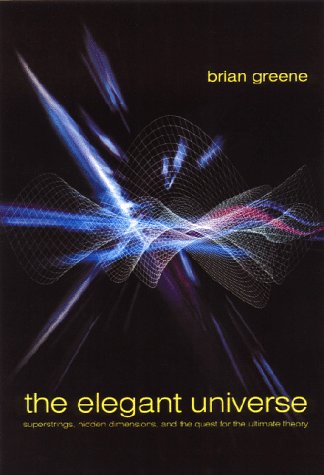
## The Elegant Universe by Brian Greene
Greene's 1999 book introduces string theory and modern physics attempts to unify quantum mechanics with relativity. He explains quantum mechanics thoroughly as foundation, then explores how physicists have tried to go beyond it. Why unify quantum and gravity? What does string theory propose? What would it mean if strings are real?
Greene is exceptionally clear about difficult concepts. He explains quantum field theory, extra dimensions, and string vibrations in accessible prose. He uses analogies carefully and explains their limitations. He distinguishes what's well-established physics from what's speculative.
The Elegant Universe makes clear that quantum mechanics is just the beginning. Physics still doesn't explain gravity at quantum scales. String theory proposes one solution (multiple dimensions, quantized strings). Other approaches exist. Physics is working on the frontiers where quantum mechanics breaks down.
The book shows why physics keeps evolving. Each theory works within its domain but breaks down at extremes. Quantum mechanics works at atomic scales but fails at gravitational strengths. These failures drive physics forward.
[Read The Elegant Universe on Amazon](https://www.amazon.com/Elegant-Universe-Superstrings-Hidden-Dimensions/dp/0393326716/?tag=skriuwer-20)
## The Quantum Mechanical Universe by Kenneth S. Krane
Krane's textbook is actually worth reading. It covers quantum mechanics thoroughly with technical depth but genuine clarity. He explains the mathematical framework, applies it to real systems, and discusses interpretations of what quantum mechanics means.
The book is challenging but manages to be pedagogical. Krane works through problems carefully. He explains not just the what but the why. He shows how quantum mechanics emerges from experimental contradictions with classical physics. He demonstrates how the mathematical framework captures physical reality.
Krane includes substantial discussion of interpretation. The Copenhagen interpretation. The many-worlds interpretation. Hidden-variable theories. Objective collapse models. He explains what each commits you to and what empirical implications differ (if any). This matters because quantum mechanics makes accurate predictions, but physicists genuinely disagree about what it means about reality.
The book requires comfort with mathematics, but doesn't require advanced background. Someone with calculus and basic physics can follow Krane. It's the kind of book that yields deeper understanding with each chapter. You emerge genuinely educated about quantum mechanics.
## Why Quantum Physics Matters
Quantum mechanics is more than abstract theory. It explains how atoms bond, why materials have the properties they do, why chemistry works. Semiconductors, lasers, nuclear power, and medical imaging all depend on quantum mechanics. The quantum tunnel effect, dismissed as impossible, is essential to how electronics function.
Quantum computing may revolutionize computation. Quantum mechanics shows computers could solve certain problems exponentially faster than classical computers. Building such machines is extraordinarily difficult, but companies and governments are investing billions. Understanding quantum mechanics helps you understand coming technology.
More fundamentally, quantum mechanics reveals that reality is weird. It's not just that the universe is large and complex. At the smallest scales, it operates by rules that contradict intuition. That raises philosophical questions. What is measurement? What causes superposition to collapse? Is reality fundamentally probabilistic? These aren't abstract. They reflect something true about how the world works.
Quantum physics reshapes what humans can know with certainty. It shows that observation affects observed. It proves that some properties lack definite values until measured. It demonstrates that the universe is quantized at fundamental scales. These insights matter for how we understand knowledge, reality, and the limits of causality.
---
## FAQ
**Do I need math to understand quantum mechanics?**
You can grasp the core ideas without advanced math. Books like Ford and Greene explain concepts intuitively. But genuine understanding requires engaging with the mathematics. Susskind's book bridges this gap, explaining the math clearly.
**Is quantum mechanics weird because it's incomplete, or is reality actually weird?**
Physicists disagree. Einstein thought quantum mechanics was incomplete (hidden-variable theories could be true). Bell's theorem and experiments suggest reality is genuinely weird. Most physicists accept that quantum mechanics is complete and reality really is probabilistic at quantum scales. But legitimate disagreement remains.
**Do quantum effects matter to everyday life?**
Not directly in most situations. Quantum mechanics governs atoms but averages out at human scales. Yet indirectly, quantum mechanics is everywhere. Chemistry depends on quantum mechanics. Electronics depend on quantum tunneling. All of modern technology rests on quantum foundations.
**Which book should I start with?**
Start with Ford or Greene for accessible explanations. Start with Aczel if entanglement particularly fascinates you. Start with Susskind if you want genuine understanding of the mathematics. All are accessible but at different depths.
---
**Want more science books that reveal how the universe actually works?** Subscribe to Skriuwer for curated reading lists exploring physics, reality, and the foundations of knowledge.
Books You Might Like

The Song of Achilles
Madeline Miller

Educated: A Memoir
Tara Westover

The Psychology of Money
Morgan Housel
More Articles
Best Adventure Fantasy Books in 2026: Epic Quests and Magical Worlds2026-06-12Best Adventure Fiction Books in 2026: Epic Journeys and Wild Escapes2026-06-12Best Books About African History in 2026: From Ancient Kingdoms to Modern Narratives2026-06-12Best Books About African Philosophy in 2026: Beyond Western Traditions2026-06-12