Best Russian Literature in 2026: 12 Novels That Changed How Humans Think About Suffering, Faith, and Freedom
Russian literature is uniquely preoccupied with the soul. Not the social self. Not the psychological self that emerges from trauma or childhood or circumstance. But the deep moral self that either accepts or refuses God, that either faces or evades suffering, that either acts or collapses into paralysis. No other national tradition asks these questions so relentlessly or goes so deep into the territory where philosophy becomes lived experience.
This obsession with the soul did not arrive by accident. It was produced under censorship, exile, imprisonment, and the constant knowledge that the state was watching. Russian writers did not theorise about power from a distance. They lived inside it. Pushkin was exiled. Dostoevsky was marched to a mock execution. Bulgakov burned his manuscript and rewrote it anyway. Solzhenitsyn was expelled from the country he returned to after surviving the camps. This pressure, this proximity to catastrophe, is what separates Russian literature from almost every other tradition at its peak.
The Russian Soul in Crisis
The twelve novels below are the ones that came out of that pressure and have lasted. They are also, many of them, among the most purely pleasurable works of prose fiction ever written in any language. They are difficult in the way that something true is difficult: they do not solve the problems they raise. They show you a human being at the moment the soul either holds or breaks.
1. Anna Karenina by Leo Tolstoy (1878)
The greatest novel about marriage, society, and the cost of following your desires. Anna falls in love with Vronsky and chooses passion over respectability, and everything that follows is the anatomy of that choice: the way society isolates her, the way her lover eventually abandons her, the way she is left with nothing but the wreckage of her own decision. Tolstoy is not kind to her, but he is honest. The parallel story of Levin, who works the land and struggles with faith, is the counterpoint: two different attempts to live in the world, neither of them entirely successful. The novel is 800 pages and worth every word.
2. The Brothers Karamazov by Fyodor Dostoevsky (1880)
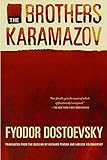
The last and greatest novel, containing everything: murder, God, doubt, love, fathers and sons. A young man, Dmitri, is accused of murdering his father. Dostoevsky spends 600 pages on a trial that never resolves the question of guilt. The real debate is between the brothers themselves: Ivan, who reasons that God is unjust because children suffer; Dmitri, who feels everything; and Alyosha, who believes. Dostoevsky does not give you a winner. He gives you three versions of being human and leaves you to choose which one you are. Written by a man who had nearly been executed and spent four years in a Siberian labour camp, the novel's argument about suffering, guilt, and redemption is not abstract.
3. Crime and Punishment by Fyodor Dostoevsky (1866)

The psychology of transgression. Raskolnikov, a poor student, murders an old pawnbroker to prove a philosophical point: that extraordinary men are above ordinary morality. The novel is Dostoevsky's examination of what happens to a mind that commits a crime it cannot justify. It is a psychological thriller and a theological argument and a portrait of St. Petersburg poverty all at once. The answer to Raskolnikov's question turns out to be that he cannot bear what his own action has made him.
4. Fathers and Sons by Ivan Turgenev (1862)
Nihilism as a generational conflict, still the most honest book about ideological disagreement ever written. The young Bazarov believes in nothing except science and rejects every form of received authority. His father and uncle represent the liberal ideals of the 1840s. Turgenev does not dismiss either side. He shows how two intelligent, decent people can be fundamentally incompatible because they are from different historical moments. The novel introduced the word "nihilism" into the European vocabulary.
5. The Master and Margarita by Mikhail Bulgakov (1967, published)
The greatest Soviet satire, and a novel about the impossibility of surviving as an artist under totalitarianism. The Devil visits Moscow with a retinue that includes a giant talking cat. The satirical fantasy unfolds alongside a story set in ancient Jerusalem and a tragic love story in Soviet Moscow. Bulgakov wrote it over twelve years knowing it would never be published in his lifetime. It was not published until twenty-six years after his death. It is now the most widely read twentieth-century Russian novel in translation, and for good reason: it is intellectually serious and absolutely delightful.
6. Selected Stories by Anton Chekhov
The master of the short story, the ending that does not resolve. Chekhov eliminated plot resolution, moral instruction, and authorial commentary. He replaced them with the weight of what goes unsaid. His characters want what they cannot have and slowly understand how their lives went wrong without ever having made a conscious decision to go wrong. He is the direct ancestor of every serious short-story writer working today. Stories like "The Lady with the Dog" and "Ward No. 6" show what prose can do when it stops trying to explain and starts just observing.
7. Eugene Onegin by Alexander Pushkin
The first great Russian novel, written in verse. Onegin is a man of refinement and ennui who rejects the love of a young woman, Tatiana, out of boredom. Years later, he finds he wants her, but she has married someone else and refuses to abandon her husband. It is a tragedy of missed timing and emotional paralysis, written with such precision and wit that you feel the smallness of Onegin's refusal and the magnitude of Tatiana's fidelity. The entire Russian novel tradition grows out of this book.
8. Invitation to a Beheading by Vladimir Nabokov
The Kafka before Kafka was known in the West. Cincinnatus is condemned to death by a court that never explains why, in a society that operates according to laws that are never stated. Nabokov wrote it in Berlin in the 1930s while exiled from Russia, and it is a meditation on power, absurdity, and the freedom that exists only in the mind. It is 200 pages and one of the great political novels disguised as philosophical fiction.
9. One Day in the Life of Ivan Denisovich by Aleksandr Solzhenitsyn
The Gulag in one day, the most efficient description of a totalitarian system ever written. Solzhenitsyn spent eight years in the labour camps and knew the material from the inside. This novel follows exactly one day from reveille to lights-out. The central argument is that survival itself is a form of dignity, that the small acts of competence and craft that a prisoner performs to get through a single day without breaking are a form of resistance. It is 180 pages long and one of the most precise moral documents written in the twentieth century.
10. Oblomov by Ivan Goncharov (1859)
A man who cannot get out of bed. Oblomov lies on his sofa in his Petersburg apartment and contemplates the world. He is paralysed not by illness but by the weight of existence itself. He thinks about getting up, about going out, about doing something with his life, and then he lies back down. The word "Oblomovism" entered the Russian language to describe this condition of passive fatalism. The novel is a dark comedy and a portrait of a particular Russian spiritual condition: the capacity to understand everything and do nothing.
11. Doctor Zhivago by Boris Pasternak (1957)
Love and the Russian Revolution, a Nobel Prize the Soviets forced him to refuse. Pasternak completed the novel in 1956, after Stalin's death. The Soviet authorities still refused to publish it. The manuscript was smuggled to an Italian publisher, translated into twenty-four languages, and won him the Nobel Prize, which he had to refuse under state pressure. The novel follows a poet and doctor through revolution and civil war. Pasternak is asking what happens to private life, private love, and private art when ideology makes a claim on every hour of a person's existence.
12. The Idiot by Fyodor Dostoevsky
A portrait of a morally perfect man trying to live in an immoral world. Prince Myshkin returns to Russia from Switzerland and attempts to live according to Christian principles of honesty and compassion. The novel shows how that attempt inevitably fails, how the world punishes goodness, and how a truly innocent person is defenceless against corruption. It is Dostoevsky's most tragic novel and his most searching examination of what goodness means when it cannot survive in the world.
Three Russian Literature Books Worth Buying Today
These three titles have the highest verified Amazon review counts and are the ones real readers return to most often.
- The Brothers Karamazov by Fyodor Dostoevsky (Pevear and Volokhonsky translation), still the novel most likely to change how you think about guilt, freedom, and faith.
- Anna Karenina by Leo Tolstoy (Pevear and Volokhonsky translation), the greatest novel about marriage, society, and the cost of desire.
- Crime and Punishment by Fyodor Dostoevsky (Pevear and Volokhonsky translation), the psychological thriller that inaugurated the modern novel of ideas.
For the full ranked reading list by review count, see the fiction books category on Skriuwer.
Your next good book, in your inbox
We only write when we find a book worth your time. Hand-picked recommendations across history, mythology, true crime and more.
Are you an author?
Get your book in front of readers like these, for free.
- Free book listing →Your own book page with an Amazon button
- Author page →Photo, bio and links to your site
- Featured placement →A spot in our best-of lists, from €29
Free tools we recommend
Get free honest reviewsReview exchange on iWrity, free to join
Books You Might Like

It Ends with Us: A Novel
Colleen Hoover

The Seven Husbands of Evelyn Hugo: A Novel
Taylor Jenkins Reid

The Song of Achilles
Madeline Miller
