Best Scandinavian Noir Books in 2026: 12 Nordic Crime Novels That Are Impossible to Put Down
Scandinavian countries consistently rank among the world's happiest and most equal societies. They also produce crime fiction obsessed with the way those societies fail their most vulnerable people. This is not a contradiction. Nordic noir, the term that became shorthand for Scandinavian crime writing from the 1990s onward, has always been interested in the gap between the Nordic self-image, functional welfare state, low corruption, high social trust, and the violence, institutional failure, and individual degradation that exists underneath.
The genre's defining traits recur across books and authors: social critique embedded in crime plots, institutional corruption as a structural theme, landscape as mood and character, female detectives and investigators as central figures, and a particular kind of bleak atmosphere that has been called "hygge gone dark," the same candlelit winter coziness turned sinister.
These twelve novels represent the range of what the genre can do.
1. The Girl With the Dragon Tattoo by Stieg Larsson
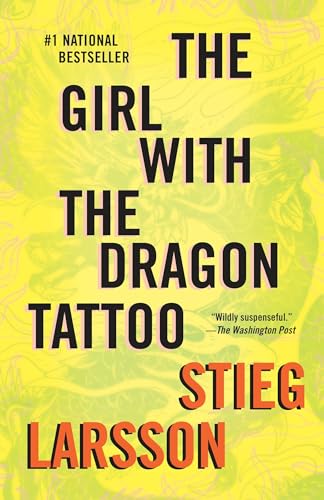
Larsson's 2005 novel, published posthumously, is the book that broke Scandinavian crime fiction into the mainstream English-speaking market. Journalist Mikael Blomkvist investigates the decades-old disappearance of Harriet Vanger from a wealthy Swedish family. The investigation he conducts alongside hacker Lisbeth Salander uncovers a pattern of abuse and murder that the family's power has suppressed for 40 years.
The title in Swedish is "Men Who Hate Women," which tells you what the book is actually about. Larsson, who spent his career investigating far-right extremism, wrote a crime novel structured as an investigation into the systematic violence men direct at women and the institutions that enable it. Lisbeth Salander, unconventional and uncompromising, became one of crime fiction's most significant characters.
Get it here: The Girl With the Dragon Tattoo on Amazon
2. Faceless Killers by Henning Mankell
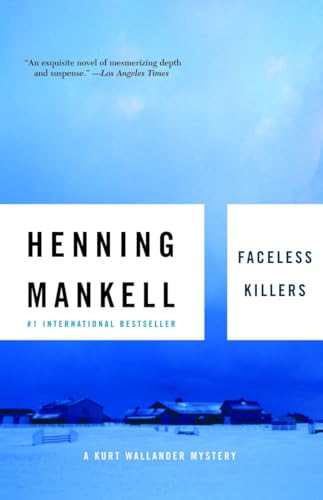
Mankell's first Kurt Wallander novel, published in 1991, established the template for the socially conscious Nordic crime novel. A Swedish farming couple is murdered in a remote farmhouse. The investigation gradually reveals a story about immigration, economic anxiety, and the ugly face of Swedish nationalism.
Wallander himself is the other significant contribution Mankell made to the genre: a detective who is depressed, physically deteriorating, divorced, and struggling with his relationship with his daughter and his father. He solves cases through persistence rather than brilliance, and his failures are as present in the books as his successes. The landscape of southern Sweden, the flat fields and cold light of Skane province, is as carefully rendered as any character.
Get it here: Faceless Killers on Amazon
3. The Snowman by Jo Nesbo
Nesbo's seventh Harry Hole novel, published in Norwegian in 2007, is the entry point most readers choose first. Harry Hole is Oslo's most brilliant and most self-destructive detective: an alcoholic who keeps being returned to active duty because nobody else can do what he does. In The Snowman, he investigates a series of murders connected to the appearance of snowmen left at the scenes.
Nesbo constructs his plots with architectural precision. The Snowman manages several intersecting storylines without losing coherence, and the revelation of the killer's identity, while genuinely surprising, is the kind of surprise that makes you look back at earlier scenes and see them differently. Hole is Wallander with the social critique dialed up and the self-destruction dialed further up still.
Get it here: The Snowman on Amazon
4. Don't Look Back by Karin Fossum
Fossum's Inspector Sejer series begins here, with the discovery of a 15-year-old girl's body on a Norwegian hillside. What follows is less a conventional thriller than a psychological study of a rural Norwegian community under the pressure of investigation. Sejer is a patient, methodical detective who is more interested in understanding people than in outwitting them.
Fossum writes slowly by the standards of the genre. Her books are not paced for rapid consumption. What she achieves instead is an extraordinary sense of the texture of ordinary Norwegian life, the small town politics, the family relationships, the particular way guilt and grief move through a community. The crime is almost secondary to the anatomy of the place where it happened.
5. 1222 by Anne Holt
Former Norwegian justice minister Anne Holt brings a different kind of authority to crime fiction. 1222, published in Norwegian in 2008, is a locked-room mystery set in a snowbound mountain hotel after a train crash strands over 200 people. The detective is Hanne Wilhelmsen, a retired police officer in a wheelchair who wants nothing to do with the murder that then occurs.
The locked-room structure is a classic device, but Holt uses the extreme Norwegian winter setting to make it feel fresh. The book is also interesting for Wilhelmsen's character: a woman who has deliberately withdrawn from human connection and who is forced, against her will, back into engagement with other people. The mystery is elegant and the social observation sharp.
6. The Ice Princess by Camilla Lackberg
Lackberg's first Fjallbacka novel, published in 2003, established the most successful domestic noir series in Swedish crime fiction. Crime writer Erica Falck returns to her childhood home in the small coastal town of Fjallbacka to settle her parents' estate and discovers the frozen body of her childhood friend, Alex, in the bathtub.
What distinguishes Lackberg from Mankell or Nesbo is her focus on the domestic sphere: family secrets, childhood trauma, the particular cruelties that occur inside homes and behind respectable facades. The Fjallbacka series uses a real Swedish coastal town as its setting, and the combination of picture-postcard scenery and extreme violence became one of the genre's signature contrasts.
Get it here: The Ice Princess on Amazon
7. The Hypnotist by Lars Kepler
Kepler is a pen name for the Swedish husband-and-wife writing team Alexander and Alexandra Ahndoril, and their debut, published in 2009, is the most viscerally thriller-focused book on this list. Detective Joona Linna investigates a family massacre in which the only survivor is a comatose teenage boy. A forensic hypnotist is brought in to access his memories.
The Hypnotist moves very fast and it is not shy about graphic content. It is closer to Thomas Harris than to Mankell in its approach, though it retains the Swedish social setting and institutional critique. Joona Linna, Finnish-born and operating in Stockholm, is an exceptional detective whose personal history unfolds across the series in a way that deepens rather than distracts.
8. Misterioso by Arne Dahl
Dahl's first A-Unit novel, published in 1998, introduces a special team of Stockholm detectives assembled to investigate a series of apparently motiveless murders of Swedish businessmen. The victims are being killed while listening to jazz, specifically Thelonious Monk's "Misterioso."
Dahl's A-Unit series is interested in organized crime, the dark underside of Swedish business culture, and the way economic power protects itself from accountability. The ensemble cast, a team rather than a lone detective, gives the series a different dynamic from the singular-genius format. The jazz thread, which could be affected, turns out to be structural: music as a way of thinking about time and pattern in the crimes.
9. Smilla's Sense of Snow by Peter Hoeg
Hoeg's 1992 novel is technically Danish crime fiction rather than Swedish or Norwegian, but it belongs to the same tradition and it is one of the most distinctive books in the genre. Smilla Jaspersen, half-Danish, half-Greenlandic, investigates the death of a young Inuit boy from her Copenhagen apartment building. Her knowledge of snow, learned in Greenland, tells her the official accident verdict cannot be correct.
What makes Smilla exceptional is Hoeg's prose, which is precise and strange, and Smilla herself, who is one of crime fiction's most original protagonists: alienated, brilliant, angry, and operating across the boundary between European and Greenlandic cultures. The novel is also a political book about Denmark's colonial relationship with Greenland.
Get it here: Smilla's Sense of Snow on Amazon
10. Between Summer's Longing and Winter's End by Leif GW Persson
Persson, a real criminologist and former government crime adviser, published his Backstrom trilogy and his standalone police procedurals with an authority that comes from genuine professional knowledge. Between Summer's Longing and Winter's End, published in Swedish in 2002, is the first in a trilogy about the unsolved murder of Swedish prime minister Olof Palme.
Persson writes with mordant, almost comic, pessimism about Swedish institutions. His police officers are variously corrupt, incompetent, politically compromised, and occasionally brilliant. The bureaucratic texture of his novels, the meetings, the paperwork, the institutional obstruction, is more accurate than most crime fiction of any nationality, and it is also, perversely, what makes them gripping.
11. The Man Who Smiled by Henning Mankell
The fourth Wallander novel, published in 1994, is the one in which Mankell most explicitly confronts the corporate and financial corruption that underlies the violence in his books. Wallander, initially on sick leave after killing a man in the previous novel, is drawn back into an investigation involving a powerful corporate lawyer and a string of suspicious deaths.
What distinguishes this entry from Faceless Killers is the explicit corporate target. The immigration anxiety of the first novel is replaced by a critique of the economic power structures that operate below the surface of Swedish social democracy. Mankell was always writing political crime fiction, and this is one of the most direct examples.
12. The Keeper of Lost Causes by Jussi Adler-Olsen
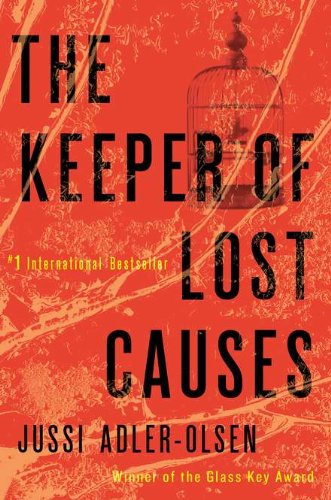
The first Carl Morck novel, published in Danish in 2007, introduces one of the genre's more original protagonists. Carl Morck is a traumatized detective demoted to head a new cold-case unit in the Copenhagen police basement, largely as a way of getting him out of everyone's way. He is given minimal resources and no respect. He solves cases anyway.
Adler-Olsen's books are darker and more violent than most of the series on this list, and the cold-case structure gives each novel a different rhythm from the conventional investigation. Morck's unit, him and his assistant Assad, one of crime fiction's best supporting characters, investigates cases that everyone else has abandoned or suppressed.
Get it here: The Keeper of Lost Causes on Amazon
Why Nordic Noir Works
The genre's durability comes from a specific tension: these are societies that genuinely value equality and social cohesion, and their crime fiction exists to examine the ways that value is violated. The gap between aspiration and reality is the engine. When a Norwegian or Swedish crime novelist exposes institutional failure or corporate corruption or systematic violence against women, they are measuring their society against its own stated ideals.
That is a more interesting project than crime fiction that simply documents violence in a society that does not claim to be trying to prevent it.
For more crime fiction and dark literature, browse the full collection on Skriuwer.
Your next good book, in your inbox
We only write when we find a book worth your time. Hand-picked recommendations across history, mythology, true crime and more.
Are you an author?
Get your book in front of readers like these, for free.
- Free book listing →Your own book page with an Amazon button
- Author page →Photo, bio and links to your site
- Featured placement →A spot in our best-of lists, from €29
Free tools we recommend
Get free honest reviewsReview exchange on iWrity, free to join
Books You Might Like

It Ends with Us: A Novel
Colleen Hoover

The Seven Husbands of Evelyn Hugo: A Novel
Taylor Jenkins Reid

The Song of Achilles
Madeline Miller

Educated: A Memoir
Tara Westover