Best Science Fiction Books of 2026: The Novels That Reimagine Everything
{
  "@context": "https://schema.org",
  "@type": "Article",
  "headline": "Best Science Fiction Books of 2026: The Novels That Reimagine Everything",
  "author": {
    "@type": "Organization",
    "name": "Skriuwer"
  },
  "datePublished": "2026-06-12",
  "description": "Explore the greatest science fiction books that challenge reality, imagine the future, and ask what it means to be human."
}
{
  "@context": "https://schema.org",
  "@type": "FAQPage",
  "mainEntity": [
    {
      "@type": "Question",
      "name": "What makes great science fiction different from other speculative fiction?",
      "acceptedAnswer": {
        "@type": "Answer",
        "text": "Great science fiction uses speculation grounded in real science or logical extrapolation from current knowledge. Unlike fantasy, sci-fi asks 'what if this were possible?' rather than 'what if magic were real?' The best science fiction uses the speculative premise to explore human nature, society, and ethics in ways that realistic fiction cannot."
      }
    },
    {
      "@type": "Question",
      "name": "Which science fiction books are best for beginners?",
      "acceptedAnswer": {
        "@type": "Answer",
        "text": "Start with accessible classics like 'Dune' by Frank Herbert, which combines epic storytelling with complex ideas, or 'The Left Hand of Darkness' by Ursula K. Le Guin, which uses science fiction to explore gender and society. 'Foundation' by Isaac Asimov and 'Neuromancer' by William Gibson introduce other major traditions in the genre."
      }
    },
    {
      "@type": "Question",
      "name": "What's the difference between hard sci-fi and soft sci-fi?",
      "acceptedAnswer": {
        "@type": "Answer",
        "text": "Hard science fiction emphasizes accuracy and internal consistency with known science. Authors like Greg Egan research physics extensively. Soft science fiction prioritizes human and social concerns over technical accuracy. Both approaches can produce great work. Hard sci-fi appeals to readers who want scientific rigor. Soft sci-fi appeals to readers who care more about characters and consequences."
      }
    }
  ]
}
Science fiction is the literature of possibility. It takes one idea (faster-than-light travel, artificial intelligence, time travel, a society organized by gene) and asks what follows. The best science fiction writers are not predicting the future. They are using the future as a laboratory to test ideas about power, freedom, love, and what it means to be human.
Science fiction is often dismissed as escapism. But the opposite is true. Good science fiction confronts you with your own world by changing everything else. It removes the familiar and forces you to think. It asks you to sit with uncomfortable questions.
The greatest science fiction novels have shaped how we think about technology and society. They have predicted aspects of our current reality. They have also explored possibilities we may never reach. Either way, they have changed how we imagine.
1. Dune by Frank Herbert
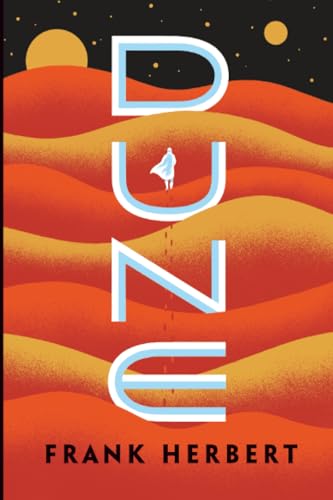
Frank Herbert's Dune is an epic of politics, ecology, religion, and power. The story is set on the desert planet Arrakis, where a precious spice controls minds and extends life. Multiple factions want to control Arrakis. The empire, the great houses, the religious order, the native people. Herbert shows how one person trying to do good can become a vehicle for historical forces that crush individuals.
Paul Atreides is a teenager when his family is sent to Arrakis. He becomes a leader of the indigenous Fremen. But his rise to power sets in motion events that he does not control. The novel shows you the limits of individual agency. It shows you how institutions use people and how people use institutions. It asks whether violence can ever create justice.
Dune is science fiction as political theory. It was written during the Vietnam War and its questions about power and violence and the corruption of idealism remain urgent. The novel is long and complex and it rewards rereading. Available on Amazon.
2. The Left Hand of Darkness by Ursula K. Le Guin
Ursula K. Le Guin's The Left Hand of Darkness is science fiction as anthropology. The planet Gethen is covered in ice and its inhabitants are ambisexual. They have no fixed gender. This simple change opens up questions about gender, society, and biology that Le Guin explores through a first-contact narrative.
An envoy from Earth arrives on Gethen trying to convince the world to join an interplanetary coalition. He makes little progress until he is forced to survive a journey across the ice with a Gethenian politician. Through their journey, Le Guin shows you how gender shapes society and how removing gender categories reveals what remains.
The novel is profound but never didactic. Le Guin tells a story that is also an argument. She invents cultures with different values and shows how those values follow from geography and biology and history. This is science fiction as thought experiment done with prose as beautiful as any literary novel. Available on Amazon.
3. Neuromancer by William Gibson
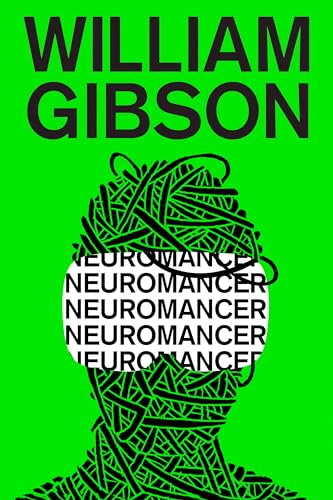
William Gibson's Neuromancer invented the aesthetic of cyberpunk and made cyberspace a concept before the internet existed. The novel follows Case, a washed-up computer hacker, who is hired to perform a heist in a future where artificial intelligences are nearly sentient and corporate power exceeds government power.
Neuromancer is fast and disorienting and the prose itself feels fragmented like the world it describes. Gibson uses technical language without always explaining it. He expects the reader to piece together what is happening. The novel creates a sense of information overload that mirrors its themes about data and power and what it means to be human when consciousness can be copied and uploaded.
The book was written in the early 1980s but it predicted aspects of current reality (cyberspace, the dominance of corporations, hacking) and aspects we may never see (artificial superintelligence). It is science fiction as style as much as substance. Available on Amazon.
4. Foundation by Isaac Asimov

Isaac Asimov's Foundation begins with a mathematician named Hari Seldon who invents psychohistory, a science that can predict the behavior of large populations. Seldon predicts the fall of a galactic empire. To preserve knowledge through the dark ages that will follow, he establishes the Foundation on a distant planet.
The novel is structured as a series of episodes spanning centuries. Each shows a crisis for the Foundation and a clever solution that Seldon seems to have anticipated. Foundation established the concept of the space opera but it is really a novel about power and knowledge and how one person's ideas can shape the future.
Asimov was more interested in ideas than character development but that is not a flaw. The ideas are compelling enough to carry the narrative. The novel asks whether the future is inevitable or whether human choice can alter the course of history. These questions remain urgent.
5. Snow Crash by Neal Stephenson
Neal Stephenson's Snow Crash is science fiction as adventure. The protagonist is Hiro Protagonist (yes, that is his actual name), a hacker and pizza delivery driver in a near-future America where the federal government has largely collapsed and corporations run everything. Hiro discovers a computer virus that can infect both minds and computers.
Snow Crash is funny and propulsive and it moves at a breakneck pace. Stephenson invents the Metaverse, a virtual reality space that predates Second Life and anticipated aspects of how the internet would develop. But the novel is not just about technology. It is about language and meaning and whether we can distinguish between the simulated and the real.
The novel is exuberant in a way that few science fiction books are. It is unafraid to be entertaining. It combines an accessible plot with genuinely complex ideas about consciousness and communication.
6. The Three-Body Problem by Liu Cixin
Liu Cixin's The Three-Body Problem is the first in a trilogy and it is one of the most ambitious science fiction novels ever written. It begins in China during the Cultural Revolution and expands to a first contact scenario with an alien civilization.
Liu's novel asks what happens when humanity learns that it is not alone in the universe and that an alien civilization plans to invade. How does this knowledge change everything? What are the ethical implications of different responses? The novel unfolds on a massive timescale with multiple storylines and points of view.
Liu is interested in the philosophy of contact and the sociology of response. He is asking deeper questions about civilization and survival and what values matter most. The novel is hard science fiction that respects its readers' intelligence.
7. Hyperion by Dan Simmons
Dan Simmons' Hyperion is an epic space opera structured like The Canterbury Tales. Seven pilgrims travel to meet a mysterious figure called the Shrike who can alter time. Each pilgrim tells their story. Together these stories create a complex narrative about artificial intelligence, love, power, and mortality.
Simmons creates an entire galaxy of worlds and civilizations. He invents a history spanning centuries. He weaves in references to poetry and classical literature. The novel is ambitious and complex and it rewards careful reading and even rereading.
Hyperion shows that science fiction can be as literary and complex as any mainstream fiction while still maintaining narrative drive and wonder.
8. The Dispossessed by Ursula K. Le Guin
Ursula K. Le Guin's The Dispossessed is science fiction as political philosophy. Two planets orbit each other. One is capitalist. One is anarchist. A physicist from the anarchist planet travels to the capitalist world. The novel shows both worlds from his perspective and asks which system better serves human flourishing.
Le Guin does not provide a simple answer. She shows the strengths and weaknesses of both systems. She shows how freedom means different things in different contexts. She shows how individual happiness does not always align with collective good.
The novel is a thought experiment in political theory but it is grounded in specific human relationships and dilemmas. This is science fiction as philosophy without becoming abstract or cold.
Science Fiction's Greatest Gift
The greatest science fiction novels use speculation to illuminate reality. They ask what we would value if everything else were different. They imagine futures to help us think about the present. They create worlds that feel as real as our own and invite us to inhabit them. Reading great science fiction expands your sense of what is possible and what matters.
Your next good book, in your inbox
We only write when we find a book worth your time. Hand-picked recommendations across history, mythology, true crime and more.
Are you an author?
Get your book in front of readers like these, for free.
- Free book listing →Your own book page with an Amazon button
- Author page →Photo, bio and links to your site
- Featured placement →A spot in our best-of lists, from €29
Free tools we recommend
Get free honest reviewsReview exchange on iWrity, free to join
Books You Might Like

It Ends with Us: A Novel
Colleen Hoover

The Seven Husbands of Evelyn Hugo: A Novel
Taylor Jenkins Reid

The Song of Achilles
Madeline Miller

Educated: A Memoir
Tara Westover