Best Science Fiction Books in 2026: 12 Classics That Built the Genre
Science fiction is not about the future. It is about the present, displaced into an imaginary world so we can examine what we are actually afraid of without the numbing effect of familiarity. Every major SF novel is an examination of a contemporary anxiety, turned into a thought experiment. Nuclear war, environmental collapse, corporate power, artificial intelligence, genetic engineering, the indifference of the universe, the loss of individual autonomy, the rise of surveillance, the fragility of civilization. SF writers take these fears and build worlds around them.
Here are twelve classics that define the genre.
1. Mary Shelley's Frankenstein (1818)
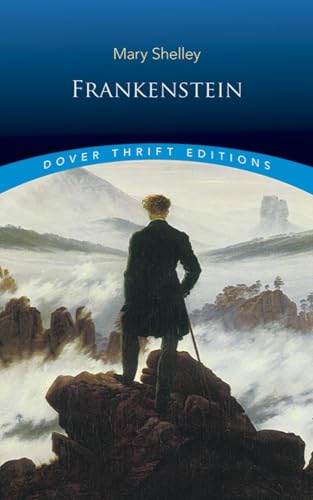
The first science fiction novel. Not because it has a spaceship or advanced technology, but because it asks the central question of SF: what happens when humans use science to exceed the limits nature set? Frankenstein is about the Promethean overreach, about the gap between creation and responsibility, about what we owe to the things we make. The creature is not a monster because it is alive, but because its creator abandoned it. The novel is a horror story, yes, but it is also the first exploration of a question SF would ask again and again: can we control what we create, or will our creations define their own existence? Find Frankenstein on Amazon.
Why it matters: Shelley established that SF is not primarily about technology or the future, but about human responsibility and moral consequence. Every robot novel, every AI thriller, every story about playing God walks a path Shelley carved.
2. H.G. Wells's The Time Machine (1895)
The Time Machine is the simplest premise with the deepest bite: a machine that travels through time. What Wells does with it is transform it into a class anxiety nightmare. The Eloi, beautiful and childlike, have been shaped by centuries of comfort. The Morlocks, banished underground, have become predators. The future is not progress but devolution. The machine itself is almost secondary. What matters is that Wells uses a scientific premise to ask: what if everything we believe about human progress is an illusion? What if the future is just a slower, more horrible version of the present? Find The Time Machine on Amazon.
Why it matters: Wells invented the template. SF was a way to explore contemporary social problems by projecting them into a speculative frame. The Victorian class system becomes a time-divided humanity. The anxiety becomes visible.
3. Philip K. Dick's Do Androids Dream of Electric Sheep? (1968)
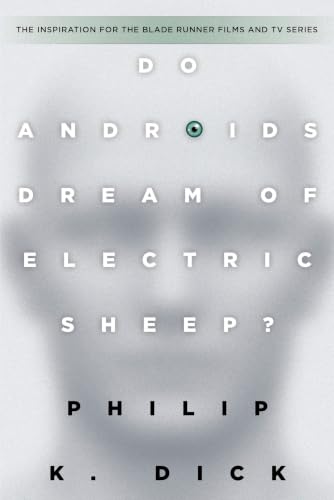
The question in the title is the whole story. In a post-nuclear world, androids have been made indistinguishable from humans. The protagonist is a bounty hunter tasked with finding and destroying them. But the more he encounters them, the less sure he is that they are not human. By the end, the question is not whether androids are human, but whether the protagonist is. Empathy becomes the test of humanity. The android who hesitates to pull the trigger because they do not want to hurt a living thing is more human than the detective who has already killed. The whole novel is a slow, terrifying meditation on consciousness and the possibility that we cannot know if anything else is real. Find Do Androids Dream of Electric Sheep? on Amazon.
Why it matters: Dick made paranoia into philosophy. He showed that SF could be philosophically rigorous while remaining absolutely thrilling. The question "what if?" does not need to be answered. The asking is enough.
4. Isaac Asimov's Foundation (1951)
Foundation is about the fall of civilization and the long game of preventing it. Psychohistory is the premise: a science that can predict the behavior of human masses in aggregate, the way physics predicts the behavior of atoms. A mathematician named Hari Seldon uses it to seed a foundation on a remote world, a repository of all human knowledge, hoping to shorten the dark age that must come after the empire falls. The novel is about unimaginable scales of time, about seeing history from an impossible distance, about the individual as irrelevant except as part of the statistical mass. It is the grandest conception of SF: what if human history itself could be treated as a problem to be solved? Find Foundation on Amazon.
Why it matters: Asimov proved that SF could handle abstract ideas, that the hero could be a concept rather than a person, that the problem could be civilization itself.
5. Arthur C. Clarke's Childhood's End (1953)
Alien ships appear above Earth's largest cities and wait. For years they wait. Humanity learns to coexist with the Overlords, who provide technology and end hunger and war. But the Overlords will not reveal themselves. When they finally appear, they are demons (in the religious sense). They have been shepherding humanity, preparing us for something. The cost of utopia is the end of human autonomy. Clarke's vision is one of cosmic perspective: the universe is vast and indifferent, benevolent forces can still diminish us, and the future may not belong to us. The ending is heartbreaking because what happens to humanity is not evil, just the natural result of contact with a vastly more advanced species. Find Childhood's End on Amazon.
Why it matters: Clarke showed that SF could be transcendent, that it could deal with awe and loss at the same scale. The aliens are not conquerers or saviors, but simply other. That is more terrifying.
6. Ursula K. Le Guin's The Left Hand of Darkness (1969)
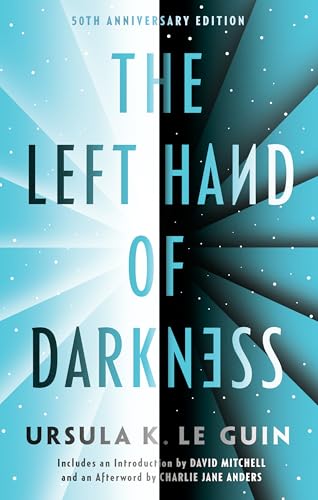
Le Guin sent a human envoy to a frozen planet where the inhabitants are ambisexual. They are neither male nor female, but can become either during breeding season. The novel is an anthropological investigation of how gender shapes society, how the absence of it reshapes everything. It is also a love story between the human envoy and a native, two people trying to understand each other across a biological chasm. Le Guin uses the alien gender to ask: how much of what we think is natural is actually the artifact of biology? How much of what we build is arbitrary? The novel is a masterpiece of worldbuilding and philosophy, but it is also intimate and human. Find The Left Hand of Darkness on Amazon.
Why it matters: Le Guin made SF literary. She showed that speculative premises could serve philosophical investigation while remaining deeply felt. She made the personal and the cosmic cohere.
7. Walter M. Miller Jr.'s A Canticle for Leibowitz (1959)
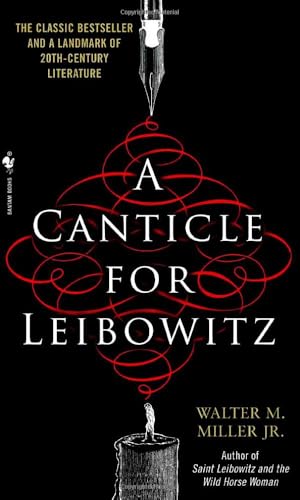
This is the apocalypse and the slow climb back out of it. The novel spans 2,600 years, divided into three sections: the desert (monks preserving knowledge after nuclear war), the renaissance (humanity relearning civilization), and the exodus (the cycle starting again). Each section repeats the problem: we build civilization, we destroy it, we start again. The monks are trying to preserve the fragments of what came before, not understanding what they are preserving, just saving words and equations as sacred objects. It is a novel about the futility of progress, the cyclical nature of violence, and the stubborn, ridiculous persistence of meaning. Find A Canticle for Leibowitz on Amazon.
Why it matters: Miller proved that SF could be epic without glorifying empire, that it could be religious without being dogmatic, that it could face the possibility of eternal recurrence without succumbing to despair.
8. Stanislaw Lem's Solaris (1961)
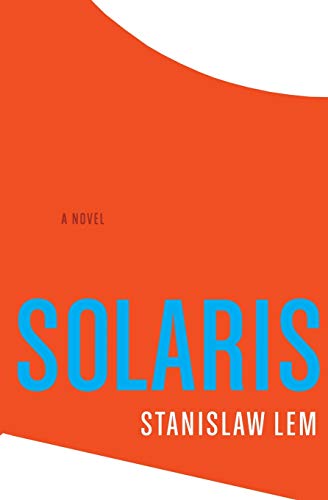
A space station orbits an alien ocean world. The ocean is conscious (maybe), but its consciousness is utterly alien. It does not threaten the station, but neither can the humans communicate with it. It simply exists, responding in ways that are incomprehensible. The novel is about the limits of understanding, about the possibility that consciousness itself might not be transferable across the gap of evolution. The ocean is not hostile or friendly. It is Other. And that otherness cannot be bridged. It is one of the purest expressions of cosmic horror, but horror in the sense of awe: the recognition that not all mind is like our mind, that there are depths we cannot fathom. Find Solaris on Amazon.
Why it matters: Lem used the structure of first contact to explore epistemology. He showed that the barrier might not be technology but the limits of consciousness itself. The failure to communicate becomes the central drama.
9. Gene Wolfe's The Book of the New Sun (1980)
This is a novel written by an unreliable narrator who may not be entirely human, in a far future that might be Earth or might be another planet, for an audience that is not entirely the reader. Severian is a torturer exiled from his guild, carrying a sword and a strange past, moving through a landscape of ruins and resurrection. The novel is dense with allusion, archaeology, and layers of meaning. The prose is baroque and deliberately obscure. The plot is less important than the texture: the sense of reading something ancient, translated, possibly corrupted. The Book of the New Sun is a novel about reading, about the way meaning persists and mutates across time. Find The Book of the New Sun on Amazon.
Why it matters: Wolfe showed that SF prose could be as demanding and rewarding as any literary fiction. He proved that SFF could be hermetic, difficult, even obscure, and still profound.
10. Ted Chiang's Stories of Your Life and Others (2002)
A collection of short stories, each one a thought experiment in narrative form. "Story of Your Life" asks: what if a language could reshape how you perceive time itself? "Tower of Babylon" imagines a world where the Tower of Babel was built and climbers reach the edge of the sky. "Understand" explores the nature of superintelligence. What makes Chiang exceptional is his ability to take a single idea and see it through to its absolute conclusion. The stories are not long, but they are dense with implication. They are puzzles that solve themselves in the reading. They are closer to philosophy than narrative, but they are still stories. Find Stories of Your Life and Others on Amazon.
Why it matters: Chiang restored the short story as a vehicle for philosophical investigation. He proved that SF could be rigorous without being cold, that it could deal with abstract ideas while remaining emotionally resonant.
11. Kim Stanley Robinson's The Years of Rice and Salt (2002)
An alternate history where the Black Death killed 99% of humanity in Europe instead of 30%. The novel follows characters across centuries, as Islamic and Chinese civilizations come to dominate a world without European hegemony. It is written partly in dialogue, partly in narrative. Characters reappear across centuries, suggesting the possibility of reincarnation or just the cyclical nature of history. The point is not that this world is better, just that it is different. The novel is an examination of how much of what we believe to be inevitable is simply the product of contingency. Find The Years of Rice and Salt on Amazon.
Why it matters: Robinson showed that alternate history could be a method of understanding the present by defamiliarizing the assumptions embedded in it. He made history into speculation, and speculation into a way of seeing.
12. Octavia Butler's Kindred (1979)
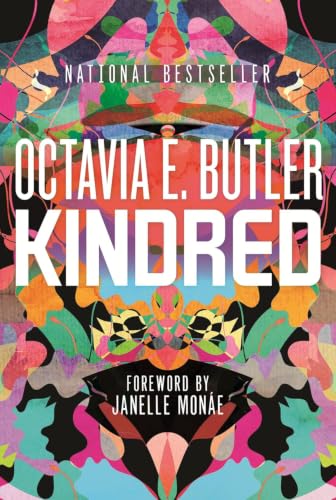
A Black woman in 1970s Los Angeles is drawn repeatedly back in time to a plantation in antebellum Maryland. She cannot control when she travels, only that she keeps going back. The novel forces her to live in a time that wants to erase her, to reckon with the physical reality of slavery. Butler uses time travel not as an escape mechanism but as a confrontation. The novel asks: what if history were not past but present? What if we could be dragged back into the violence we think we have escaped? Kindred is horrifying because it is plausible, because the horror is not alien but human, because the woman at the center cannot simply escape or outsmart her way out. Find Kindred on Amazon.
Why it matters: Butler made SF a vehicle for interrogating race and power. She showed that the technology or premise was secondary to the human reckoning. She proved that SF could be more than an intellectual exercise; it could be a way of inhabiting and understanding real trauma.
Why These Books Still Matter
Science fiction works by analogy. By moving the present into an imaginary frame, it makes what is normal visible as contingent. The books on this list do not primarily predict the future. They investigate the present. They take anxiety and build a world around it. They ask what if, and they follow the question to its conclusion, whatever that conclusion is.
The best science fiction is not about technology. It is about what technology reveals about us: our capacity for creation, our moral blindness, our stubborn hope, our cruelty, our tendency to recreate the problems we are trying to escape. These twelve novels are the foundation of that investigation. They remain central because the questions they ask are not dated. Every generation discovers them and recognizes itself in them.
Explore the Genre
- For cosmic awe: Start with Clarke's Childhood's End or Lem's Solaris. Both deal with first contact and the vastness of space.
- For philosophical rigor: Try Dick's Do Androids Dream of Electric Sheep? or Chiang's stories. Both use SF as a vehicle for hard philosophical problems.
- For worldbuilding: Le Guin's The Left Hand of Darkness remains unsurpassed for the way it builds a world and uses that world to investigate gender and society.
- For epic scope: Read Asimov's Foundation or Robinson's The Years of Rice and Salt. Both deal with history on an impossible scale.
Search Amazon for these science fiction classics to find them in your favorite format.
Want more curated reading lists? Explore our collection of best fantasy books, best horror novels, and best detective fiction.
Your next good book, in your inbox
We only write when we find a book worth your time. Hand-picked recommendations across history, mythology, true crime and more.
Are you an author?
Get your book in front of readers like these, for free.
- Free book listing →Your own book page with an Amazon button
- Author page →Photo, bio and links to your site
- Featured placement →A spot in our best-of lists, from €29
Free tools we recommend
Get free honest reviewsReview exchange on iWrity, free to join
Books You Might Like

It Ends with Us: A Novel
Colleen Hoover

The Seven Husbands of Evelyn Hugo: A Novel
Taylor Jenkins Reid

The Song of Achilles
Madeline Miller

Educated: A Memoir
Tara Westover