Best Scientist Biography Books in 2026: 12 Lives That Changed How We See the Universe
The best scientist biographies are not just stories about discovery. They are stories about what it costs to see something no one else has seen: the institutional resistance, the personal failures, the long stretches where the work produces nothing useful, and the occasional moment when everything clicks and the world looks completely different.
These 12 books cover scientists across disciplines and centuries, from a clockmaker who solved the longitude problem to the mathematician who built the theoretical foundation for modern computing and was prosecuted by his own government for who he was. Each life is different. The quality of attention the biographers bring to them is consistent.
Physics and Mathematics
1. Einstein: His Life and Universe by Walter Isaacson

Isaacson's biography is the comprehensive modern account: Einstein's childhood in Germany, his years at the Swiss patent office where he produced his most important work, the development of special and general relativity, his relationship with Mileva Maric, his politics, and his final decades in Princeton unable to complete a unified field theory. Isaacson makes the physics accessible without dumbing it down. At 675 pages, it is long, but nothing important is left out.
2. Genius: The Life and Science of Richard Feynman by James Gleick
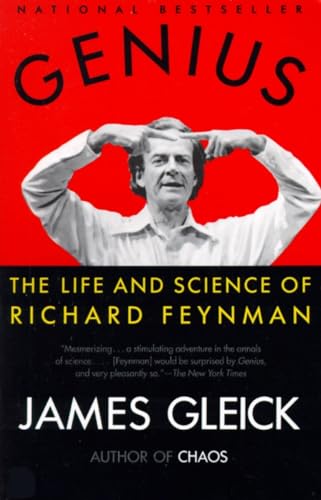
Feynman is the most entertaining physicist of the 20th century, and his own memoirs (Surely You're Joking, Mr. Feynman) are excellent, but Gleick's biography goes deeper into the science. He explains quantum electrodynamics in terms that non-physicists can follow and shows how Feynman's particular way of thinking, visual and intuitive rather than formally mathematical, produced insights that more conventional approaches missed. A model of how to write about scientific ideas without losing the reader.
3. A Beautiful Mind by Sylvia Nasar
John Nash won the Nobel Prize in Economics in 1994 for work he did in 1950. In between, he spent decades in the grip of schizophrenia, convinced that he was receiving messages from extraterrestrial intelligence. Nasar's biography navigates both sides: the mathematical genius and the mental illness. She is careful not to romanticize the illness or present the recovery as complete. The result is honest about what schizophrenia actually involves while still being a story about one of the most original mathematical minds of the 20th century.
4. Alan Turing: The Enigma by Andrew Hodges
The definitive biography of the mathematician who formalized computation, helped break German codes at Bletchley Park, and was prosecuted by the British government for homosexuality in 1952 and died two years later. Hodges, himself a mathematician, explains Turing's technical work clearly. He is also unsparing about what the British state did to Turing after the war. This is one of the great scientific biographies, and also a document of institutional cruelty.
The Atomic Age
5. The Making of the Atomic Bomb by Richard Rhodes
Strictly speaking this is a history rather than a biography, but it is structured around the scientists who built the bomb: Oppenheimer, Fermi, Bohr, Teller, and dozens of others. Rhodes won the Pulitzer Prize for it. He traces the physics from the discovery of the neutron through Trinity, and he is equally good on the human and political dimensions. No other book explains both what the bomb is and what it meant to the people who built it.
The Hidden Scientists
6. Rosalind Franklin: The Dark Lady of DNA by Brenda Maddox
Franklin's X-ray diffraction images of DNA were used by Watson and Crick without her knowledge or credit. She died of cancer in 1958, four years before Watson, Crick, and Wilkins shared the Nobel Prize. Maddox's biography is not a grievance account. She examines Franklin's full scientific career, her work on coal and graphite before DNA, her later research on viruses, and the specific dynamics of the Cambridge and King's College environments that structured what credit she received. Clear-eyed and essential.
Evolution and Natural History
7. Darwin by Adrian Desmond and James Moore
The standard biography of Charles Darwin, and at nearly 800 pages, the thorough one. Desmond and Moore place Darwin's ideas in their social and political context: Victorian England, the debates about class and race, the religious controversies that Darwin knew his theory would trigger. They argue that Darwin's opposition to slavery shaped his thinking about common descent. Whether or not you accept that argument, the biographical detail is excellent and the treatment of the science is precise.
Navigation and Timekeeping
8. Longitude by Dava Sobel
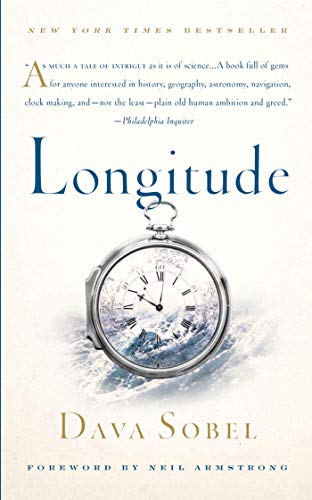
John Harrison was a self-taught Yorkshire clockmaker who spent decades solving a problem that had defeated the greatest mathematicians in Europe: how to determine a ship's east-west position at sea. The solution required a timepiece accurate enough to maintain Greenwich time across months at sea. Harrison built five of them, each more precise than the last, and spent most of his life fighting the Board of Longitude for recognition and prize money. Sobel tells this story in 174 pages. It is one of the most efficiently constructed narrative histories in print.
Language as Science
9. The Surgeon of Crowthorne by Simon Winchester
James Murray spent decades editing the Oxford English Dictionary, the most ambitious lexicographical project in history. One of his most valuable contributors was a man named W.C. Minor, who submitted thousands of quotations on paper slips from a room in Berkshire. Murray eventually visited to thank him and discovered that Minor lived in Broadmoor, the criminal lunatic asylum. He had been confined there since shooting a man dead in Lambeth in 1872. Winchester tells both stories simultaneously, and the structure earns the ending.
Astronomy and Cosmology
10. Coming of Age in the Milky Way by Timothy Ferris
Not a single biography but a history of cosmology told through the scientists who built it: Copernicus, Galileo, Newton, Einstein, Hubble, and the physicists who developed quantum mechanics. Ferris writes about science for general audiences with real skill. The book traces the shift from an Earth-centered universe to the current model of an expanding cosmos 93 billion light-years in observable diameter. How humanity figured all of this out, step by step, is one of the great stories of the last 500 years.
Two More Worth Reading
11. Surely You're Joking, Mr. Feynman by Richard Feynman
Feynman narrating his own life in his own voice. The physics is lighter than in Gleick's biography but the personality is undiluted: cracking safes at Los Alamos, learning to draw, the bongo drums, the strip clubs, and the moments where Feynman explains physics in a way that makes everything suddenly clear. Read Gleick for the science and Feynman for the person.
12. The Gene: An Intimate History by Siddhartha Mukherjee

Mukherjee's history of genetics weaves biography throughout: Mendel in his monastery garden, the eugenicists who corrupted the field, Watson and Crick, and the scientists developing CRISPR today. His own family carries a history of mental illness that makes the question of genetic inheritance personal rather than abstract. Like his Pulitzer Prize-winning The Emperor of All Maladies, this combines rigorous science with humanizing narrative.
Where to Start
For physics: Isaacson on Einstein gives you the full picture. Gleick on Feynman gives you the most entertaining portrait of a scientific mind at work.
For the human cost of science: Hodges on Turing and Maddox on Franklin. Both are stories about institutional failure, not just intellectual achievement.
For scope: Rhodes's atomic bomb history covers more scientists in a single book than any other title on this list. Ferris covers the deepest time span.
The scientists in these books changed what we know about time, space, heredity, computation, and the structure of the universe. The biographies change how you think about how science actually gets done: by people, in institutions, with all the complications that implies.
Your next good book, in your inbox
We only write when we find a book worth your time. Hand-picked recommendations across history, mythology, true crime and more.
Are you an author?
Get your book in front of readers like these, for free.
- Free book listing →Your own book page with an Amazon button
- Author page →Photo, bio and links to your site
- Featured placement →A spot in our best-of lists, from €29
Free tools we recommend
Get free honest reviewsReview exchange on iWrity, free to join
Books You Might Like

It Ends with Us: A Novel
Colleen Hoover

The Seven Husbands of Evelyn Hugo: A Novel
Taylor Jenkins Reid

The Song of Achilles
Madeline Miller

Educated: A Memoir
Tara Westover