Best Self-Help Books 2026
Most self-help books are junk. They promise transformation in three steps. They sell you the fantasy of change without showing you the mechanism. The books that actually work are the ones grounded in psychology, neuroscience, or philosophy. They show you how your mind actually works, then give you specific tools to work with it rather than against it.
What Makes Self-Help Actually Useful?
Real self-help books operate from an accurate model of human behavior. They acknowledge that willpower depletes, that habit formation takes time, that context matters more than intention. They don't blame you for struggling. They explain the systems you're inside and offer leverage points. Look for authors who change their own thinking across the book, not ones who arrive with the answer locked in place.
1. Atomic Habits by James Clear

James Clear presents a framework: you don't rise to the level of your goals, you fall to the level of your systems. Most people are chasing outcomes (lose 20 pounds, write a book, earn more money) without changing the systems that produced their current outcomes. Clear argues that the 1% daily improvement in your systems compounds over time into massive change.
He breaks habit formation into four steps: cue, craving, response, reward. To change a habit, you modify one of these components. Want to exercise more? Clear the friction (put your gym clothes on the night before). Want to eat better? Change the cue (buy only the foods you want to eat). The book is packed with small, actionable changes that work because they don't require willpower, they reprogram your environment and behavior. Clear shows habit formation from the neuroscience perspective but never gets lost in the science. This is the self-help book that produces actual results because it treats habit change as a systems problem, not a motivation problem.
Get it here: Atomic Habits on Amazon
2. Thinking, Fast and Slow by Daniel Kahneman
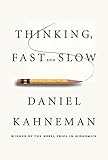
Daniel Kahneman won the Nobel Prize in economics for research showing that humans are not rational actors. We have two thinking systems: fast thinking (automatic, emotionally guided) and slow thinking (deliberate, logical). We rely on fast thinking way more than we should, which leads to consistent errors.
Kahneman walks you through the biases and heuristics that distort your judgment. Anchoring (the first number you see influences all subsequent estimates), availability heuristic (memorable examples feel more common than they are), overconfidence, loss aversion, and dozens of others. By understanding these patterns, you can't eliminate them (they're how your brain is wired), but you can build systems to counteract them. If you want to understand why you make the decisions you make and how to make better ones, this is the map.
Get it here: Thinking, Fast and Slow on Amazon
3. The Courage to Be Disliked by Ichiro Kishimi and Fumitake Koga
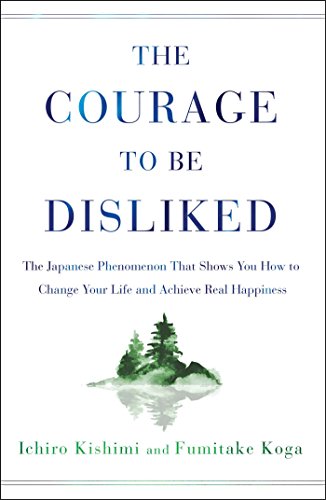
This book is a dialogue between a student and a philosopher about Alfred Adler's ideas. It reads like a story, not a textbook. The student keeps pushing back against the philosopher's claims, and through that resistance, the book unfolds. Adler's core insight: your past doesn't determine your future, your interpretation of your past does. You also choose your current unhappiness (not consciously, but you choose it because it serves you in some way).
This sounds harsh but it's liberating. If you created your current situation through interpretations and choices, you can create a different situation. You don't have to wait for external change. The book tackles loneliness, rejection, family trauma, inferiority, and how to build genuine relationships. It challenges the victim narrative without dismissing real suffering. It's philosophy framed as conversation, which makes it more digestible than academic texts on Adler. If you've been waiting for your life to change externally and nothing is happening, Adler's ideas force you to examine what you're choosing.
Get it here: The Courage to Be Disliked on Amazon
4. Antifragile by Nassim Nicholas Taleb
Most self-help is about achieving stability and avoiding failure. Taleb argues the opposite: the goal isn't stability, it's to build systems that benefit from stress and volatility. He calls this "antifragility." Fragile breaks under stress. Robust handles stress. Antifragile improves under stress.
How do you build antifragility into your life? Take small losses (fail at low stakes), avoid large tail-risk events (the catastrophic failure that wipes you out), build redundancy, and have options. Taleb applies this to health (small stresses strengthen you), business (some businesses benefit from chaos), learning (you learn more from mistakes at low stakes), and society. The book is dense and Taleb is often infuriating (he loves his own rhetoric), but the core insight is valuable: the goal isn't to avoid challenges, it's to structure your life so challenges make you stronger.
Get it here: Antifragile on Amazon
5. Emotional Intelligence by Daniel Goleman

Daniel Goleman introduced the concept of emotional intelligence: the ability to recognize emotions in yourself and others, and to manage them effectively. He argues that EQ predicts success better than IQ. Smart people fail at life because they can't read a room, manage their own frustration, or build genuine relationships.
Goleman covers self-awareness (knowing your emotional triggers), self-regulation (managing impulses), motivation (what actually drives you), empathy (understanding others' emotions), and social skills (managing relationships). The book uses case studies and is grounded in neuroscience. What makes it useful: it treats emotions as data, not weaknesses. If you're angry, that's information about something mattering to you. If you're anxious, that's your nervous system telling you something. Rather than suppressing emotions, you learn to read them and respond strategically. For anyone struggling with relationships or self-sabotage, understanding your emotional patterns is the foundation.
Get it here: Emotional Intelligence on Amazon
Key Takeaways
These books avoid the self-help trap of motivational empty calories. They offer systems (Clear), psychology (Kahneman), philosophy (Kishimi), antifragility principles (Taleb), and emotional frameworks (Goleman). Together they show that change comes from understanding how you actually work, then building systems that leverage that understanding.
Start with Clear if you want to change a specific behavior. Start with Goleman if you want to understand your emotional patterns. Start with Kahneman if you want to make better decisions. Kishimi if you want to question your narrative about your past. Taleb if you want to rethink what success means.
Frequently Asked Questions
Q: Do these books require me to change my lifestyle dramatically? A: Clear's approach is specifically about small changes. The others are about understanding yourself better, which can lead to change but doesn't require overhaul.
Q: Which book should I read first if I'm struggling with anxiety? A: Start with Goleman to understand what anxiety is telling you. Then Clear to build systems that reduce anxiety triggers. Then Taleb to reframe anxiety as information.
Q: Are these books scientific? A: Kahneman and Goleman are backed by decades of research. Clear cites research. Kishimi is philosophy based on psychology. Taleb is theoretical but grounded in probability. None are pseudoscience.
Q: Can I read these books and see immediate results? A: Clear shows results in weeks if you implement his system. The others require more reflection and time, but the understanding compounds.
Q: Should I read these books in a specific order? A: Start with Clear for systems and Kahneman for understanding bias. The others are complementary and work in any order.
Skriuwer Editorial recommends reading these books with a notebook nearby. The value comes from applying ideas, not just consuming them.
Your next good book, in your inbox
We only write when we find a book worth your time. Hand-picked recommendations across history, mythology, true crime and more.
Are you an author?
Get your book in front of readers like these, for free.
- Free book listing →Your own book page with an Amazon button
- Author page →Photo, bio and links to your site
- Featured placement →A spot in our best-of lists, from €29
Free tools we recommend
Get free honest reviewsReview exchange on iWrity, free to join
Books You Might Like

It Ends with Us: A Novel
Colleen Hoover

The Seven Husbands of Evelyn Hugo: A Novel
Taylor Jenkins Reid

The Song of Achilles
Madeline Miller

Educated: A Memoir
Tara Westover