Best Sociology Books in 2026: Understanding Human Behavior and Society
Best Sociology Books in 2026
Sociology is the study of human behavior in groups, institutions, and entire societies. It examines why we do what we do, how power flows through communities, and what forces shape our beliefs and actions. The best sociology books make this invisible machinery visible. They strip away the myths we tell ourselves about how society works and show you the actual patterns underneath.
Whether you are interested in inequality, culture, technology's impact, or the structure of everyday interaction, there is a sociology book that will change how you see the world.
The Sociological Imagination by C. Wright Mills
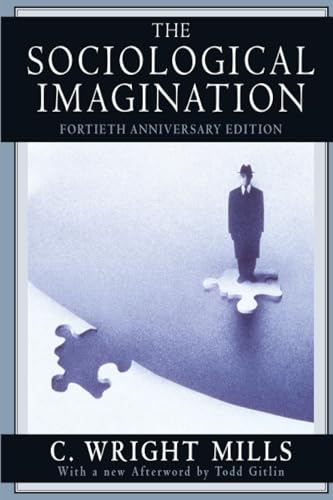
This is the foundational text that defined what sociology actually is. Mills argued that sociology is not about memorizing statistics or isolated facts. It is about developing an imagination that can connect personal troubles to public issues, and vice versa. When you understand the "sociological imagination," you stop blaming individuals for systemic problems and start asking what forces in society created the conditions in the first place.
Mills wrote this in 1959, but the book is more relevant now than ever. In an age of social media fragmentation and political polarization, the ability to see your personal life in historical and social context is crucial.
Bowling Alone by Robert Putnam
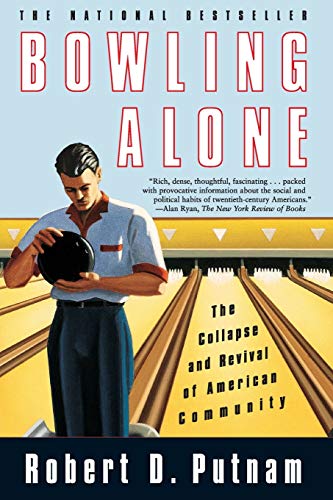
Putnam documents the collapse of civic participation in America over the last 50 years. Fewer people join clubs, attend church, play team sports, or visit friends. Putnam calls this decline in social capital "bowling alone" (people still bowl, but they bowl alone rather than in leagues). This loss of community connection has ripple effects on everything from health to crime to political polarization.
The book is data-heavy but readable, and the implications are unsettling. It forces you to confront how much loneliness is baked into modern life and who benefits from our social disconnection.
The Second Sex by Simone de Beauvoir
This is one of the most important books ever written. De Beauvoir argues that women are not born inferior to men, they are made so by society. The book examines how gender is constructed and maintained through education, culture, sexuality, and institutional power. It is the origin point for modern feminist theory and remains radical.
The book is long and dense in places (especially the middle sections), but the core argument is clear and devastating. If you want to understand how gender works as a system of power rather than just as a collection of personal choices, this is essential reading.
Freakonomics by Steven Levitt and Stephen Dubner

Levitt is an economist, but he thinks like a sociologist. Freakonomics asks the kind of questions that make sociology fun: Why do drug dealers live with their moms? How is sumo wrestling like teaching to a test? What do teachers and sumo wrestlers have in common? The book shows that economics is really the study of human incentives and behavior, which makes it fundamentally sociological.
The writing is clear and witty. Each chapter is short enough to read in one sitting. The book makes you see how hidden incentives shape behavior in ways people do not expect or talk about.
The New Jim Crow by Michelle Alexander
Alexander examines mass incarceration as a racial caste system. She argues that the criminal justice system, supposedly color-blind, functions as a tool of racial control just as effectively as Jim Crow laws did. The book traces how drug policy, policing, and sentencing practices have created a permanent underclass of Black Americans locked out of voting, employment, and housing.
This is not abstract sociology. It is a close analysis of policy and law, grounded in data and real stories. It changed public conversation about criminal justice and remains the definitive work on the sociology of incarceration.
Educated by Tara Westover
Westover's memoir about growing up in a survivalist cult in Idaho is also a masterclass in sociology. The book shows how family ideology, isolation, and control shape what someone believes to be possible. It is also a story about how education disrupts that cycle and what it costs to break free from a total institution.
Read this for the personal drama, but also for what it reveals about how institutions (family, education, religion) control information and belief.
Strangers in Their Own Land by Arlie Russell Hochschild
Hochschild, a legendary sociologist, spent five years in Louisiana talking to people who felt abandoned by the political system. The book is part ethnography, part narrative journalism. She listens to their stories without dismissing them, then examines what she is hearing through a sociological lens.
The result is a stunning portrait of how people construct meaning from economic despair and political alienation. Hochschild shows how the same facts can be interpreted completely differently depending on where you are standing and what stories you have already internalized.
The Presentation of Self in Everyday Life by Erving Goffman
Goffman argues that social life is like theater. We all perform roles, manage impressions, and control information about ourselves. We have a "front stage" version of ourselves (what others see) and a "backstage" version (what we hide). Understanding this can be eye-opening.
The book is short but packed with insight. Once you read Goffman, you start seeing social interaction as a constant negotiation of appearances. It is impossible to unsee.
Capital in the Twenty-First Century by Thomas Piketty
Piketty is an economist, but this is a work of social analysis at its core. He examines how wealth concentrates over time and how political systems (taxes, inheritance laws, regulation) either accelerate or slow that concentration. The book is data-driven and uses history to show long-term patterns in inequality.
It is long and detailed, but the argument is clear: without intervention, wealth begets wealth, and inequality spirals indefinitely. The book is essential for understanding modern capitalism as a social system.
Conclusion
The best sociology books are those that make you see the structures you have been living inside without noticing them. They expose how much of what we think is natural or inevitable is actually constructed and maintained by people with power. Once you start thinking like a sociologist, you cannot turn it off.
Your next good book, in your inbox
We only write when we find a book worth your time. Hand-picked recommendations across history, mythology, true crime and more.
Are you an author?
Get your book in front of readers like these, for free.
- Free book listing →Your own book page with an Amazon button
- Author page →Photo, bio and links to your site
- Featured placement →A spot in our best-of lists, from €29
Free tools we recommend
Get free honest reviewsReview exchange on iWrity, free to join
Books You Might Like

It Ends with Us: A Novel
Colleen Hoover

The Seven Husbands of Evelyn Hugo: A Novel
Taylor Jenkins Reid

The Song of Achilles
Madeline Miller

Educated: A Memoir
Tara Westover