Best Southern Gothic Books in 2026: 12 Novels That Find Horror in the American South's Dark Past
Southern Gothic is America's most honest literature. While other regional traditions have sometimes celebrated or sentimentalized the places they describe, Southern Gothic does the opposite: it finds the horror underneath the charm, the violence underneath the hospitality, the decay underneath the magnolia. It refuses to let the South forget its sins by making those sins into ghosts that still walk the land. The grand house is rotting from inside. The family secret is not really a secret. The thing everyone agreed never to discuss is the thing that explains everything.
The tradition runs from William Faulkner through Flannery O'Connor and outward into contemporary writers who have expanded its geography and its politics. At its best, Southern Gothic is not regional at all: it is a way of looking at any culture that was built on violence and has tried to paper over that violence with manners and tradition. The twelve books below are the essential ones.
The Defining Works
A Good Man Is Hard to Find by Flannery O'Connor (1955)
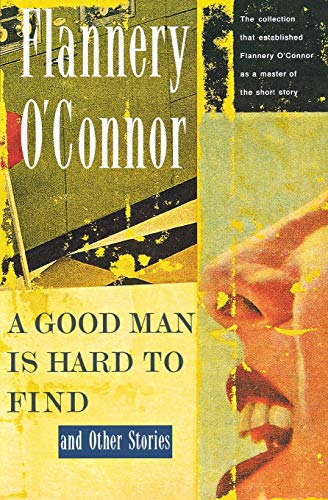
A Good Man Is Hard to Find is the collection that defined the genre as a literary category. O'Connor was a devout Catholic who saw grace as violent and grotesque, something that arrives through catastrophe rather than comfort. The title story follows a family on a road trip that ends in massacre at the hands of a serial killer called The Misfit. The grandmother's moment of genuine grace comes when she is about to be shot. This pattern, violence as the vehicle for spiritual awakening, runs through every story in the collection and it unsettles readers today as much as it did in 1955. The peacock in "The Displaced Person," the Bible salesman in "Good Country People," the wooden leg and the nihilist thesis: O'Connor packed more darkness into short fiction than most novelists manage in careers.
The Sound and the Fury by William Faulkner (1929)
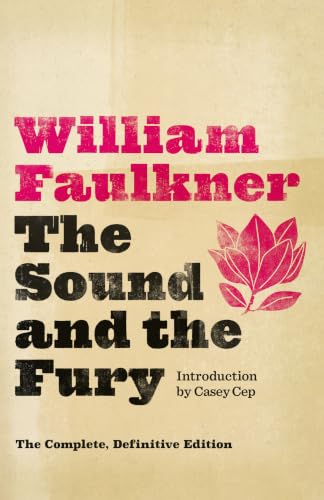
The Compson family of Jefferson, Mississippi are the central case study of Southern Gothic at its most formally ambitious. The Sound and the Fury tells their story four times through four different consciousnesses, beginning with the interior monologue of Benjy, who is severely intellectually disabled and experiences time non-linearly. The family's decay, the sold land, the lost honor, the sister who was sent away in disgrace, the brother who kills himself at Harvard, the mother who retreats into permanent invalidism: all of it is presented without authorial judgment, which makes the horror more complete. Faulkner won the Nobel Prize partly on the strength of this novel. It is difficult and it rewards the difficulty.
Beloved by Toni Morrison (1987)

Beloved is the most important American novel of the second half of the twentieth century and a Southern Gothic masterwork. Sethe is a former enslaved woman living in Cincinnati in 1873 with a ghost that haunts her house. When a young woman calling herself Beloved appears at the door, Sethe slowly realizes that the dead can return and that the past cannot be simply survived. Morrison based the novel on the true story of Margaret Garner, an enslaved woman who killed her daughter rather than let her be returned to slavery. The novel asks what it means to carry a history of such extremity in your body and in your land. It is a ghost story, a love story, and the definitive literary confrontation with American slavery.
The Canon
Outer Dark by Cormac McCarthy (1968)
McCarthy's second novel and his first fully Appalachian Gothic work. A woman in the Appalachian backwoods gives birth to her brother's child. He abandons the infant in the woods. She goes looking for it. The novel follows both siblings across a landscape haunted by three unnamed men who move through the periphery of every scene, leaving violence behind them. McCarthy strips the prose down to near-biblical plainness and the effect is a kind of folk horror that feels genuinely ancient. If you find Blood Meridian too demanding as a starting point, Outer Dark is where McCarthy's darkness first fully developed.
Other Voices, Other Rooms by Truman Capote (1948)
Capote published this at twenty-three and it remains his most Gothic work, a novel about a thirteen-year-old boy who travels to a crumbling Louisiana mansion to meet the father he has never known and finds instead decay, mystery, and a cross-dressing recluse who becomes his only real companion. The atmosphere is extraordinary: the house, the Spanish moss, the slowly revealed truth about the father. Capote was writing about his own childhood displacement and sexual identity through the lens of Southern Gothic, and the coding is legible but never didactic.
The Heart Is a Lonely Hunter by Carson McCullers (1940)
McCullers was twenty-three when this was published and its maturity is astonishing. Set in a small Georgia mill town, the novel centers on John Singer, a deaf-mute man who becomes the confessor for five lonely people who project onto him whatever they need him to be. The grotesque in McCullers is quieter than O'Connor's, embedded in loneliness and isolation rather than violence, but it is no less total. Singer's own inner life, and the person he is actually confessing to, form the novel's devastating structural irony.
To Kill a Mockingbird by Harper Lee (1960)

The courtroom drama is what everyone remembers, but To Kill a Mockingbird is a Gothic novel. Boo Radley locked in his house for years, the rumors that circulate about him, the night of the attack, the figure moving through darkness: Lee understood the Gothic machinery and built her civil rights argument inside it. The town of Maycomb is rotting with racism that presents itself as tradition and decorum, and the children who see through it do so partly because they are young enough to still be afraid of the dark. The Gothic frame is what gives the moral argument its emotional weight.
Tobacco Road by Erskine Caldwell (1932)
Caldwell's portrait of the Lester family, white tenant farmers in Georgia in the final stages of destitution, is among the most extreme examples of the grotesque in American fiction. Jeeter Lester cannot stop farming land that will no longer support him. His family disintegrates through starvation, accident, and violence. The novel was enormously controversial on publication and banned in several cities, both for its sexual content and for its depiction of poverty as a form of social hereditary disease. It is not comfortable reading and it was not meant to be.
A Feast of Snakes by Harry Crews (1976)
Crews grew up in rural Georgia and set this novel at a rattlesnake festival in a small Florida Panhandle town. The protagonist is a former high school football star whose brief moment of glory is the only thing that defined him and who has been sliding toward violence ever since. Crews is the most directly grotesque of the Southern Gothic writers: bodies, poverty, and the human animal stripped of its social pretensions. A Feast of Snakes is his most concentrated and violent novel and it builds to an ending that is both inevitable and shocking.
Winter's Bone by Daniel Woodrell (2006)
Ree Dolly is sixteen, raising her younger siblings in the Ozark mountains of Missouri, when her father disappears after putting the family's house up for bail. If he does not appear for his court date, they lose everything. Ree's search for him takes her into the meth-cooking networks that run through the entire community, where asking questions is dangerous and family loyalty is absolute. Woodrell coined the phrase "country noir" to describe his work. Winter's Bone is its masterpiece. The novel that became the film that launched Jennifer Lawrence is quieter and more specific than the film, and the ending is harder.
Geronimo Rex by Barry Hannah (1972)
Hannah's debut novel follows Harry Monroe through adolescence in a small Mississippi town, obsessed with Geronimo as a figure of pure violent resistance to civilization. The novel is wilder and funnier than most Southern Gothic, more interested in the comedy of male rage than in the tragedy of it, but the darkness is genuine. Hannah's prose is stylistically distinctive: sentences that detonate unexpectedly, a rhythm that is closer to jazz than to the measured Southern speech of Faulkner. He became a major influence on a generation of writers, including Larry Brown and Tom Franklin, who took his energy in more grounded directions.
The Orchard Keeper by Cormac McCarthy (1965)
McCarthy's debut, set in the Tennessee mountains, follows three characters whose lives intersect around a corpse rotting in an old pesticide pit. The novel has the quality that all early McCarthy has: a feeling that the landscape is morally aware, that the mountains themselves are watching and judging. It lacks the formal ambition of his later work but it is already recognizably McCarthy, and it shows where the Gothic tradition flows into the harder naturalism of the Appalachian novel.
The Argument Behind the Genre
Southern Gothic is often misread as regional nostalgia or as a literary version of true crime: violence and decay as entertainment. The best work in the tradition is doing something more specific. It is examining what happens to a culture that built its prosperity on violence and then told itself a different story about that violence for generations. The ghosts in these novels are not supernatural. They are historical. The rotting house is not a metaphor. It is a fact about what happens when you build on a foundation that cannot bear the weight.
Start with A Good Man Is Hard to Find for the purest introduction to the form. Then read Beloved for the most important political argument the genre has produced. The Sound and the Fury is where you go when you are ready for the most demanding version of all of it.
Your next good book, in your inbox
We only write when we find a book worth your time. Hand-picked recommendations across history, mythology, true crime and more.
Are you an author?
Get your book in front of readers like these, for free.
- Free book listing →Your own book page with an Amazon button
- Author page →Photo, bio and links to your site
- Featured placement →A spot in our best-of lists, from €29
Free tools we recommend
Get free honest reviewsReview exchange on iWrity, free to join
Books You Might Like

It Ends with Us: A Novel
Colleen Hoover

The Seven Husbands of Evelyn Hugo: A Novel
Taylor Jenkins Reid

The Song of Achilles
Madeline Miller
