Best Supernatural and Cosmic Horror Books in 2026: 10 That Make the Universe Feel Threatening
Cosmic horror works from a single, devastating premise: that the universe is not hostile toward humanity, it is simply indifferent, and indifference at that scale is far worse than hostility. A universe that hates you has at least noticed you. Cosmic horror imagines something older and larger and so thoroughly disinterested in your existence that encountering it produces not fear exactly but the particular horror of realising you were never the point.
The tradition began with H.P. Lovecraft in the 1920s and has expanded into something far more varied and technically sophisticated than Lovecraft himself achieved. This list covers the founding texts, the critical modern expansions, and the writers working at the edge of what the genre can currently do. Every entry makes the universe feel threatening in a distinct way.
What Separates Cosmic Horror From Other Horror
Standard horror puts a recognisable threat against a human being. A killer, a monster, a ghost, something that wants to hurt you or your family or your town. Cosmic horror removes the threat's interest in you entirely. The entity at the centre of a cosmic horror story is not trying to scare you. It does not know you exist. The horror is epistemic: what you thought was the shape of reality turns out to be a very thin surface over something that has no shape you can hold in your mind, and once you have seen through the surface, you cannot unsee it.
The best entries in the genre are therefore almost always about perception and its limits. The investigators, academics, and reluctant witnesses at their centres are destroyed not by violence but by knowledge.
The Call of Cthulhu and Other Weird Stories by H.P. Lovecraft
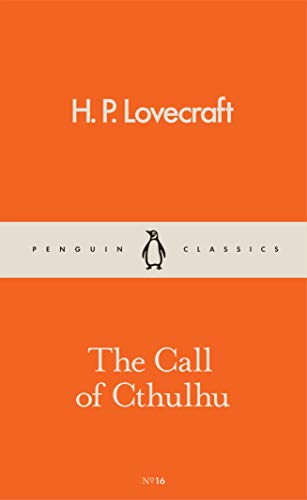
The Penguin Classics collection edited by S.T. Joshi is the standard starting point for Lovecraft, and the title story remains the most efficient demonstration of the genre's central mechanism. Scattered fragments of a dead man's papers lead a narrator to assemble a picture of something ancient and vast sleeping beneath the Pacific Ocean, and the assembly itself is what damages him. The horror is in the connecting of dots.
Lovecraft's prose is purple by contemporary standards, and his personal bigotry is documented and real, something his current readership and the scholars who study him do not paper over. What survives the prose and the biography is the core idea: that there are things in the universe for which human consciousness is not scaled, and contact with them is not enlightening, it is dissolving. Find The Call of Cthulhu on Amazon.
Annihilation by Jeff VanderMeer
VanderMeer's 2014 novel follows an unnamed biologist who enters Area X, a stretch of wilderness sealed off from the outside world after some unexplained event, as part of the twelfth expedition to study it. The previous eleven expeditions ended in suicide, murder, cancer, or the members returning as recognisable shells with no memory and a short life expectancy.
Annihilation is Lovecraftian in its approach to the unknown, but where Lovecraft describes the terrible thing, VanderMeer withholds description entirely. Area X remains genuinely inexplicable by the end of the novel, and the inexplicability is not a narrative failure but the point. The biologist's notes, which constitute the novel, keep adjusting to new data that will not cohere. The book is the record of a mind trying to make sense of something that cannot be made sense of. Find Annihilation on Amazon. VanderMeer is also the defining figure of New Weird fiction, the subgenre that blends this kind of ecological dread with secondary-world fantasy; our best New Weird fiction books list covers Annihilation alongside China Miéville and Gene Wolfe.
The Conspiracy Against the Human Race by Thomas Ligotti
Ligotti is fiction's most committed philosophical pessimist, and this 2010 nonfiction work is the most direct statement of the worldview that runs through all his horror. Drawing on Schopenhauer, Zapffe, and Cioran, Ligotti argues that consciousness is a catastrophic evolutionary mistake, that the awareness of our own mortality and the meaninglessness of existence is something only humans carry and that it constitutes a kind of suffering with no compensating purpose.
This is not a book that tries to cheer you up. It is also not nihilistic in a trivial way. Ligotti's argument is careful and his prose is exact, and readers who engage with it seriously come away with a sharper understanding of why cosmic horror lands the way it does: the genre is doing philosophy through fear.
Survivor Song by Paul Tremblay
Tremblay works in a different register from the cosmic tradition but belongs on this list because his horror consistently achieves the quality cosmic horror aims for: the removal of agency in the face of something that does not know or care you exist. Survivor Song follows two women across a single day in which a rabies variant is spreading exponentially through Massachusetts. The epidemic is not malevolent. It has no interest in the characters. It is simply a biological process, and the terror is in watching competent, caring people discover that competence and care are not sufficient against something operating at that scale.
The Imago Sequence by Laird Barron
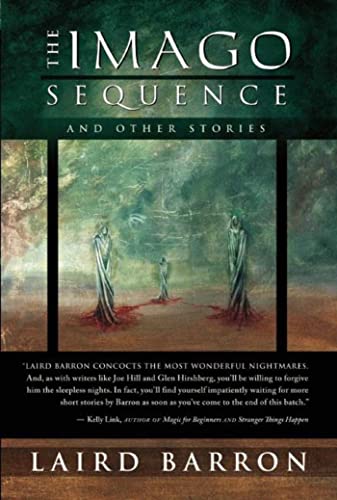
Barron's debut collection is the best introduction to what happened to cosmic horror after Lovecraft. The title novella follows the search for a missing woman through a series of photographs, each one showing something in the background that should not be there, something that keeps changing between prints. Barron's strength is landscape: the Pacific Northwest features in most of these stories, and he makes wilderness feel genuinely prehistoric, as if the land remembers things humans cannot.
The collection works because Barron is not imitating Lovecraft. He is taking the core idea, that there are presences in the world that predate human consciousness and are indifferent to it, and rendering it through contemporary sensibilities, contemporary violence, and prose that has absorbed fifty years of literary development since the original Weird Tales pulps. Find The Imago Sequence on Amazon.
The Doll Who Ate His Mother by Ramsey Campbell
Campbell's debut novel from 1976 is routinely cited as the most important British contribution to the Lovecraftian tradition. A group of people connected by a car accident investigate the figure responsible for a series of increasingly disturbing crimes in Liverpool. What they find underneath the city, literally and figuratively, is something that has been feeding on the community for longer than any of them can account for.
Campbell's skill is urban atmosphere. His Liverpool is a specific, recognisable place and the horror infiltrates it through ordinary surfaces: the pub, the flat, the street corner, the local library where the records trail off at the point they become useful. He makes the familiar uncanny in a way that Lovecraft's exotic settings never quite achieve.
A Collapse of Horses by Brian Evenson
Evenson's story collection operates at the edge of comprehensibility in a way that few horror writers attempt. The stories are formally strange, built on narrators whose reliability dissolves mid-sentence, on events that contradict the events that preceded them, on an overall sensation that the ground of the fiction is not stable and that this instability is not a trick but a condition.
The cosmic horror here is almost entirely psychological. Evenson is not interested in the monster under the ocean. He is interested in the moment when a perceiving mind can no longer be certain that what it perceives is real, and the stories are constructed to reproduce that experience in the reader. The collection is difficult and it is among the most original horror writing of the last decade.
Three More Cosmic and Supernatural Horror Reads
The genre is wider than any single list can contain. These three titles are essential reading for anyone going deeper.
- The Haunting of Hill House by Shirley Jackson: technically a haunted house novel, but the question the book never answers is whether Hill House is supernatural or whether Eleanor's deteriorating mind is producing everything the narrative reports. The ambiguity is precise and intentional, and the final pages are among the most disturbing in American fiction.
- Songs of a Dead Dreamer and Grimscribe by Thomas Ligotti: the fiction collection that preceded The Conspiracy Against the Human Race and demonstrates how Ligotti's philosophical pessimism translates into story. "The Frolic" and "The Chymist" are the two stories to read first.
- The Cipher by Kathe Koja: a hole appears in a storage room. It is perfectly black, perfectly round, and looking into it changes the people who look. Koja's novel is body horror and cosmic horror at the same time, and its portrait of two people destroying themselves in proximity to the inexplicable is genuinely affecting.
Where to Start
New readers should begin with Annihilation. It is the contemporary novel that most fully achieves what cosmic horror aims for, it is short, and it avoids the dated prose and documented prejudice that complicate a first encounter with Lovecraft. Read the Lovecraft collection after, when you have a frame for what he was attempting. For the philosophical dimension of the genre, Ligotti's The Conspiracy Against the Human Race is the clearest statement. For fiction at the current edge of the form, Barron's The Imago Sequence and Evenson's A Collapse of Horses show where the tradition is going.
Your next good book, in your inbox
We only write when we find a book worth your time. Hand-picked recommendations across history, mythology, true crime and more.
Are you an author?
Get your book in front of readers like these, for free.
- Free book listing →Your own book page with an Amazon button
- Author page →Photo, bio and links to your site
- Featured placement →A spot in our best-of lists, from €29
Free tools we recommend
Get free honest reviewsReview exchange on iWrity, free to join
Books You Might Like

It Ends with Us: A Novel
Colleen Hoover

The Seven Husbands of Evelyn Hugo: A Novel
Taylor Jenkins Reid

The Song of Achilles
Madeline Miller
