Best YA Books of All Time: 10 Coming-of-Age Stories Adults Love Too
The best coming-of-age stories are not really about being young. They are about the specific terror and clarity of being in a moment of change, when the world has not yet hardened around you and the choices you make still feel provisional. That quality is what makes readers return to these books as adults and find something different in them than they did the first time.
This list covers ten books across more than sixty years of YA and coming-of-age fiction. Some were written before the YA category existed as a marketing term. All of them have held their readership across generations.
The Catcher in the Rye by J.D. Salinger
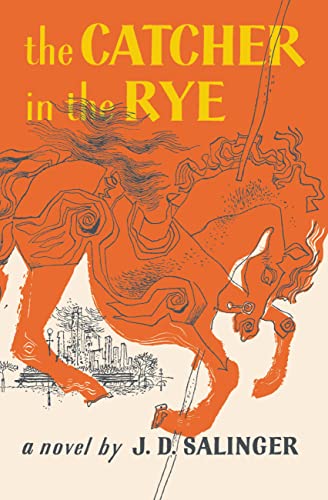
J.D. Salinger's The Catcher in the Rye (1951) is the novel that defined the coming-of-age genre for American literature. Holden Caulfield, sixteen years old and recently expelled from his fourth prep school, spends three days alone in New York City observing what he calls the "phoniness" of the adult world while avoiding his parents and slowly losing his grip on coherence. The voice is the book's entire achievement: immediate, circular, funny, and genuinely painful in ways that feel lived rather than performed.
Readers tend to find Holden either deeply sympathetic or deeply irritating, and sometimes both simultaneously. That ambivalence is the point. Salinger captures with uncomfortable accuracy the self-awareness that coexists with total blind spots, the contempt for inauthenticity that is itself a performance. The novel has been banned from school curricula more than almost any other book in American history, mostly for the same qualities that make it worth reading.
The Catcher in the Rye by J.D. Salinger is the foundational coming-of-age novel in American literature, still current more than seventy years after publication.
The Outsiders by S.E. Hinton
S.E. Hinton wrote The Outsiders (1967) when she was fifteen years old, and it reads like someone writing about something they needed to write about rather than something they were trying to accomplish. The novel follows Ponyboy Curtis, fourteen, a Greaser in a working-class neighborhood in Tulsa navigating a violent rivalry with the Socs, the wealthier kids from the other side of town. Two deaths, one in self-defense and one as sacrifice, structure the plot. The ending is a piece of craft that most adult novelists would be proud of.
What makes The Outsiders endure is the texture of male friendship and loyalty it captures without sentimentality. Hinton understood something that most adult writers approaching the same material do not: that teenage boys have the same emotional depth as anyone, expressed in forms that adults often misread. The novel has sold more than 14 million copies and is still frequently the first "serious" novel many readers encounter.
The Fault in Our Stars by John Green
John Green's The Fault in Our Stars (2012) is the most commercially successful YA novel of the 2010s and the book that introduced most of its generation to Green's characteristic mode: teenagers who are intellectually sharper than most adults would find comfortable, placed in circumstances that force them to think clearly about mortality. Hazel, sixteen and living with terminal cancer, meets Augustus at a support group. The novel is a love story organized around the question of what it means to live meaningfully when you know the timeline.
The criticism most often leveled at Green is that his characters are too articulate, too literary, too philosophically composed for their ages. The counter-argument is that some teenagers genuinely are, and that fiction does not have a duty to reflect average experience. The emotional beats of the novel are earned rather than manipulated, and the ending avoids the falseness that lesser treatments of the same material usually fall into.
The Hunger Games by Suzanne Collins
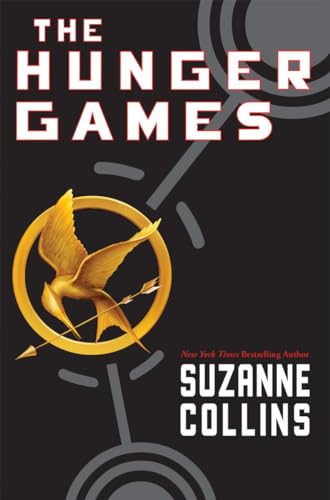
Suzanne Collins's The Hunger Games (2008) is the dystopian YA novel that established the template for a decade of successors. Katniss Everdeen, seventeen, volunteers to replace her younger sister in the annual Hunger Games, a televised combat event in which children from twelve conquered districts fight to the death for the entertainment of the ruling Capitol. The novel is a thriller, a survival story, and a critique of reality television and political spectacle simultaneously.
What separates The Hunger Games from its many successors is Collins's refusal to make Katniss an uncomplicated hero. Katniss is practical, sometimes ruthless, often manipulated, and frequently unsure of her own motivations. The novel's politics, which draw explicitly on Roman gladiatorial culture and modern media spectacle, are more sophisticated than the genre usually attempts. The sequels are substantially darker and more honest about the costs of revolution than most YA fiction in the same space.
The Hunger Games by Suzanne Collins is the best dystopian YA novel and a more politically serious book than its mainstream reception sometimes suggests.
Eleanor and Park by Rainbow Rowell
Rainbow Rowell's Eleanor and Park (2013) is a love story set in 1986, following two misfit teenagers on the same school bus in Omaha who fall for each other over shared comic books and mixed tapes. Eleanor is large, poorly dressed, and comes from a chaotic and dangerous home. Park is half-Korean, quiet, and uncertain about his place in both his family and his school. The novel is deliberately small in its ambitions and extraordinarily precise in its emotional detail.
Eleanor and Park belongs on a list of the best YA books of all time because it accomplishes something rare: it depicts the specific texture of falling in love for the first time without either romanticizing it past recognition or undercutting it with adult irony. The ending is deliberately inconclusive in a way that has frustrated some readers and that others find exactly right. It is the most authentically romantic book on this list.
City of Bones by Cassandra Clare
Cassandra Clare's City of Bones (2007), the first book in the Mortal Instruments series, is the best example of urban fantasy YA: a New York City in which a shadow world of Shadowhunters, demons, warlocks, vampires, and werewolves exists alongside the mundane world, visible only to those with the sight. Clary Fray is fifteen when she witnesses a murder in a nightclub that no one else can see, and the unraveling of her ordinary reality drives the first novel.
Clare's worldbuilding is detailed and consistent, and she populates her series with a large ensemble cast that rewards long-term readers. City of Bones is not the most literary book on this list, but it is one of the most purely pleasurable, and the Shadowhunter Chronicles as a whole represent one of the most sustained acts of YA world-creation in the genre's history. The series has sold more than 50 million copies across all its branches.
The Hate U Give by Angie Thomas
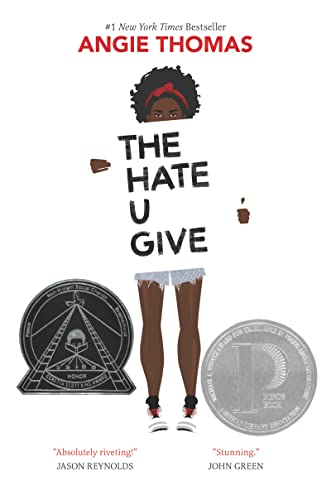
Angie Thomas's The Hate U Give (2017) follows Starr Carter, sixteen, who witnesses the police shooting of her childhood best friend Khalil at a traffic stop. The novel then follows the aftermath: the investigation, the protests, the community fractures, and Starr's own reckoning with code-switching between her Black neighborhood and her predominantly white private school. Thomas named the book after Tupac's concept of THUG LIFE, "The Hate U Give Little Infants F---s Everybody."
The Hate U Give is the most directly political book on this list and also one of the most emotionally precise. Thomas writes Starr's experience with the kind of specificity that comes from personal knowledge, and the novel refuses easy resolutions. It was one of the most banned books in the United States in both 2021 and 2022. Read it regardless of where you stand on the politics, because the novel earns its positions through character and story rather than argument.
The Hate U Give by Angie Thomas is the best coming-of-age novel of the 2010s and essential reading for anyone who wants to understand what the YA genre can accomplish at its most serious.
To Kill a Mockingbird by Harper Lee

Harper Lee's To Kill a Mockingbird (1960) predates YA as a category but is one of the foundational texts of coming-of-age fiction. Scout Finch, eight years old in the novel's main action, narrates the story of her father Atticus's defense of a Black man falsely accused of rape in 1930s Alabama. The novel is simultaneously a moral education story, a portrait of small-town Southern life, and one of the most direct treatments of racial injustice in American literary fiction.
The novel has faced scrutiny in recent years for using racial violence primarily as a vehicle for a white character's moral development, and that is a fair criticism worth holding alongside the book's considerable achievement. Lee's prose is precise and the portrait of childhood friendship and perception is among the most accurate in American literature. It remains one of the most read novels in the English language and the most assigned in American schools.
Speak by Laurie Halse Anderson
Laurie Halse Anderson's Speak (1999) follows Melinda Sordino through her freshman year of high school after she called the police at an end-of-summer party and stopped speaking in any meaningful way. The reason for the call is revealed gradually: she was raped at the party by an older student. The novel is about trauma, silence, and the process of finding language for an experience that language resists.
Speak is the book that most clearly defines what YA can do that literary fiction for adults often cannot: address the specific experiences of young readers directly, without euphemism, in a voice that feels real to them. Anderson's writing is exact and the narrative structure, Melinda's gradual return to speech, earns the ending completely. It is the most formally accomplished novel on this list after The Catcher in the Rye.
The Perks of Being a Wallflower by Stephen Chbosky
Stephen Chbosky's The Perks of Being a Wallflower (1999) is an epistolary novel told through letters from Charlie, fifteen, to an anonymous "friend." Charlie is brilliant, deeply sensitive, and slowly revealing a traumatic history through his account of his first year of high school, his friendships with two seniors, and his introduction to books, music, and drugs. The novel covers sexual abuse, suicide, depression, and friendship with genuine care and without manipulation.
The Perks of Being a Wallflower occupies the same cultural space as The Catcher in the Rye for the generation that grew up in the late 1990s. Both novels center a highly sensitive, intelligent narrator struggling to make sense of a world that seems designed for a different kind of person. Chbosky's version is more emotionally direct and less ironic, which makes it more immediately legible to younger readers. Like Salinger's novel, it has been frequently challenged or banned for its content.
Three YA Books to Start With
- The Catcher in the Rye by J.D. Salinger. The foundational text. Read it first if you have not already, and re-read it if you have not done so in a decade. The experience is different at different ages.
- The Hunger Games by Suzanne Collins. The best plotted book on the list and the most propulsive. Start here if you want a book that will not let you put it down.
- The Hate U Give by Angie Thomas. The most important recent addition to the genre. The most politically direct and the most emotionally immediate. Read alongside The Outsiders for how the genre has changed in fifty years.
Why Adults Read YA
The question is sometimes asked as if it requires justification. It does not. The books on this list are not simpler than adult literary fiction; they are different. They are often more emotionally direct, less concerned with ironic distance, and more willing to take stakes seriously without hedging them. The coming-of-age moment is the moment when the world first becomes legible as a choice rather than a given, and that experience does not stop being interesting once you are past it. If anything, the distance makes it clearer.
Your next good book, in your inbox
We only write when we find a book worth your time. Hand-picked recommendations across history, mythology, true crime and more.
Are you an author?
Get your book in front of readers like these, for free.
- Free book listing →Your own book page with an Amazon button
- Author page →Photo, bio and links to your site
- Featured placement →A spot in our best-of lists, from €29
Free tools we recommend
Get free honest reviewsReview exchange on iWrity, free to join
Books You Might Like

It Ends with Us: A Novel
Colleen Hoover

The Seven Husbands of Evelyn Hugo: A Novel
Taylor Jenkins Reid

The Song of Achilles
Madeline Miller
