10 Books Similar to Animal Farm (Power, Corruption, and Political Allegory)
Animal Farm works because it says something very simple in a very simple form: revolutions eat their children, power corrupts the people who seize it, and the oppressed, once liberated, reproduce the conditions of their oppression. Orwell wrote it in 1944 and could not find a publisher for two years because the allegory was too pointed at a wartime ally. When it finally appeared in 1945, it was an immediate sensation.
The books on this list share the same method or the same subject. Some are allegories, some are direct political satires, some are historical accounts that feel allegorical. All of them are about the machinery of power, the gap between what revolutions promise and what they deliver, and the specific ways in which language is used to manage that gap.
1. 1984 by George Orwell
The other Orwell. If Animal Farm is the allegory of the revolution that betrays itself, 1984 is the allegory of the state that revolution produces. Animal Farm is the before; 1984 is the after. Napoleon's pig dynasty, extended through time, would produce a society something like Airstrip One. Find 1984 on Amazon.
The two books are best read together. Animal Farm is short, cold, and almost funny in its economy. 1984 is long, claustrophobic, and not funny at all. Together they constitute Orwell's complete argument about totalitarianism.
2. Lord of the Flies by William Golding

A group of English schoolboys is stranded on an island after a plane crash. They attempt to organize themselves. The attempt fails, in exactly the way Orwell's revolutionary pigs fail: the structures of authority reproduce themselves, the language of order becomes the tool of domination, and the boy who represents genuine reason (Piggy) is destroyed. Find Lord of the Flies on Amazon.
Golding wrote Lord of the Flies as a direct response to The Coral Island, a Victorian boys' adventure in which English children on a desert island demonstrate the natural superiority of English civilization. His argument is the opposite: civilization is not natural but imposed, and without external enforcement, the habits of violence and hierarchy emerge spontaneously. The pig imagery in both books is not coincidental.
3. Gulliver's Travels by Jonathan Swift
Swift published Gulliver's Travels in 1726 and disguised a savage political satire as a children's travel story, which is how it has been misread ever since. The Lilliputians are England and France, bickering over which end of a boiled egg to open (Big-Endians and Little-Endians: Catholics and Protestants). The Yahoos are humans stripped of their pretensions. The Houyhnhnms are rational horses who cannot conceive that creatures who look like Yahoos could be worth talking to. Find Gulliver's Travels on Amazon.
Swift's political allegory is more specific and more local than Orwell's, but the method is identical: the defamiliarizing device (tiny people, horses, giants) allows the reader to see the familiar political landscape as if for the first time. The target of the satire is not a particular ideology but human nature as a political animal.
4. The Master and Margarita by Mikhail Bulgakov
Bulgakov wrote this novel in the Soviet Union in the 1930s, revised it obsessively for decades, and knew it could never be published in his lifetime. It was finally published, in heavily censored form, in 1966, twenty-six years after his death. Find The Master and Margarita on Amazon.
The Devil visits Moscow and proceeds to expose the hypocrisies, cowardices, and corruptions of Soviet literary and bureaucratic life in a series of scenes that are simultaneously comedy, horror, and prophecy. The Moscow sections are Animal Farm's satirical method applied to a living rather than historical revolution. The parallel story of Pontius Pilate and Jesus is one of the greatest pieces of writing in twentieth-century fiction, period.
5. Brave New World by Aldous Huxley
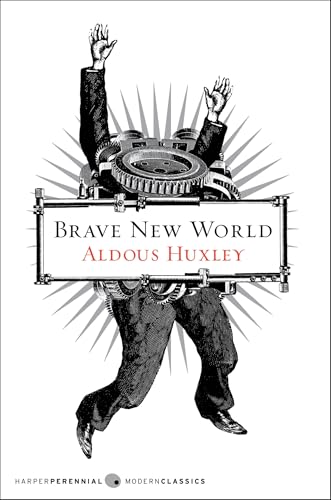
Where Animal Farm is about a revolution that imposes its power through terror and hunger, Brave New World is about one that imposes it through pleasure. Citizens of the World State are not hungry pigs watching their rations shrink while the pigs eat better; they are happy consumers who have been conditioned to want exactly what the system provides. Find Brave New World on Amazon.
Huxley's argument is that the Napoleonic pig dynasty, if it had been smarter, would not have tightened the rations. It would have figured out how to make the animals want to be hungry. The two books are the two poles of the same political argument.
6. The Iron Heel by Jack London
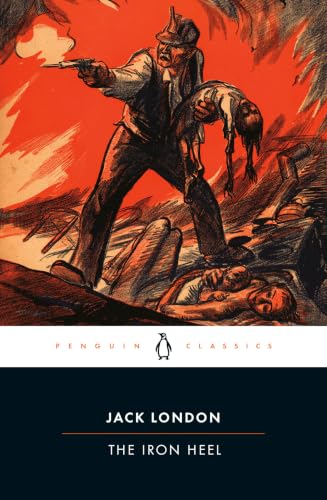
Published in 1908, this is the earliest of the dystopian warnings about fascism. The Iron Heel depicts an American oligarchy that rises to power in the early twentieth century, crushes organized labor, and maintains its control for three centuries. It is narrated as a recovered historical document. Find The Iron Heel on Amazon.
London was a socialist and the novel is openly polemical in a way that Orwell's allegory carefully is not. But the mechanism it describes (the ruling class organizing itself more effectively than the working class and using that organization to destroy opposition) is the same mechanism that Animal Farm illustrates with pigs and horses.
7. The Tin Drum by Gunter Grass
Oskar Matzerath is born in Danzig in 1924 and on his third birthday decides to stop growing. He narrates the rise and fall of the Nazi regime, and the chaos of the postwar period, from the height of a child, carrying a tin drum he uses to express what adult language cannot say. Find The Tin Drum on Amazon.
Grass's method is satirical and grotesque rather than allegorical, but his subject is the same as Orwell's: how ordinary people accommodate themselves to political evil, and what the language of that accommodation looks like. The tin drum is the anti-language that the regime cannot co-opt.
8. The Plague by Albert Camus
Oran is a city in Algeria. A plague arrives. The city is sealed. The novel follows a group of characters through the epidemic and recovery. Camus intended the plague as an allegory of the Nazi occupation of France, which he lived through. Find The Plague on Amazon.
The Plague shares Animal Farm's interest in how communities respond to organized evil and how ordinary individuals become complicit or resistant. But where Animal Farm is cold and satirical, Camus is warm and moral: his interest is not in the mechanics of how the pigs took power but in what human decency looks like when it operates under impossible conditions.
9. The Grapes of Wrath by John Steinbeck
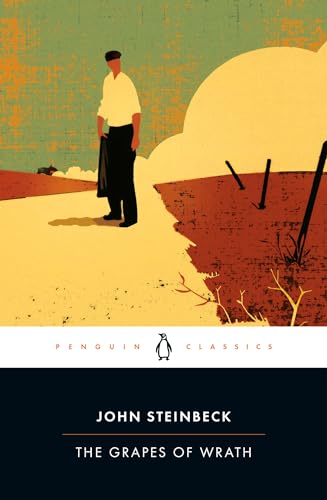
The Joad family is forced from their Oklahoma farm during the Dust Bowl and migrates to California, where they find not the promised land but an organized system for keeping agricultural laborers poor, mobile, and powerless. Find The Grapes of Wrath on Amazon.
Steinbeck is not writing allegory in the way Orwell is, but his subject is the same: the gap between what a system promises and what it delivers, and the language through which the powerful explain to the powerless why things cannot be otherwise. The landowners in California have a more sophisticated version of Squealer's propaganda: they call it economics.
10. A Modest Proposal by Jonathan Swift
Not a novel but a pamphlet, and only six pages long. Swift proposes, in 1729, that the poverty of Ireland could be solved by eating Irish babies, who would provide a source of protein for the wealthy English landlords and relieve Irish families of the burden of feeding children they cannot afford. Find A Modest Proposal on Amazon.
The pamphlet is the purest form of Orwell's method: the argument is advanced with complete logical consistency in the style of genuine policy recommendations, and it is effective precisely because it forces the reader to see what the actual policy toward Ireland was by showing what its logical extension would be. Animal Farm does the same thing at greater length and with a gentler surface.
Frequently asked questions
What is Animal Farm actually about?
Animal Farm is an allegory of the Russian Revolution and the early Soviet period. Farmer Jones represents Tsar Nicholas II. The pigs (especially Napoleon and Snowball) represent Lenin, Trotsky, and Stalin. The commandment revisions represent Stalinist historical revision. The final scene, where the animals cannot tell the pigs from the human farmers, represents Orwell's argument that the Soviet state had become indistinguishable from the capitalist states it claimed to oppose.
Why is Animal Farm considered a children's book?
It is not, really, though it has been shelved there. The surface of the story (talking animals, a farm revolt) resembles children's literature. The content is a cold, precise satire of totalitarian politics. It has been assigned in schools partly because its short length and simple prose make it accessible, and partly because its political target (the Soviet Union) was uncontroversial by the time it entered school curricula.
What is the meaning of the ending of Animal Farm?
The pigs and the human farmers are playing cards together, and the other animals watching through the window can no longer tell which is which. Orwell's point is that the revolution has not changed the fundamental relationship between rulers and ruled. It has only changed which figures occupy the position of the ruler. Power has corrupted the pigs into exactly what they overthrew.
Is Animal Farm banned anywhere?
Animal Farm has been banned in the Soviet Union, Cuba, and other Communist states where its allegory was transparent. It has also been challenged in some Western schools, usually over concern that it introduces young readers to political satire without sufficient context, or (less defensibly) because of the discomfort it causes when the allegory is applied to contemporary politics rather than historical ones.
Your next good book, in your inbox
We only write when we find a book worth your time. Hand-picked recommendations across history, mythology, true crime and more.
Are you an author?
Get your book in front of readers like these, for free.
- Free book listing →Your own book page with an Amazon button
- Author page →Photo, bio and links to your site
- Featured placement →A spot in our best-of lists, from €29
Free tools we recommend
Get free honest reviewsReview exchange on iWrity, free to join
Books You Might Like

Sapiens: A Brief History of Humankind
Yuval Noah Harari

The Last Kingdom (The Saxon Stories, Book 1)
Bernard Cornwell

Meditations
Marcus Aurelius

The Power of Now
Eckhart Tolle