Dark History Sleep Stories: 8 Hours of History's Strangest and Darkest Chapters (2026)
History's official version has always been cleaned up. The parts that are too embarrassing, too brutal, or too complicated get compressed into footnotes or dropped entirely. The Inquisition becomes a sentence. The medical experiments become a paragraph. The famines engineered by policy get filed under "unfortunate circumstances." Dark history sleep stories pull those footnotes out into the open and read them slowly in the dark, where they belong.
The Learn While You Sleep channel has a dedicated dark history playlist covering the strange, disturbing, and deliberately forgotten corners of the past. Inquisitions. Plagues. Weirdest kings. Lost empires. The content runs long, measured in hours, and the narration stays calm throughout, which makes it ideal for sleep even when the subject matter is unsettling.
8 Hours of Dark Ancient History Facts
This is the flagship dark history video on the channel. Eight hours covering the most disturbing and overlooked aspects of ancient civilizations: the violence, the rituals, the power structures built on fear, and the historical events that official accounts have consistently minimized. The length alone makes it exceptional sleep content. Start it when you go to bed and it will still be playing when you wake up.
More Dark History Sleep Stories from the Channel
- 1 Hour: The Weirdest Kings in History. Rulers whose behavior was strange enough to be documented and disturbing enough to be remembered.
- 3 Hours: Dark Lost Kingdoms and Forgotten Empires. Civilizations that rose, dominated, and vanished so completely that we barely know their names.
- Elizabeth I's Disgusting Hygiene Habits. A reminder that the gap between historical prestige and historical reality is always wider than you think.
Why Dark History Works for Sleep
It seems counterintuitive. Surely you should listen to something soothing to fall asleep. But the pattern most people find works is something that occupies the analytical mind just enough to stop it from generating its own anxieties. A calm voice describing the real history of medieval torture implements gives your brain something to process that is genuinely interesting but emotionally distant. It happened long ago, to people you will never meet, in a world that no longer exists. That combination of engagement and distance is precisely what a restless mind needs.
Books on Dark History
If you want to go further than the videos, these books take the dark side of history seriously without sensationalising it:
- The Anatomy of Fascism by Robert O. Paxton. What fascism actually was, based on what fascists actually did, not on what they said. Paxton refuses the comfortable definitions and forces the reader to look at the actual record.
- Ordinary Men by Christopher Browning. How ordinary middle-aged German policemen became perpetrators of mass shooting in occupied Poland. One of the most important and disturbing books written about the twentieth century, and a permanent answer to anyone who insists "I would never."
- The Gulag Archipelago by Aleksandr Solzhenitsyn. Still the definitive account of the Soviet camp system, written by someone who survived it. Reads as testimony, history, and indictment in equal measure.
- King Leopold's Ghost by Adam Hochschild. The Belgian Congo as a privately owned forced-labour state that killed an estimated ten million people, and the first international human-rights campaign that exposed it. Hochschild is the modern master of recovered colonial-era atrocity.
The Atrocities Most People Were Never Taught
School history curriculums in most countries are negotiated documents. They reflect what the state in question is comfortable admitting, which is rarely the full picture. The Belgian Congo, the Bengal famine of 1943, the Armenian genocide, the Trail of Tears, the Holodomor, the violence of partition in 1947 India and Pakistan, the systematic sexual violence of the Red Army's advance into Germany in 1945, the deliberate engineering of famine in Ireland in the 1840s. Each of these episodes killed in the millions. Each of them is well-documented. Each of them is also routinely left out of mainstream textbooks because acknowledging them complicates a national story the state would rather keep simple.
Listening to a calm voice talk through this material in the dark is not, oddly, depressing. It is closer to a kind of relief, because the alternative is letting the same material rattle around in your head without context. The sleep story format gives it shape. You can come back to specific chapters during the day and read more carefully. The audio simply makes you aware that this is the territory you are sleeping next to.
How Dark History Connects to the Present
Almost every dark-history topic has a direct line into a current political argument. Debates about colonialism feed off the Congo record. Debates about authoritarianism use Paxton, Arendt, and Browning as touchstones. Debates about famine, food security, and aid policy invoke the Irish, Bengal, and Soviet examples. The reason these chapters were buried in the first place is the same reason they refuse to stay buried: they explain too much about how the present arrived at the situation it is now in. A reading list of dark history is therefore also, by accident, a reading list for understanding the modern news cycle.
For more reading, see our best dark history books hub, our guide to what hidden history actually means, and the broader dark history category. The MK Ultra reading list is the natural next step for the 20th-century dark chapters, and our best World War 2 books guide covers the deadliest of them. For the true-crime end of the dark-history shelf, see our ranked best serial killer books.
Your next good book, in your inbox
We only write when we find a book worth your time. Hand-picked recommendations across history, mythology, true crime and more.
Are you an author?
Get your book in front of readers like these, for free.
- Free book listing →Your own book page with an Amazon button
- Author page →Photo, bio and links to your site
- Featured placement →A spot in our best-of lists, from €29
Free tools we recommend
Get free honest reviewsReview exchange on iWrity, free to join
Books You Might Like

Sapiens: A Brief History of Humankind
Yuval Noah Harari
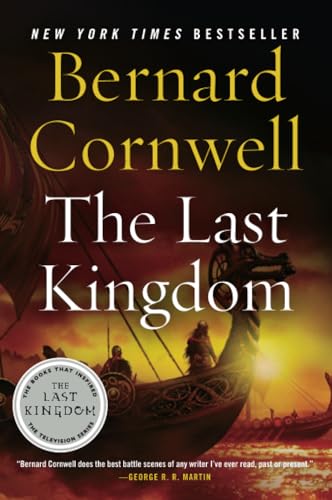
The Last Kingdom (The Saxon Stories, Book 1)
Bernard Cornwell

Meditations
Marcus Aurelius

The Hiding Place
Elizabeth Sherrill, John Sherrill Corrie ten Boom