Eleanor of Aquitaine: The Queen Who Ruled Without a Crown
Eleanor of Aquitaine: The Queen Who Ruled Without a Crown
Eleanor of Aquitaine stands as one of history's most remarkable figures—a woman who wielded unprecedented political influence across two kingdoms, inspired legends, and shaped the course of medieval Europe without ever holding a crown in her own right. Born around 1122, she inherited one of Europe's largest and most prosperous territories, yet her true power lay not in land alone, but in her intelligence, determination, and the sheer force of her personality. Her story challenges everything we thought we knew about medieval women and power.
The Heiress of a Great Duchy
Eleanor's journey to prominence began with her birth into the House of Poitou-Aquitaine. Her father, William X, Duke of Aquitaine, was a powerful and cultured nobleman whose vast domains stretched across southwest France. When he died in 1137, the fifteen-year-old Eleanor inherited not just a title, but approximately one-third of what would become France—a territory larger and more prosperous than the royal lands held by King Louis VII of France himself.
This inheritance was the key that unlocked Eleanor's extraordinary influence. In medieval Europe, women were property to be married off for political alliances, yet Eleanor's wealth and lands made her invaluable. She wouldn't be a passive pawn in others' games; instead, she would become a master strategist. Eleanor of Aquitaine understood that her duchess title gave her a power base independent of any husband—a rare advantage that few medieval women could claim.
Marriage, Politics, and Royal Courts
At age fifteen, Eleanor married Louis VII of France, and briefly became Queen of France. However, this marriage was tumultuous. Eleanor bore Louis two daughters but no sons—a critical failure in the eyes of medieval nobility. More importantly, Louis and Eleanor had fundamentally different temperaments. While Louis was pious and cautious, Eleanor was bold and unconventional. After fifteen years and a divorce in 1152, she shocked Christendom by marrying Henry of Anjou just eight weeks later.
This second marriage would prove far more consequential. Henry soon became King of England, making Eleanor one of the most powerful women in Christendom. As Queen of England and Duchess of Aquitaine, she now controlled vast territories across the Channel and France. Yet more importantly, Eleanor became the mother of kings. She bore Henry eight children, including future English monarchs Richard the Lionheart and King John. Her role in shaping these rulers cannot be overstated.
Power Behind the Throne
What made Eleanor of Aquitaine truly exceptional was how she exercised influence in an age when women were legally subordinate. She served as regent when Henry was away, managed the administration of her lands, and cultivated a court known for patronage of the arts, troubadours, and literary innovation. Eleanor championed courtly love and the cultural sophistication of southern France, bringing Occitan traditions to the English court and establishing herself as a patron of intellectual life.
Her relationship with her sons revealed both her influence and her complexity. When her son Richard was captured during the Crusades, Eleanor negotiated for his release. When her youngest son John needed support, she intervened on his behalf. Yet she also clashed dramatically with her husband Henry, and family conflicts became the subject of historical drama that echoes through the centuries. These were not the passive roles expected of queens—they were exercises in real political power.
Legacy and Influence
Eleanor was imprisoned in 1173 for supporting her sons' rebellion against King Henry, spending sixteen years in captivity. Yet even from her cell, she remained influential, and her sons depended upon her political wisdom and the legitimacy her name carried. She was released by Richard and continued wielding influence well into her eighties, an extraordinary feat for anyone in medieval times, let alone a woman.
Eleanor of Aquitaine died in 1204 at approximately eighty-two years old, having outlived multiple husbands and several sons. She saw her grandsons inherit the throne she had helped build an empire to support. Her life inspired countless works of literature, drama, and scholarship, from modern biographies like Alison Weir's comprehensive "Eleanor of Aquitaine" to appearances in historical novels such as Elizabeth Chadwick's works, which brilliantly capture the medieval world she dominated.
Conclusion
Eleanor of Aquitaine was a queen without a crown in title, yet she wielded power rivaled by few crowned monarchs of her era. She demonstrated that medieval women could transcend the limitations placed upon them through intelligence, inheritance, strategic marriages, and sheer force of will. Her territories, her children, and her cultural legacy shaped Europe for generations. In studying Eleanor, we discover not a footnote to male history, but a central figure whose influence was profound, deliberate, and enduring.
To dive deeper into the extraordinary life of Eleanor of Aquitaine and the medieval world she inhabited, explore the curated collection of historical biographies and novels at Skriuwer.com. Discover books that bring this remarkable woman's story to life and help you understand the complex politics and culture of medieval Europe.
Your next good book, in your inbox
We only write when we find a book worth your time. Hand-picked recommendations across history, mythology, true crime and more.
Are you an author?
Get your book in front of readers like these, for free.
- Free book listing →Your own book page with an Amazon button
- Author page →Photo, bio and links to your site
- Featured placement →A spot in our best-of lists, from €29
Free tools we recommend
Get free honest reviewsReview exchange on iWrity, free to join
Books You Might Like

Sapiens: A Brief History of Humankind
Yuval Noah Harari
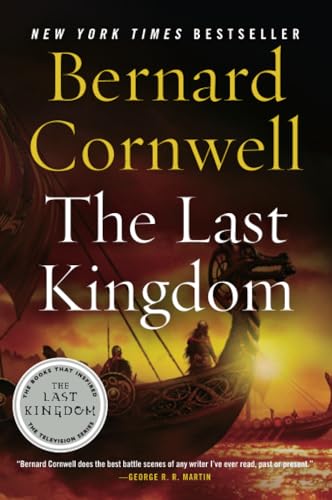
The Last Kingdom (The Saxon Stories, Book 1)
Bernard Cornwell

Meditations
Marcus Aurelius

The Hiding Place
Elizabeth Sherrill, John Sherrill Corrie ten Boom