The Most Controversial Books of All Time (And Why They Still Spark Fights)
SOME BOOKS DON'T JUST CHALLENGE IDEAS — they get authors exiled, imprisoned, or killed.
Every entry on this list triggered bans, riots, death threats, or full government crackdowns. Not because the writing was bad. Because it was too effective at making people think thoughts the powerful didn't want thought.
Here's the uncomfortable distinction most "controversial books" lists miss: there's a difference between a book that's offensive and a book that's dangerous. A book that offends a few readers gets a bad review. A book that's actually dangerous gets burned.
This list focuses on the dangerous ones.
What Makes a Book Truly Controversial?
Before the list: a quick filter. In 2026, the American Library Association tracked over 1,247 book-challenge attempts in a single year — a record. But most of those challenges target YA novels with LGBTQ+ themes or age-appropriate sex education books. Genuine, that's a fight worth having — but it's not the same category as books that reshaped world history or got their authors murdered.
The books below fall into one of three categories:
- Epistemically dangerous — they argued something the ruling class claimed was false, and turned out to be right
- Politically explosive — they gave oppressed groups a vocabulary and a framework to demand power
- Morally unresolved — they present evil from the inside and refuse to condemn it, leaving the reader no safe place to stand
Now the list.
1. The Satanic Verses — Salman Rushdie (1988)
A novel about two Indian actors who survive a terrorist bombing and undergo magical transformations. That's the plot. The controversy is something else entirely.
Ayatollah Khomeini issued a fatwa calling for Rushdie's death in February 1989. Iran offered a bounty. Rushdie spent a decade in hiding under British police protection. His Japanese translator was murdered. His Italian translator was stabbed. His Norwegian publisher was shot.
What did the book actually say? It includes a dream sequence where a character named "Mahound" (a medieval slur for the Prophet) dictates verses to a scribe who secretly alters them — a fictional riff on the historical "Satanic Verses" episode, a disputed passage in early Islamic scholarship. Rushdie was playing with the fragility of sacred texts, not attacking Islam as a faith.
The fatwa was never formally lifted by Iran. In 2022, a man with Iranian ties stabbed Rushdie on stage in New York, blinding him in one eye.
Why it still matters: It's the clearest modern test case for whether literary freedom survives when religion and state align against a single author.
2. Lolita — Vladimir Nabokov (1955)
The novel is narrated by Humbert Humbert, a predatory pedophile who abducts and repeatedly rapes a 12-year-old girl while constructing elaborate literary justifications for his behavior. Nabokov never breaks the frame. There is no authorial voice stepping in to condemn him.
That's the controversy, and it's the point.
Nabokov forces readers to inhabit the mind of a monster who is charming, literary, and utterly convinced of his own innocence. By the end, readers who've been seduced by Humbert's prose feel complicit. That's intentional. The novel is an attack on aesthetics used as moral cover — but it doesn't announce that. You have to feel it.
France banned it. The UK banned it. Argentina banned it. It's now considered one of the greatest novels of the 20th century.
Why it still matters: Every generation rediscovers the book and fights about whether it glamorizes abuse or dismantles the glamorization from within. Both readings are defensible. That's the trap Nabokov set.
3. The Communist Manifesto — Marx & Engels (1848)
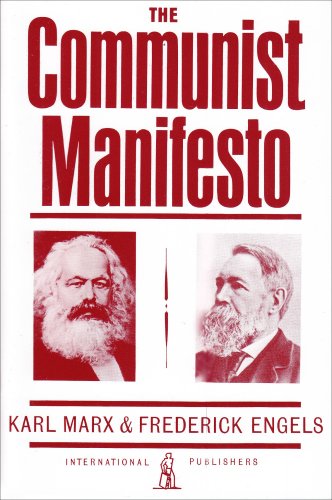
Fifty-nine pages. Commissioned as a political pamphlet for a small workers' organization in Brussels. Published weeks before the 1848 revolutions swept Europe.
The Manifesto is banned in some form in over 70 countries today, either outright or effectively. It's been used to justify the Soviet Union, Maoist China, Cuba, Cambodia under the Khmer Rouge, and dozens of other regimes. It's also been used to justify labor unions, the 40-hour work week, public education, and universal suffrage — rights that are now considered baseline in most democracies.
The book itself is shorter than this article. Its staying power isn't from the quality of its prose. It's from the specificity of its diagnosis: capitalism produces its own gravediggers. Workers will eventually organize because they have no other choice.
Whether you think that's liberation theology or a blueprint for mass murder depends largely on which century you were born in and which continent you grew up on.
Why it still matters: The Manifesto is still read as active political theory by both its supporters and its enemies. Few 19th-century documents have that.
4. Mein Kampf — Adolf Hitler (1925)
Buy on Amazon (annotated scholarly edition)
The scholarly annotated edition, published by the Institute for Contemporary History in 2016 after the 70-year copyright expired, is the only version worth reading — and you should read it precisely because it's so banal.
Mein Kampf is badly written. It's repetitive, self-pitying, and ideologically incoherent. The antisemitism is not argued — it's asserted with the confidence of someone who has never been challenged. The racial theory is borrowed from pseudoscientists Hitler never actually read in full.
That's the lesson. The Holocaust wasn't enabled by brilliant, seductive evil. It was enabled by mediocre evil that millions of ordinary people found sufficiently plausible. The book shows you the scaffolding of that mediocrity.
Germany banned it for 70 years after the war. When the copyright expired, the annotated edition sold 85,000 copies in Germany in its first year.
Why it still matters: The annotated edition with 3,500 critical footnotes is one of the most important historical documents of the 20th century. The unannotated version is primarily useful to those who want to radicalize.
5. The Da Vinci Code — Dan Brown (2003)

Technically a thriller. Functionally, a conspiracy theory about early Christianity presented as "research-based" fiction. The book claims the Catholic Church suppressed evidence that Jesus married Mary Magdalene, had children, and that a secret society (the Priory of Sion) preserved this lineage for 2,000 years.
Every historical claim in the novel is false. The Priory of Sion was a fraud invented in 1956 by Pierre Plantard, a convicted con man. Brown's historical "research" came primarily from a 1982 pseudohistorical book called Holy Blood, Holy Grail, which is itself built on forged documents Plantard created.
The Vatican issued formal condemnations. Multiple countries considered (and some pursued) legal bans. Christian groups organized boycotts. The Greek Orthodox Church tried to get it banned in Greece.
The book sold 80 million copies.
Why it still matters: It demonstrates that narrative confidence beats factual accuracy with mass audiences — a lesson the misinformation economy has been running on ever since.
6. Lady Chatterley's Lover — D.H. Lawrence (1928)
The full, unexpurgated version was banned in the UK until 1960 and in the US until 1959. The Penguin UK trial — Regina v. Penguin Books — became a landmark case in obscenity law. The prosecution famously asked jurors whether this was the kind of book "you would wish your wife or servant to read."
The explicit sex scenes are genuinely explicit by 1928 standards. But what made establishment Britain panic wasn't the sex. It was the class politics. Lady Chatterley is an aristocrat. Her lover is her gamekeeper, a working-class man. The sex isn't pornographic — it's tender and mutual and entirely devoid of shame. That combination (desire without shame, across class lines) was politically unacceptable in a way pure pornography might not have been.
Why it still matters: The 1960 trial effectively ended literary censorship in Britain. It established the precedent that "literary merit" was a valid defense against obscenity charges — a legal framework that protected almost every significant work of literature published afterward.
7. American Psycho — Bret Easton Ellis (1991)
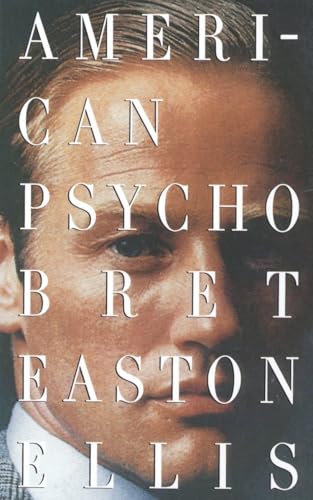
A satirical novel narrated by Patrick Bateman, a wealthy Wall Street banker who may or may not be a serial killer. The violence is graphic. The novel alternates between detailed descriptions of murder and equally detailed descriptions of business cards and designer suits, presenting them with identical emotional register.
That's the point. Bateman's violence and Bateman's consumerism are the same phenomenon. The novel is a diagnosis of 1980s yuppie culture, and the horror is that the satire works even if you remove all the murders.
The original publisher (Simon & Schuster) paid Ellis $300,000 and then cancelled the contract after employees complained. Vintage published it. It was banned for sale to minors in Queensland, Australia until 2007 and remains restricted there. NOW (National Organization for Women) organized boycotts.
Why it still matters: The controversy around the violence kept many readers from engaging with the actual argument. That's usually how it goes.
8. The Catcher in the Rye — J.D. Salinger (1951)
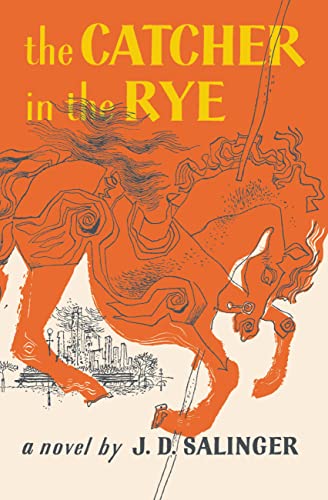
Among the most challenged books in American school libraries, consistently, for 75 years. The objections: profanity, sexual content, glorification of teenage rebellion.
The actual novel: a depressed 16-year-old gets expelled from boarding school and wanders New York for three days, increasingly unmoored. Holden Caulfield's famous disdain for "phonies" reads as annoying teenage posturing to adult readers and as devastating social criticism to adolescents encountering it for the first time.
John Lennon's killer, Mark David Chapman, was carrying a copy when he was arrested. He had written "This is my statement" inside the cover. That association still haunts the book's reputation, despite having no logical connection to the novel's content.
Why it still matters: It's the clearest illustration of why adults banning books from teenagers usually just makes those books more powerful.
9. The Bible
The most translated, most distributed, and most censored book in human history.
The early Christian church burned competing Gospels. The Index Librorum Prohibitorum banned specific translations. William Tyndale was burned at the stake in 1536 for translating it into English without authorization. Galileo's conflict with the Church was, at its root, a fight over who had the authority to interpret biblical cosmology.
In 20th and 21st-century authoritarian regimes — Soviet Union, Maoist China, North Korea — it has been restricted or banned as a threat to state ideology.
The book has been used to justify slavery, the Crusades, colonialism, and genocide. It has also been used by abolitionists, civil rights leaders, and liberation theologians to argue that those same practices were moral crimes.
Why it still matters: A text with 2,000 years of interpretive tradition layered on top of it is a different object than a text read fresh. Understanding the Bible means understanding how contested texts get weaponized.
10. 1984 — George Orwell (1949)

Banned in the Soviet Union (obviously), but also challenged or banned in multiple US school districts — once for being "pro-communist" and once for being "anti-communist." Both charges were filed in different decades by different political factions.
Orwell wrote the novel as a direct response to Stalin's show trials and the corruption of the British left. He was a committed democratic socialist who had fought in the Spanish Civil War and watched Stalinist agents murder his allies. The novel is not anti-leftist — it's anti-totalitarian. That distinction has been lost in most uses of the word "Orwellian."
Why it still matters: The vocabulary Orwell invented — doublethink, thoughtcrime, memory hole, Room 101, the Two Minutes Hate — is now standard political language. Understanding what those terms actually mean in context, versus how they're deployed rhetorically, matters.
21st-Century Books That Earned the Label
The Shock Doctrine — Naomi Klein (2007)
Klein's argument: neoliberal economists deliberately exploit disasters (natural, financial, political) to impose unpopular free-market reforms while populations are too traumatized to resist. She calls this "disaster capitalism."
The book was attacked by economists who called it historical distortion. It was praised by activists who called it the clearest explanation of global economic policy in 50 years. The core claim — that Chile's post-coup economic transformation was a deliberate experiment by Chicago School economists — is documented and contested at the level of detail, not premise.
The God Delusion — Richard Dawkins (2006)
Banned in several majority-Muslim countries. Challenged in Christian-majority regions. Praised by secular humanists as a clear-headed case for atheism. Criticized by philosophers of religion as a simplistic treatment of sophisticated theology.
Dawkins' central argument — that religious faith is a cognitive error and cultural transmission mechanism — provoked more organized hostility than any atheist book since Bertrand Russell's Why I Am Not a Christian (1927).
Fire and Fury — Michael Wolff (2018)
The Trump White House's lawyers tried to stop publication with a cease-and-desist. The publisher moved the release date up. It sold 1.4 million copies in its first week.
The legal threat alone made it a bestseller. The pattern — powerful subjects trying to suppress books and thereby guaranteeing their success — is as old as the printing press.
The Banned vs. Controversial Distinction
A quick note on 2026 book-banning trends, because the numbers are often misrepresented.
The 1,247 "challenges" the ALA tracks annually include everything from a parent asking a school librarian to move a book to a different shelf, to full formal district-wide bans. The former is overwhelmingly more common.
Actual, formal removal of books from public library systems is rarer but measurably increasing: 2021 saw around 330 formal removals in the US; 2024 saw over 900.
The top targets in recent years: books with LGBTQ+ themes, books depicting racial violence in US history (particularly those discussing slavery honestly), and, in a smaller but vocal contingent, books about vaccine science and climate change.
Almost none of the books on this list are in active modern censorship fights. Their controversies are, for the most part, settled history. The live fights are happening over different texts, for different reasons, in a different political context.
That's worth knowing before conflating "most controversial books ever" with "most challenged books right now."
Reading Order: Where to Start
If you're new to this corner of literary history, this sequence works:
- 1984 — establishes the vocabulary for political censorship
- The Communist Manifesto — establishes the ideological context for 20th-century bans
- Lady Chatterley's Lover — cleanest case study in obscenity law and literary merit
- Lolita — hardest, but the most sophisticated argument for why uncomfortable literature matters
- The Satanic Verses — the live case, still unresolved
If you want the dark psychology angle, pair this list with our guide to the best dark psychology books.
FAQ
What is the most banned book in the world?
The Bible has been restricted, banned, or burned more times across more countries over more centuries than any other book. In the 20th and 21st centuries, 1984, The Communist Manifesto, and works by Rushdie and Nabokov dominate the modern ban lists.
Why was Lolita controversial?
Because Nabokov refuses to condemn his narrator. The controversy isn't about what the book depicts — it's about who the reader becomes while reading it. The prose makes Humbert sympathetic, and that complicity is the point.
Is The Da Vinci Code based on real history?
No. The historical claims in the novel are based largely on Holy Blood, Holy Grail (1982), which itself relied on documents later proven to be forgeries. The "Priory of Sion" was a fabricated organization created by a French con man in 1956.
Which controversial books are currently banned in the US?
No books are federally banned in the US. Individual school districts and some state-level bills have removed specific books from school libraries or restricted access. Most action is at the local school-board level. The books most commonly challenged in US schools as of 2025 are titles with LGBTQ+ themes, not the historical controversies on this list.
What's the difference between a banned book and a challenged book?
A "challenge" is any formal request to restrict access to a book. A "ban" is when that restriction is implemented. Most challenges don't result in bans. The American Library Association tracks both, but the media frequently uses the more dramatic term.
Your next good book, in your inbox
We only write when we find a book worth your time. Hand-picked recommendations across history, mythology, true crime and more.
Are you an author?
Get your book in front of readers like these, for free.
- Free book listing →Your own book page with an Amazon button
- Author page →Photo, bio and links to your site
- Featured placement →A spot in our best-of lists, from €29
Free tools we recommend
Get free honest reviewsReview exchange on iWrity, free to join
Books You Might Like

It Ends with Us: A Novel
Colleen Hoover

The Seven Husbands of Evelyn Hugo: A Novel
Taylor Jenkins Reid

The Song of Achilles
Madeline Miller

Educated: A Memoir
Tara Westover