
The History of Burger King: Insta, Whopper, Revolution
Sprachen lernen geht leichter als du denkst — mit den richtigen Geschichten.
A note from Skriuwer
Our Amazon publishing account has been unexpectedly suspended. We disagree with this decision and are currently pursuing the matter through formal legal channels. We are actively working to resolve the situation and will keep you informed as things develop. Thank you for your support.
About this book
Burger King has been playing second fiddle to McDonald's for 70 years. The story of how it got there, stayed there, and almost didn't survive is more interesting than the sandwiches.
This book covers the founding in Miami in 1953, the franchise wars that defined fast food as an industry, the ownership changes, the near-bankruptcies, the social media reinvention that made the brand relevant again, and the real story behind the Whopper. It includes the internal battles, the marketing genius, and the strategic mistakes that cost the company billions.
The fast food industry built modern America as much as Hollywood did. And Burger King, perpetual challenger, reckless innovator, and occasional disaster, is a surprisingly good lens for understanding how that happened.
This is business history that actually moves. Worth your time.
TABLE OF CONTENTS
CHAPTER 1: ORIGINS OF THE INSTA-BROILED DREAMÂ
1950s fast-food culture and growth
Insta-Broiler invention and early equipment
Keith Kramer, Matthew Burns, and the first Jacksonville store
CHAPTER 2: THE TRANSITION FROM INSTA-BURGER KING TO BURGER KING
James McLamore and David Edgerton take over
Dropping “Insta†for a simpler brand name
Refining the broiler system for consistency
CHAPTER 3: THE EARLY FRANCHISE MODEL AND EXPANSION STRATEGIES
Why franchising accelerated growth
Establishing operational manuals and training
Challenges in scaling beyond Florida
CHAPTER 4: NAVIGATING COMPETITIVE WATERS IN THE 1960S
Rising fast-food rivals (McDonald’s, Wendy’s, others)
Comparative advertising and the “Burger Warsâ€
Refining the Whopper to stand out
CHAPTER 5: THE INTRODUCTION OF THE WHOPPER AND MENU INNOVATIONS
Birth of the Whopper and its significance
Expanding beyond basic burgers with chicken, fish, and sides
Managing complexity in a growing menu
CHAPTER 6: CHANGING OWNERSHIP AND CORPORATE CULTURE IN THE LATE 1960S
Pillsbury’s acquisition and its immediate effects
Leadership turnovers and brand-direction conflicts
Shifts in how franchisees interacted with corporate
CHAPTER 7: GROWTH SPURTS
Prototype stores and standardized design
Operational improvements for consistency
Challenges of fast expansion and franchise relations
CHAPTER 8: MARKETING TALES AND ADVERTISING STRATEGIES OF THE 1970S
Early “Have It Your Way†momentum
Local vs. national advertising efforts
Shaping the Burger King brand voice
CHAPTER 9: CHALLENGES WITH FRANCHISEES, OPERATIONS, AND CONSISTENCY
Franchise conflicts over remodels and rules
Maintaining consistent quality across scattered locations
Dealing with labor shortages and high turnover
CHAPTER 10: INTERNATIONAL FORAYS
Entering Canada, Puerto Rico, and select overseas markets
Master franchise agreements and cultural adaptations
Logistical lessons from global expansion
CHAPTER 11: BURGER WARS INTENSIFY
Direct competition with McDonald’s and Wendy’s
Pricing battles and menu comparisons
Push to maintain flame-broiled differentiation
CHAPTER 12: SHIFTS IN LEADERSHIP AND THE CORPORATE VISION IN THE 1980S
Frequent CEO changes and strategic reboots
Pillsbury’s oversight, data-driven approach
Balancing aggressive expansion with brand identity
CHAPTER 13: MENU EXPERIMENTATIONS AND LIMITED-TIME OFFERS
Introduction of new chicken, fish, and specialty burgers
Pros and cons of frequent LTOs
Navigating consumer demand for variety
CHAPTER 14: OPERATIONAL OVERHAULS AND TECHNOLOGICAL CHANGES
Modernizing kitchen layouts and store prototypes
Computerized POS adoption and data analytics
Improving consistency via training and inspections
CHAPTER 15: BRAND IMAGE CAMPAIGNS AND SPONSORSHIPS
Celebrity endorsements and sports tie-ins
Relaunching “Have It Your Way†in different ad styles
Dealing with misfires like “Where’s Herb?â€
CHAPTER 16: INTERNAL STRUGGLES AND OWNERSHIP CHANGES IN THE 1980S
Corporate tension under Pillsbury and Grand Met
Franchisee legal conflicts and store remodel pressures
Reactions to brand-wide controversies
CHAPTER 17: CONTROVERSIES AND PUBLIC PERCEPTION ISSUES
Health critiques, nutritional labeling, and environment debates
Criticisms over labor practices in fast-food
Burger King’s crisis management approach
CHAPTER 18: SLOWING MOMENTUM AND EFFORTS TO REINVIGORATE THE BRAND
Late 1980s slowdown in sales and store traffic
Refocusing on the Whopper, store design, and “Have It Your Wayâ€
Finding balance between value items and premium positioning
CHAPTER 19: LATE 1980S TO EARLY 1990S INITIATIVES
Consolidating brand identity under Grand Met
Project “BK Now!†for operational efficiency
Selective LTOs and modernized marketing campaigns
CHAPTER 20: POSITIONING FOR THE FUTURE: REFLECTIONS ON A GROWING CHAIN
Review of Burger King’s evolution and major lessons
Continued focus on flame-broiling and customization
Entering the mid-1990s with new momentum despite ongoing challenges
Product Details
Dimensions: 6 × 9 inches / 15.24 x 22.86 cm
Cover: Paperback
Featured in these reading lists
Are you the author? Get your official badge →
Books like this

Sapiens: A Brief History of Humankind
Yuval Noah Harari

The Last Kingdom (The Saxon Stories, Book 1)
Bernard Cornwell

Meditations
Marcus Aurelius

The Hiding Place
Elizabeth Sherrill, John Sherrill Corrie ten Boom
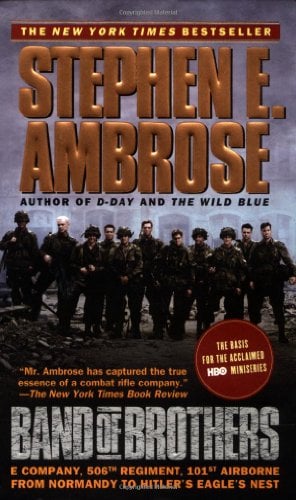
Band of Brothers: E Company, 506th Regiment, 101st Airborne from Normandy to Hitlers Eagles Nest
Stephen E. Ambrose