Melhores Livros sobre Conspirações 2026
Selecionado por Auke & a equipe Skriuwer · Atualizado Abril 2026 · Links de afiliado
Os livros mais lidos sobre conspirações, encobrimentos e história oculta, ordenados por avaliações na Amazon.
Nem todas as teorias da conspiração são falsas, e nem todas são verdadeiras. Os melhores livros sobre este assunto separam os fatos demonstráveis da especulação, examinam os verdadeiros encobrimentos de governos e empresas e mostram como a desinformação funciona.
Esta lista inclui tanto livros que documentam conspirações históricas reais quanto livros que tratam criticamente as teorias populares. Todos ordenados por número de avaliações verificadas de leitores na Amazon.
Comparação rápida, top 5
O ranking
- 1

G. Edward Griffin
(16,000 avaliações)Where does money come from? Where does it go? Who makes it? The money magicians' secrets are unveiled. We get a close look at their mirror and smoke machines, their pulleys, cogs, …
Comprar na Amazon → - 2

Milton Cooper
(13,000 avaliações)William Cooper turned out to be right; and that's all we have to say about his self-published Book.Let's keep copies of this treatise for our grandchildren and their children, so t…
Comprar na Amazon → - 3

Noam Chomsky and Edward S. Herman
(10,000 avaliações)Chomsky and Herman argue that the American mass media functions as a propaganda system through structural incentives rather than conspiracy, demonstrating their model with systemat…
Comprar na Amazon → - 4
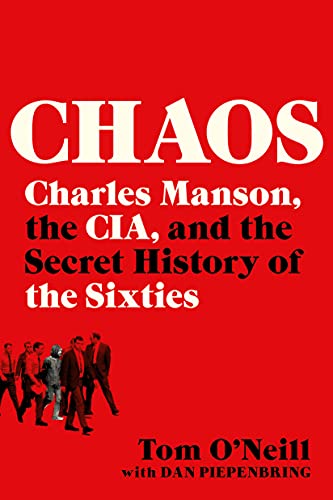
Tom O'Neill
(8,900 avaliações)Twenty years of reporting compressed into one 500-page investigation. Journalist Tom O'Neill set out to write a magazine piece about the Manson murders for the 30th anniversary, go…
Comprar na Amazon → - 5

Dan Jones
(4,800 avaliações)Dan Jones tells the full 192-year story of the Knights Templar from the founding in Jerusalem in 1119 to the burning of Jacques de Molay in 1314. Fast, accurate and built on the ch…
Comprar na Amazon → - 6
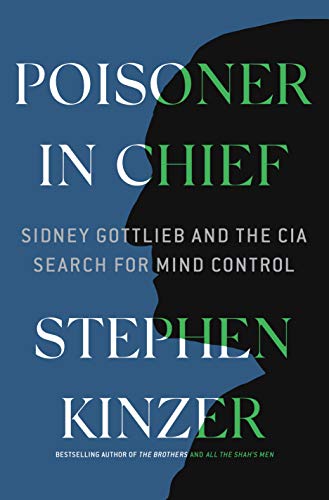
Stephen Kinzer
(3,400 avaliações)The definitive biography of Sidney Gottlieb, the CIA chemist who ran MK-Ultra from 1953 to 1964. Stephen Kinzer, a former New York Times foreign correspondent, traces Gottlieb's ca…
Comprar na Amazon → - 7

Umberto Eco
(3,200 avaliações)Umberto Eco's 700-page novel about three publishing editors who invent a secret-society conspiracy theory for fun and lose control of it. The single best literary thought experimen…
Comprar na Amazon → - 8

Manly P. Hall
(3,200 avaliações)Manly P. Hall compiled this illustrated encyclopedia of esoteric philosophy in 1928, drawing connections between Freemasonry, Rosicrucianism, Kabbalah, Hermeticism, alchemy, and th…
Comprar na Amazon → - 9

Tim Weiner
(2,800 avaliações)Tim Weiner's Pulitzer Prize-winning history of the CIA, based on decades of declassified documents and interviews. The most comprehensive single-volume account of the agency from i…
Comprar na Amazon → - 10

Richard Leigh, Henry Lincoln Michael Baigent
(2,300 avaliações)The 1982 book that argued the Holy Grail was a coded reference to a royal bloodline of Jesus and Mary Magdalene. The founding document of the modern Grail conspiracy genre and the …
Comprar na Amazon → - 11

DK
(2,002 avaliações)An illustrated, unbiased history of magic and the occult, tracing the subject from prehistoric shamanism through alchemy, astrology, and divination to modern Wicca. The best single…
Comprar na Amazon → - 12

Edward Bernays
(2,000 avaliações)Edward Bernays wrote this 1928 manual as an explicit guide to manipulating public opinion, arguing that an invisible governing class must manage public attitudes in a mass democrac…
Comprar na Amazon → - 13

Vincent Bugliosi
(1,850 avaliações)Vincent Bugliosi, the lead prosecutor of Charles Manson, spent twenty years writing this 1,612-page treatment of the JFK assassination, with an additional 1,100 pages of endnotes o…
Comprar na Amazon → - 14

Mark Dice
(1,800 avaliações)Mark Dice's survey of every claim modern Illuminati conspiracy theory makes, useful as a map of the landscape even when its credulity outruns the evidence. Read it once to see the …
Comprar na Amazon → - 15

John J. Robinson
(1,600 avaliações)John J. Robinson argues that Freemasonry did not originate from medieval stonemason guilds but from the suppressed Knights Templar network that survived the 1307 arrests by going u…
Comprar na Amazon → - 16

Peter Pomerantsev
(1,500 avaliações)Peter Pomerantsev documents the new information warfare designed not to persuade but to confuse, moving between Russia, the Philippines, Ukraine, and the UK. His argument is that m…
Comprar na Amazon → - 17

Arthur Goldwag
(1,200 avaliações)Arthur Goldwag's encyclopedic reference treats each secret society and conspiracy on its own terms, separating documented institutional histories from conspiracy-theory inventions.…
Comprar na Amazon → - 18

Jim Marrs
(1,200 avaliações)New York Times bestselling author Jim Marrs traces connections between the Council on Foreign Relations, the Trilateral Commission, the Bilderberg Group, Freemasonry, and ancient s…
Comprar na Amazon → - 19

Jasper Ridley
(1,100 avaliações)Jasper Ridley's standard popular history of Freemasonry, from medieval stonemason guilds through Enlightenment-era expansion to the present-day fraternal organization.
Comprar na Amazon → - 20

Jason Stanley
(1,000 avaliações)Yale philosopher Jason Stanley approaches propaganda as a democratic theory problem, showing how propaganda exploits the gap between democratic ideals and social realities. His fra…
Comprar na Amazon →
Perguntas frequentes
Qual é a diferença entre uma conspiração real e uma teoria da conspiração?
Uma conspiração real é um complô secreto demonstrável (como MKUltra, Watergate ou as campanhas da indústria do tabaco dos anos 60). Uma teoria da conspiração é uma afirmação inverificável sobre um poder secreto.
Estes livros são sérios ou sensacionalistas?
Ambos estão representados no ranking, mas os livros mais bem avaliados geralmente trabalham com fontes. Os livros que se baseiam apenas em suposições são avaliados pior pelos leitores ao longo do tempo.
Quais conspirações reais são abordadas?
Entre outras: experimentos da CIA com LSD em sujeitos não informados, programas de vigilância estatal, manipulação de eleições, supressão de pesquisas médicas e vários assassinatos políticos.
Como reconhecer um livro sério sobre este assunto?
Procure: referências bibliográficas no apêndice, um autor com formação jornalística ou acadêmica, e uma editora de reputação.
O seu próximo bom livro, no seu e-mail
Só escrevemos quando encontramos um livro que vale a pena. Recomendações escolhidas em história, mitologia, crime real e muito mais.