Best Books on the Psychology of Evil: Why Good People Do Terrible Things
We want to believe that evil people are different from us. They are sick. They are monsters. They were born wrong. This belief comforts us because it means we are safe. We are not capable of the things evil people do. But the evidence suggests something far more disturbing. Ordinary people, people like us, are capable of terrible things under the right circumstances. Regular soldiers commit war crimes. Decent people participate in genocides. Nice neighbors betray their friends and family to secret police. The question is not what is wrong with evil people. The question is what circumstances turn ordinary people into instruments of cruelty.
The books on this list confront that question head-on. They are difficult to read, sometimes disturbing, and they will challenge your understanding of human nature. But they are essential reading for anyone who wants to understand how the world actually works.
The Banality of Evil and Psychological Authority
Eichmann in Jerusalem by Hannah Arendt is the foundational text on how ordinary people come to commit extraordinary cruelties. Arendt observed the trial of Adolf Eichmann, the Nazi official who organized the logistics of the Holocaust. What she found was not a monster filled with hatred but an ordinary bureaucrat following orders, obeying authority, and believing he was just doing his job. Arendt called this "the banality of evil." Evil is often not the result of twisted motivations or inhuman malice but of ordinary people suspended in hierarchies where individual responsibility disappears. The book is short, accessible, and absolutely necessary reading.
The Lucifer Effect by Philip Zimbardo examines how good people become capable of evil. Zimbardo is a psychologist famous for the Stanford Prison Experiment, in which ordinary college students assigned the role of guards became cruel and abusive toward students assigned as prisoners. The book expands beyond that experiment to look at other situations where ordinary people behaved badly: military hazing, corporate fraud, police violence. Zimbardo argues that we underestimate the power of the situation and overestimate the importance of individual character. Change the context, and change how people behave.
Obedience to Authority by Stanley Milgram documents the famous experiments in which ordinary people administered what they believed were severe electrical shocks to subjects simply because an authority figure told them to. The subjects were not sadists. They were not seeking power. They felt terrible about what they were doing. But they obeyed the experimenter's instructions. Milgram's work reveals that authority is one of the most powerful forces in human behavior, and that ordinary obedience to authority can lead to complicity in terrible acts. The book is based on Milgram's research but reads as philosophical inquiry into human nature.
Cruelty and Group Dynamics
The Lucifer Effect by Philip Zimbardo (mentioned above) is actually two books. The first half analyzes psychological experiments showing how situations change behavior. The second half examines real-world examples including Abu Ghraib prison, the genocide in Rwanda, and the massacre at My Lai. Zimbardo argues that we need to look beyond the individual perpetrator and examine the systems, hierarchies, and group dynamics that made the cruelty possible. The book shows that preventing evil requires changing systems and contexts, not just identifying and removing "bad people."
Hate: Why We Should Resist It with Free Thought and Reason by Jonathan Glover examines atrocities and genocides of the 20th century. Glover looks at cases from the Nazis to Cambodia to Rwanda and asks what made ordinary people capable of such horrors. He argues that cruelty is enabled by psychological mechanisms like dehumanization, where victims are redefined as less than human, and by group dynamics where individual conscience becomes submerged in group loyalty. The book is not always easy reading, but it offers real insights into how atrocities happen and how they might be prevented.
The Wrecking Crew by Thomas Frank moves from individual atrocity to systemic cruelty. Frank examines how corporate fraud, government corruption, and institutional violence operate. The cruelty here is less dramatic than genocide but affects millions of lives through poverty, pollution, and denied opportunity. The book argues that understanding evil requires looking beyond dramatic moral failures and examining how systems normalize cruelty and distribute harm across populations.
The Nature of Moral Breakdown
The Moral Landscape by Sam Harris offers a philosophical examination of good and evil, arguing that morality is not subjective but can be studied scientifically. Harris uses neuroscience and philosophy to argue that well-being is the foundation of morality, and that harm is the foundation of immorality. The book does not examine why people do evil (that is for psychologists) but rather what evil actually is and whether we can make objective judgments about it. It is a needed corrective to the relativism that allows people to justify terrible behavior.
The Righteous Mind by Jonathan Haidt examines how moral reasoning actually works. Haidt, a social psychologist, found that people do not actually reason their way to their moral conclusions. Instead, people have immediate moral intuitions, and then construct rational arguments to justify those intuitions. This mechanism explains how people on different sides of moral debates can be so convinced of their rightness. It also explains how good people can justify cruelty: they develop intuitions that their group is right and their enemies deserve punishment. Understanding this mechanism is crucial to preventing moral breakdown.
Historical Atrocity and Human Nature
Bloodlands by Timothy Snyder examines the mass killings that took place in Eastern Europe between 1933 and 1945, when the region was caught between Nazi and Soviet power. Snyder shows that much of the worst violence occurred not in industrial death camps but in rural areas through shooting, starvation, and disease. The book is meticulously researched and deeply disturbing. It shows that the Holocaust and Stalinist terror were not aberrations but the culmination of long histories of violence and political ideology gone wrong. The book is difficult but essential for understanding how 20th-century evil actually unfolded.
Man's Inhumanity to Man by Jonathan Glover (a different book from his earlier work on hate) surveys atrocities throughout history. Glover examines the Trojan War, medieval crusades, slavery, the Holocaust, and modern warfare. His argument is that cruelty is not inevitable to human nature, but it is not accidental either. It emerges from specific combinations of ideology, authority, and social conditions. Understanding those patterns offers hope that cruelty can be reduced, even if it cannot be eliminated.
What These Books Teach Us
The core insight from all of these books is the same: evil is not something that only monsters do. It emerges from ordinary people responding to situations and following the logic of their group. That does not excuse it. But it does offer the possibility of prevention. If evil emerges from situations, changing situations can reduce evil. If evil emerges from authority, limiting authority can reduce evil. If evil emerges from ideology that dehumanizes others, promoting empathy and understanding can reduce evil.
Start with Eichmann in Jerusalem by Hannah Arendt for the clearest explanation of how ordinary people come to commit atrocities. Follow with The Lucifer Effect by Philip Zimbardo for concrete examples of how situations change behavior. Then read Obedience to Authority by Stanley Milgram to understand the power of authority over individual conscience.
These books are not pleasant reads. They will disturb you. But they will also make you more aware of the forces that drive human behavior, and more vigilant about resisting those forces when they threaten to lead people toward cruelty.
Your next good book, in your inbox
We only write when we find a book worth your time. Hand-picked recommendations across history, mythology, true crime and more.
Books You Might Like
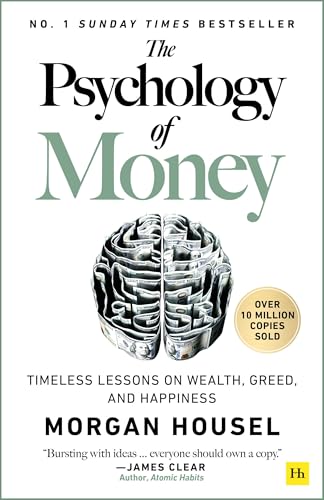
The Psychology of Money
Morgan Housel

Thinking, Fast and Slow
Daniel Kahneman

Man's Search for Meaning
Viktor E. Frankl

The Body Keeps the Score
M.D. Bessel van der Kolk