Best Books on Addiction and Recovery
The Addiction Framework Nobody Agrees On
Ask ten experts what addiction is and you will get ten different answers. Some will call it a disease. Some will call it a behavioral disorder. Some will argue it is a symptom of trauma or disconnection. Some will point to brain chemistry. Some to social factors. All of these are partially true, and all of them are incomplete. This is why addiction is so hard to treat: there is no consensus on what it is or how to fix it.
What we know is this: addiction works. It produces a specific change in how the brain processes reward and motivation. People become addicted to substances and behaviors that create that change. The change persists even after consequences become severe. Recovery is possible, but the methods that work are not standardized and they do not work for everyone.
The books that follow are not recovery programs. They are maps of the territory, showing what addiction actually looks like from different angles and what we have learned about how people escape it.
Stanton Peele, Addiction: A Social Disease Perspective
Peele argues that framing addiction as a disease is comforting but wrong, and that the disease model actually makes recovery harder. If addiction is a disease like diabetes, then it is something that happens to you, not something you do. You need an expert to fix it. You are not responsible for it, only for managing it. Peele's point is that this removes agency, and agency is what people need to recover.
His alternative is to frame addiction as a learned behavior that develops in a social context, reinforced by environmental factors, by the person's history, by the specific emotional needs the addiction meets. If this is the correct frame, then recovery requires understanding how the behavior was learned and how to unlearn it. This is harder than taking a pill, but it treats the person as someone capable of change rather than as a defective biological system.
Peele's work is controversial in medical circles, but his point about agency remains one of the most important insights in addiction recovery.
Gabor Mate, In the Realm of Hungry Ghosts
Mate worked with severely addicted people in Vancouver and his book is a meditation on what he found: addiction is almost always a response to pain. Not moral weakness, not genetic predisposition (though genetics matters), but pain that the person cannot process or escape. The addictive substance or behavior temporarily solves that problem by numbing the feeling. Over time, the body becomes dependent, and then the addiction becomes its own form of pain.
Mate connects addiction to trauma, to disconnection from family and community, to the specific ways that modern life isolates people and makes it harder to maintain genuine connection. He argues that true recovery requires addressing what the addiction was treating, not just removing the addictive substance.
The second half of the book profiles several of Mate's clients, showing in concrete detail how addiction develops, what keeps it in place, and what moves toward recovery looks like. It is difficult to read but essential.
Lance Dodes, Addiction: A Disorder of Choice
Dodes is a psychoanalyst who works with people addicted to alcohol and other drugs. His central claim is that addiction is a specific kind of compulsion that serves an emotional function. It is a way to regain a sense of agency and power in situations where the person feels powerless. The addictive act is impulsive, compulsive, and focused, which makes it feel like you are taking control even when you are actually losing it.
Dodes' approach to treatment is to help people understand what emotional state precedes the addictive act, what need it is meeting, and how to find healthier ways to meet that need. He is critical of approaches that focus on the substance alone and ignore the emotional context. A person who is not addressing the underlying powerlessness will find another addictive behavior to replace the original one.
William Cope Moyers, Broken: My Story of Addiction and Recovery
This is the only memoir on this list, but it is here because addiction is ultimately a personal experience and no amount of theory captures what it feels like. Moyers is the son of Bill Moyers, a prominent journalist. He had access to money, family, elite treatment centers, and powerful people who wanted to help him. He relapsed repeatedly anyway. His book documents what that was like: the deception, the self-deception, the moments of clarity that changed nothing, the shame that kept him trapped.
What eventually worked for him was a combination of connection, accountability, and acceptance. Not necessarily in that order and not necessarily in the way that textbooks describe it. But the specific details of his recovery are less important than the recognition that recovery is possible and that it does not follow a neat template.
The Reality of Recovery
No book will tell you how to get sober if you are an active addict. Addiction is not something that theory solves. The books here are for people who want to understand the landscape: what addiction actually is, why it is so hard to escape, what approaches have worked for others. The particular route out depends on the particular person, their circumstances, and the specific addiction.
What all the evidence does suggest is that recovery requires some combination of: addressing the underlying pain or need the addiction served, rebuilding connection with other people and with meaning, regaining a sense of agency and control, and creating a new identity that is not organized around the addictive behavior. Different treatment approaches emphasize different pieces of this puzzle.
Further reading
Your next good book, in your inbox
We only write when we find a book worth your time. Hand-picked recommendations across history, mythology, true crime and more.
Books You Might Like
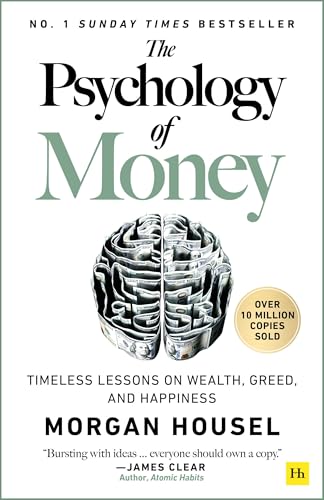
The Psychology of Money
Morgan Housel

Thinking, Fast and Slow
Daniel Kahneman

Man's Search for Meaning
Viktor E. Frankl

The Body Keeps the Score
M.D. Bessel van der Kolk