Best Books About the Freemasons: A Reading Guide for the Curious Outsider (2026)
Freemasonry is the oldest and largest fraternal organization in the world. Estimates put current membership somewhere between 2 and 6 million people globally, with lodges in almost every country. It has produced heads of state, military commanders, scientists, and artists in numbers that make any serious history of the modern world difficult to write without encountering Masons. And yet the organization maintains a deliberate opacity about its rituals, its internal hierarchy, and its purposes, which has made it the subject of conspiracy theories, academic study, and passionate debate for three centuries.
The books below are organized by reader type, because the question "what is the best book about the Freemasons?" has completely different answers depending on whether you want history, philosophy, symbolism, or an investigation of the conspiracy claims. Our broader best books about secret societies list covers the wider landscape including the Rosicrucians, Skull and Bones, and modern elite networks.
Best for Beginners: Start Here
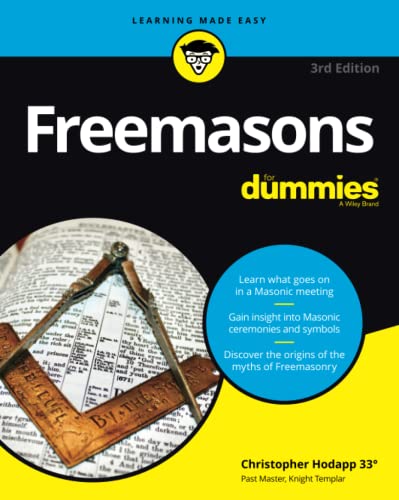 Freemasons For Dummies by Christopher Hodapp is the universal starting point and for good reason. Hodapp is a 32nd-degree Freemason who wrote this book specifically to answer the questions outsiders ask but lodges don't explain. He covers the history, the degrees, the rituals, the symbols, and the persistent myths (no, they don't worship Satan; no, they don't run the world) with the patience of someone who has answered these questions many times. Multiple editions since 2005, consistently recommended across every Masonic and non-Masonic reading list. If you have never read anything about Freemasonry, start here.
The Craft and Its Symbols by Allen E. Roberts is a 90-page illustrated introduction aimed at new initiates. It is slim enough to read in an afternoon and useful for anyone who wants the symbolic vocabulary of Freemasonry explained visually before encountering any of the denser texts.
Best History: The Craft and How It Shaped the Modern World
 The Craft: How the Freemasons Made the Modern World by John Dickie is the best modern history of Freemasonry available for general readers, and the book most conspicuously absent from competitor reading lists because it was only published in 2020. Dickie is a professor of Italian history who has previously written on the Mafia and the Camorra. He brings the same forensic approach to Freemasonry: documented, skeptical, and attentive to what the organization actually did rather than what it claimed or what its critics alleged. He traces Freemasonry from its Scottish lodge origins through its role in the American and French Revolutions, its global spread during the British Empire, and its twentieth-century engagement with fascism in Italy and Spain. The Wall Street Journal called it "entertaining and informative" and The Economist praised its scholarship. This is the book to read if you want to understand why Freemasonry mattered historically without either celebrating or condemning it.
 The Freemasons: A History of the World's Most Powerful Secret Society by Jasper Ridley is an older one-volume history that covers the full arc from 17th-century England to the late 20th century. Ridley was a biographer rather than a specialist in esoteric history, which makes this book more reliable as conventional history than as an account of Masonic philosophy. It is weaker than Dickie on the meaning and appeal of the organization, but better at tracking political influence across different national contexts. Read Dickie first; return to Ridley for the British political angle.
Best for the History-Conspiracy Crossover: The Knights Templar Connection
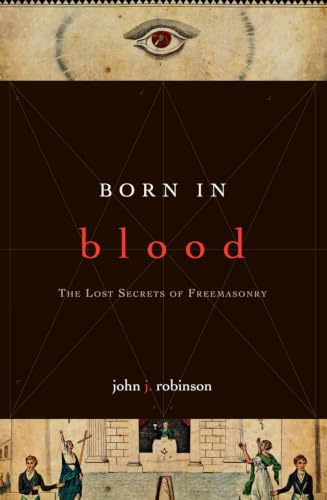 Born in Blood: The Lost Secrets of Freemasonry by John J. Robinson argues that Freemasonry originated not from medieval stonemason guilds but from the suppressed Knights Templar network that survived the 1307 arrests by going underground. Robinson is a popular historian rather than an academic, and the central thesis is contested by Masonic scholars, but his research into the linguistic links between Masonic ritual language and what would have been needed to operate a secret society in 14th-century England is genuinely interesting. Praised by Kirkus Reviews as "scholarly detective work." Over 2,100 Goodreads ratings make it the most widely read book in this category. Read it alongside our best books about the Knights Templar to evaluate Robinson's claims against the academic literature.
Best for Symbolism and Philosophy: The Esoteric Tradition
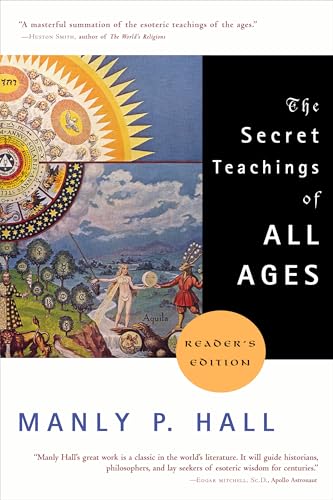 The Secret Teachings of All Ages by Manly P. Hall is not strictly a book about Freemasonry, but it is the most frequently cited text in Masonic philosophical circles and has over 6,800 Goodreads ratings, making it by far the most widely read book in this category. Hall was a Canadian philosopher who compiled this illustrated encyclopedia of esoteric philosophy in 1928, drawing connections between Freemasonry, Rosicrucianism, Kabbalah, Hermeticism, alchemy, and the ancient mystery traditions. It is dense, occasionally unreliable as history, and organized as reference rather than narrative, but as a window into how Masonic philosophers understand their own tradition it is irreplaceable.
Morals and Dogma by Albert Pike is the canonical text of the Scottish Rite (one of the two major Masonic bodies in the United States). Published in 1871, it is 900 pages of philosophical lectures aimed at members progressing through the higher degrees. It is more referenced than read, even by practicing Masons, and is not recommended as an entry point. For the symbolism tradition in a more accessible form, the Lost Keys of Freemasonry by Manly P. Hall is shorter and clearer.
One Book If You Have Only One
If you have time for only one book and want the best historical understanding of what Freemasonry is and why it matters: read John Dickie's The Craft. If you want to understand the organization from the inside as a practicing Mason would understand it: read Freemasons For Dummies by Christopher Hodapp first. They are not in competition. The former explains what Freemasonry did in the world; the latter explains what it means to its members. Both perspectives are necessary for a complete picture.
For the conspiracy angle specifically, our posts on the best Illuminati books and secret societies cover the documented and undocumented claims in more depth. Browse the full conspiracy shelf at Skriuwer for related reading lists.
Your next good book, in your inbox
We only write when we find a book worth your time. Hand-picked recommendations across history, mythology, true crime and more.
Are you an author?
Get your book in front of readers like these, for free.
- Free book listing →Your own book page with an Amazon button
- Author page →Photo, bio and links to your site
- Featured placement →A spot in our best-of lists, from €29
Free tools we recommend
Get free honest reviewsReview exchange on iWrity, free to join
Books You Might Like

Sapiens: A Brief History of Humankind
Yuval Noah Harari
The Last Kingdom (The Saxon Stories, Book 1)
Bernard Cornwell

Meditations
Marcus Aurelius

The Hiding Place
Elizabeth Sherrill, John Sherrill Corrie ten Boom