9 Books Similar to Shogun (If Feudal Japan Gripped You)
James Clavell's Shogun is not really a novel about feudal Japan. It is a novel about power -- how it is held, transferred, and lost -- set against a backdrop so alien to Western readers that the culture shock becomes the plot. Blackthorne's disorientation is the reader's disorientation, and the slow revelation of a civilization that runs on entirely different assumptions is what makes the book impossible to put down.
The books on this list share that quality. They are not just historical fiction with exotic settings. They are books interested in how different rules produce different human beings, and what happens when those systems collide.
1. Tai-Pan by James Clavell
The obvious starting point if you loved Shogun: Clavell's second Japan novel, set in 1841 Hong Kong as the British establish a trading colony after the First Opium War. Dirk Struan, the Tai-Pan (supreme leader) of the Noble House trading company, is building an empire while fighting rivals, Chinese secret societies, and the competing ambitions of other European merchants.
Where Shogun is about a Westerner learning to operate within a Japanese system he cannot fully grasp, Tai-Pan is about a Westerner imposing a new system on a Chinese population that has its own long-running codes. Struan understands China better than most of his competitors, but the understanding is always incomplete. Clavell is consistently interested in this gap -- between what you think you know about another culture and what you are actually missing.
The Asia Saga continues through Gai-Jin, King Rat, Noble House, Whirlwind, and Gaijin. They can be read independently, though Tai-Pan is the best entry point after Shogun.
2. Musashi by Eiji Yoshikawa
If Shogun gave you the political structure of feudal Japan, Musashi gives you its spiritual and martial core. Based on the life of Miyamoto Musashi, the legendary swordsman who codified the two-sword style and wrote The Book of Five Rings, this is the definitive Japanese epic -- 970 pages of duels, philosophy, romance, and the meaning of mastery.
Yoshikawa wrote Musashi as a newspaper serial in the 1930s, and it reads like one: episodic, propulsive, with cliff-hangers built into the chapter structure. The Japan it describes (early Edo period, just after the Battle of Sekigahara) overlaps with Shogun's setting. You will recognize the social structure, the clan loyalties, the role of the samurai class.
This is the most purely Japanese book on the list -- written by a Japanese author for a Japanese audience, translated into English by Charles Terry. It provides the inside view that Clavell's Western protagonist could only partially access.
3. The Pillars of the Earth by Ken Follett
A structural parallel rather than a setting one: Pillars of the Earth is set in 12th-century England, not Japan, but it shares Shogun's DNA in important ways. Both novels follow outsiders navigating a world governed by codes they did not grow up with (feudal loyalty, Church authority), both use architecture as a metaphor for civilization, and both are essentially about who controls the levers of power.
The scale is comparable: 900 pages, multiple generations, a plot that moves between the very powerful and the very powerless. If what you loved about Shogun was the total immersion in an alien social order rather than the Japan-specifically, Pillars of the Earth delivers the same experience in a European key.
4. The Tokaido Road by Lucia St. Clair Robson
Set in 1702 Japan, this novel follows a young woman disguised as a man traveling the famous Tokaido road from Edo to Kyoto to avenge her father -- one of the 47 Ronin whose story is the most famous act of samurai loyalty in Japanese history.
Robson researched the novel for years, and the period detail is exceptional: inn culture, religious practice, the complex social hierarchy of Edo Japan, the role of women. The protagonist's disguise allows her to move between social classes in ways that reveal how the system works from multiple angles simultaneously.
If you want more feudal Japan after Shogun, and specifically a protagonist whose gender adds another layer of outsider status to navigate, this is the book.
5. Aztec by Gary Jennings
Set in pre-conquest Mexico rather than Japan, but structurally the closest thing to Shogun in world literature. Mixtli, an old Aztec man, narrates his entire life to Spanish missionaries who have conquered his civilization. The reader knows from the opening frame that the world Mixtli describes will be destroyed.
Like Shogun, Aztec is interested in a civilization whose rules are internally coherent but completely alien to Western assumptions -- human sacrifice, the calendar system, the flower wars, the nature of the gods. And like Shogun, it refuses to make that civilization simple. The Aztec world has its own beauty, its own logic, its own cruelties, presented without the condescension of a Western moral framework imposed from outside.
Jennings spent years in Mexico researching the novel. It is longer than Shogun and considerably more graphic, but the same deep-immersion pleasure is present throughout.
6. Silence by Shusaku Endo
A Japanese Catholic priest writing about Japanese Christianity in the 17th century produces something that no Western author could: a story about the collision between Christianity and Japanese culture told from the inside. Rodrigues, a Portuguese Jesuit, goes to Japan to find his mentor, who has reportedly apostatized under torture. What he discovers destabilizes his entire theological framework.
Where Shogun treats Japanese Buddhism and Shinto with curiosity, Silence treats the incompatibility between Christian conscience and Japanese social reality as a genuine theological problem. The novel asks what faith means when its public expression destroys the people you are trying to serve.
It is shorter than the other books on this list, and quieter -- no battles, no political machinations. But for readers who found Shogun's religious dimensions interesting (the Jesuits, the question of whether Blackthorne can genuinely understand Japan), Silence is essential.
7. Lonesome Dove by Larry McMurtry
Another structural parallel: Lonesome Dove is the American equivalent of Shogun in scope, ambition, and the quality of its historical world-building. A cattle drive from Texas to Montana in the 1870s, told through the perspectives of two aging Texas Rangers, their crew, and a dozen other characters whose lives intersect along the trail.
What makes it comparable to Shogun is the total commitment to a specific historical world -- its codes, its violence, its beauty, its casual cruelty. McMurtry does not romanticize the frontier any more than Clavell romanticizes feudal Japan. Both novels are honest about what their worlds cost the people living in them.
If you read Shogun for the epic sweep as much as for Japan specifically, Lonesome Dove is the American equivalent.
8. The Last Samurai by Helen DeWitt
Not the Tom Cruise film. This 2000 novel is one of the strangest and most rewarding books of the last 30 years: a single mother in London raises her son, Ludo, partly by showing him Kurosawa's Seven Samurai repeatedly. Ludo becomes obsessed with the film as a moral education -- what does it mean to have a code, to be that kind of person?
The connection to Shogun is oblique but real. Kurosawa's samurai films are the cinematic parallel to Clavell's novels: attempts by outsiders (in Kurosawa's case, a Japanese director working in a genre influenced by American Westerns) to ask what the samurai code actually means as a way of living. DeWitt's novel is about what happens when you take that question seriously as a child.
It is also extremely funny. If you want something that shares Shogun's interest in the samurai code without being historical fiction, this is the most original option.
9. Gates of Fire by Steven Pressfield
Set at Thermopylae in 480 BC, this novel about the 300 Spartans shares Shogun's core preoccupation: a warrior culture whose values are so extreme that they become a kind of beauty. The Spartan system, like the samurai system, produces men who are nearly incomprehensible to outsiders -- and the novel is told through a survivor who watched them die.
Pressfield, like Clavell, is not interested in sentimentalizing his subject. The Spartan system is brutal, produces broken men as often as heroes, and destroys everyone who lives inside it. But it also produces something that people who live in softer societies cannot help admiring, even when they know they should not.
For readers who loved Shogun's central question -- what does total commitment to a code of honor actually cost, and what does it produce -- Gates of Fire is the best answer in historical fiction.
What makes a good Shogun read-alike?
The books that satisfy the same itch share three qualities: a historical world rendered in enough detail that the reader has to adjust to it rather than the book adjusting to them, a protagonist navigating a social system governed by rules they did not grow up with, and an honest portrayal of violence as a structural feature of that world rather than a dramatic intrusion into it.
Books that are set in exotic places but do not commit to the alienness of those places feel thin by comparison. Shogun works because Clavell trusts the reader to follow Blackthorne into confusion before pulling them toward understanding.
Frequently asked questions
What is the closest book to Shogun?
Musashi by Eiji Yoshikawa is the closest in setting and period. Tai-Pan by Clavell himself is the closest in structure. Aztec by Gary Jennings is the closest in ambition and the quality of deep-immersion historical world-building.
Is there a sequel to Shogun?
Not a direct sequel. Clavell wrote six novels in his Asia Saga (Shogun, Tai-Pan, Gai-Jin, King Rat, Noble House, Whirlwind) set in different periods and locations across Asia. Gai-Jin is set in 1862 Japan and is the closest geographic and thematic follow-on.
Is the TV series based on Shogun faithful to the book?
The 2024 FX series is considered more faithful to the historical record (it uses real names -- Toranaga is clearly Tokugawa Ieyasu) and is praised for its Japanese-language dialogue. The 1980 miniseries with Richard Chamberlain is a more direct adaptation of the novel's plot. Both are worth watching, for different reasons.
How historically accurate is Shogun?
The broad outlines are historically grounded -- the arrival of the first English navigator in Japan (William Adams, the basis for Blackthorne), the political struggle that preceded Sekigahara, the Jesuit presence, the clan structures. Clavell compressed and dramatized extensively. As a portrait of late-Sengoku-period Japan, it is more reliable than most Western historical fiction of its era.
Is Shogun appropriate for younger readers?
The novel contains significant sexual content, graphic violence, and extended sequences of torture. It is typically recommended for adult readers or older teenagers (17+).
Your next good book, in your inbox
We only write when we find a book worth your time. Hand-picked recommendations across history, mythology, true crime and more.
Books You Might Like

Sapiens: A Brief History of Humankind
Yuval Noah Harari
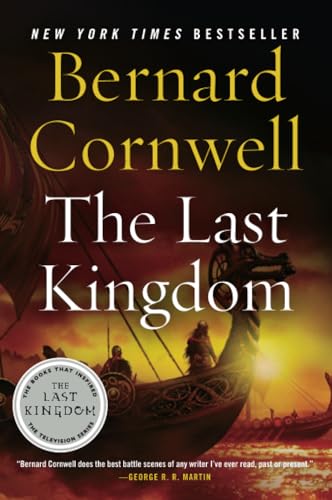
The Last Kingdom (The Saxon Stories, Book 1)
Bernard Cornwell

Meditations
Marcus Aurelius

The Hiding Place
Elizabeth Sherrill, John Sherrill Corrie ten Boom