Best Books on Organizational Behavior and Management (2026)
Organizational behavior as a field exists because the gap between what organizations are supposed to do and what they actually do is enormous, and that gap has consequences. Companies with clear strategies fail. Teams with talented people produce mediocre results. Managers with good intentions make their reports miserable. The books below are the ones that take this gap seriously, that try to explain how organizations actually work rather than how management theory says they should work.
The Foundational Texts
The Human Side of Enterprise by Douglas McGregor was published in 1960 and introduced the Theory X / Theory Y framework that still underlies most management theory today, whether or not managers know that is where it came from. Theory X assumes that people are fundamentally lazy and need to be controlled and directed. Theory Y assumes that people want to do good work and that management's job is to create conditions that allow it. McGregor argued that most organizations ran on Theory X assumptions and got Theory X results. The book is short, readable, and its central argument has not been refuted in sixty years.
The Functions of the Executive by Chester Barnard is harder to find and harder to read, but it is the foundation of modern organizational theory. Barnard was a practicing executive who wrote a rigorous theory of how organizations actually function, based on his experience running New Jersey Bell Telephone. His central insight, that organizations are cooperative systems that depend on members' willingness to contribute, and that this willingness is not guaranteed by authority alone, remains the starting point for serious thinking about organizational behavior.
How Organizations Actually Fail
The Innovator's Dilemma by Clayton Christensen answers a question that puzzled business historians for decades: why do successful companies fail? Christensen's answer is that well-managed companies fail precisely because they are well-managed. They listen to their customers, invest in what those customers need, and improve their products along the dimensions that their most profitable customers value. The problem is that disruptive competitors enter at the low end of the market, selling simpler products to customers the incumbents do not care about, and then improve along different dimensions until they have displaced the leaders. The framework has been applied to dozens of industries and remains one of the most useful analytical tools in the management literature.
Switch: How to Change Things When Change Is Hard by Chip Heath and Dan Heath addresses the specific problem of why organizations fail to change even when everyone agrees the current state is bad. Their framework, the rider (rational mind), the elephant (emotional mind), and the path (the environment), is a practical way of thinking about the multiple levels at which change has to happen simultaneously. Less theoretically ambitious than Christensen but more directly useful for managers trying to move a specific team in a specific direction.
Power, Politics, and Culture
Most management books pretend that organizations operate on reason and merit. The good ones acknowledge the role of power, politics, and culture in determining what actually happens.
Power: Why Some People Have It and Others Don't by Jeffrey Pfeffer is the most honest book on this list about how organizations actually work. Pfeffer is a Stanford Business School professor who has spent decades studying power in organizations, and his conclusion is that performance and reward are much more loosely connected than most people believe, and that political skill, network positioning, and the ability to control resources matter more than most management books admit. Uncomfortable reading for people who prefer to believe in meritocracy, and useful for exactly that reason.
Organizational Culture and Leadership by Edgar Schein is the standard academic reference on organizational culture and how it is created, transmitted, and changed. Schein's central argument is that culture is not a variable that leaders can easily manipulate from above but a product of shared history and assumptions that often operates below the level of conscious awareness. His three-level model, artifacts, espoused values, and underlying assumptions, is the most widely used framework for diagnosing organizational culture.
Decision-Making and Groups
Victims of Groupthink by Irving Janis is the original study of how cohesive groups make catastrophically bad decisions. Janis examined a series of foreign policy disasters, including the Bay of Pigs invasion and the failure to anticipate Pearl Harbor, and identified a pattern: groups under pressure to reach consensus suppress dissent, overestimate their own competence, and fail to consider alternatives systematically. The concept of groupthink has entered the general vocabulary but the original book is still the best account of how it works and what can be done about it.
Your Reading Order
Start with McGregor's Human Side of Enterprise for the foundational framework, then read Christensen's Innovator's Dilemma for the best account of organizational failure. Add Pfeffer's Power when you want the honest account of how organizations actually work politically, and Schein's Organizational Culture when you need to understand why cultures resist change. The Heath brothers' Switch is the most practical book for someone managing a specific change initiative right now.
Further Reading
For more curated reading lists on business, psychology, and decision-making, browse the full psychology and business collection on Skriuwer.
Your next good book, in your inbox
We only write when we find a book worth your time. Hand-picked recommendations across history, mythology, true crime and more.
Books You Might Like
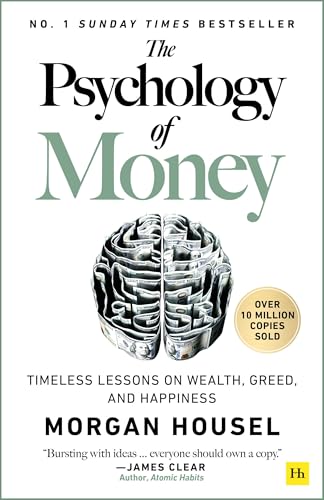
The Psychology of Money
Morgan Housel

Thinking, Fast and Slow
Daniel Kahneman

Man's Search for Meaning
Viktor E. Frankl

The Body Keeps the Score
M.D. Bessel van der Kolk