Best Books on Resilience: How to Bounce Back Stronger From Any Setback
Resilience is not about never falling down. It is about getting up. It is the capacity to absorb setbacks, learn from them, and move forward with renewed strength. Some people seem naturally resilient while others struggle with adversity. But resilience is not purely innate. It can be learned, practiced, and developed. The books listed here offer both the science of why some people bounce back and practical strategies for building your own capacity to handle life's difficulties.
The Foundational Science of Resilience
Resilience: Why Things Bounce Back by Andrew Zolli (Free Press) takes a systems approach to resilience, drawing examples from ecology, finance, neuroscience, and social organization. Zolli argues that resilience is not simply individual strength but a property of adaptive systems. He shows how organizations, communities, and individuals can build the flexibility to absorb shocks and recover. The book moves beyond self-help platitudes into real mechanisms of how resilience works.
The Body Keeps the Score: Brain, Mind, and Body in the Healing of Trauma by Bessel van der Kolk (Penguin) examines how trauma affects the nervous system and how the brain and body must both be engaged to heal. Van der Kolk shows why traditional talk therapy alone often fails with trauma survivors, and why somatic approaches like yoga, dance, and neurofeedback can be crucial. The book is grounded in neuroscience but written for a general audience.
Grit: The Power of Passion and Perseverance by Angela Duckworth (Scribner) makes the case that persistence and determination matter more than raw talent. Duckworth's research with students, soldiers, and performers shows that people who combine a long-term goal with the willingness to practice intensively tend to succeed, even when they do not start with obvious advantages. Grit is resilience in action.
Stories of Overcoming Adversity
The Last of Us: Turning the Tide on Extreme Poverty by Adam Hochschild (Houghton Mifflin) tells the stories of people and movements that have fought against impossible odds. Hochschild combines history with biography, showing how ordinary people have found courage to challenge systems that seemed unbeatable. The book is ultimately about human resilience at scale.
Man's Search for Meaning by Viktor Frankl (Beacon Press) is perhaps the most widely read book about resilience. Frankl was a psychiatrist imprisoned in Nazi concentration camps. He survived and went on to develop a school of psychology based on the idea that meaning is central to psychological health. The book is short, profound, and has changed the lives of millions of readers since its publication in 1946.
Educated by Tara Westover (Random House) is a memoir of a woman who escaped an abusive, fundamentalist family and went on to earn a PhD from Cambridge. Westover's story is harrowing, but it is also a testament to the power of education and self-directed change. She rebuilds her life and her sense of identity despite overwhelming obstacles. The book has become a cultural touchstone on resilience in the face of family trauma.
Practical Strategies for Building Resilience
Antifragile: Things That Gain From Disorder by Nassim Nicholas Taleb (Random House) goes beyond resilience to argue that some systems actually become stronger when stressed. Taleb distinguishes between fragile (breaks under stress), robust (stays the same), and antifragile (improves under stress). He argues that we should build our lives, careers, and financial systems to be antifragile rather than merely resistant to harm. The book is dense but rewarding.
Atomic Habits by James Clear (Avery) is about building small, consistent behaviors that compound into major change. While marketed as a productivity book, it is fundamentally about resilience. Clear shows how people recover from setbacks by focusing on the identity they want to build, not the outcomes they want to achieve. Small habits create the foundation for dealing with future adversity.
Mindset: The New Psychology of Success by Carol Dweck (Random House) introduces the concept of a growth mindset versus a fixed mindset. People who believe they can develop their abilities through effort are more resilient in the face of failure. Dweck's research shows that this difference in mindset shapes how people interpret setbacks and whether they persist through difficulty.
Resilience in Specific Contexts
Rising Strong by Brene Brown (Random House) focuses specifically on recovering from failure and shame. Brown argues that the key to resilience is not avoiding failure but getting back up after falling. She offers a framework for processing failure, learning from it, and moving forward without shame. The book combines research with Brown's characteristic warm, direct voice.
Option B: Facing Adversity, Building Resilience, and Finding Joy by Sheryl Sandberg and Adam Grant (Knopf) began as Sandberg's response to the sudden death of her husband. Rather than a purely personal memoir, it is a hybrid of memoir and research about grief and recovery. Grant, a social scientist, helps Sandberg examine what the research says about resilience and what actually helped her move forward.
The Obstacle Is the Way by Ryan Holiday (Portfolio) draws on Stoic philosophy to reframe obstacles as opportunities for growth rather than things to be avoided. Holiday shows how Stoic thinkers like Marcus Aurelius and Epictetus built resilience by changing their perspective on adversity. The book is philosophical but also practical, with examples from modern life and history.
Resilience in Relationships and Community
The How of Happiness by Sonja Lyubomirsky (Penguin) examines what scientific research reveals about building lasting happiness and wellbeing. Resilience is not just about surviving hard times, it is about building a foundation of wellbeing that allows you to bounce back. Lyubomirsky translates research into actionable practices that people can integrate into their daily lives.
Permission to Feel: Unlocking the Power of Emotions to Help Our Kids, Ourselves, and Our World by Marc Brackett (Celadon) argues that emotional awareness and regulation are core to resilience. Brackett's research at Yale shows that people who understand their emotions and can name them are better equipped to handle setbacks. The book is aimed at parents and educators, but the insights apply to adults.
Building Your Resilience Practice
These books offer different entry points into the study of resilience. Some focus on the science, others on stories of real people who have overcome extraordinary adversity. Some offer philosophical frameworks, while others provide practical, step-by-step strategies. The common thread is that resilience is learnable. You do not need to be born with it. You can build it, strengthen it, and pass it on to others.
Skriuwer curates collections of books on psychology and self-help to help you find what you need. The best book for you will depend on whether you are looking for stories, science, or practical tools. Start with what calls to you, then branch out to the others.
Your next good book, in your inbox
We only write when we find a book worth your time. Hand-picked recommendations across history, mythology, true crime and more.
Books You Might Like

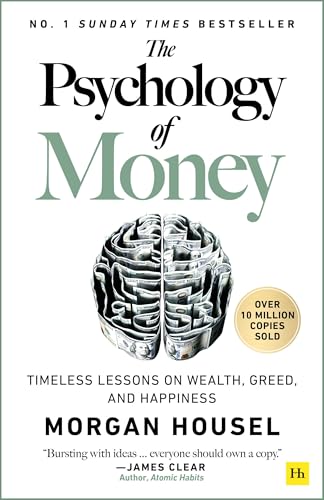
The Psychology of Money
Morgan Housel

Thinking, Fast and Slow
Daniel Kahneman

Man's Search for Meaning
Viktor E. Frankl