Best Contemporary Literary Fiction in 2026: 10 Books Written for Adults Who Still Read
Contemporary literary fiction is the category publishers reach for when a novel is serious about prose, structure, and ideas, but does not fit neatly into history, mystery, or science fiction. The label is imprecise by design. What it reliably signals is that someone made formal decisions on purpose: the sentence length, the narrative voice, the structure of chapters, the decision to withhold information or provide it early. These are not incidental choices. They are the substance of the book.
This list covers ten novels published since 1980 that have established themselves as the core of contemporary literary fiction in English. Each one is genuinely difficult to imitate, which is one way to recognize work that is doing something specific with language rather than just using language as a delivery mechanism for plot.
Where to Start
If you are new to contemporary literary fiction, start with White Teeth or Normal People. Both are readable without being simple and give you a clear sense of what literary fiction values over genre fiction. Then try The Underground Railroad for the most narratively direct of the formally ambitious titles here. After those three, your instincts about where to go next will be reliable.
Colson Whitehead, The Underground Railroad (2016)
Cora is a slave on a Georgia plantation who escapes via the Underground Railroad. In Whitehead's version, the railroad is literal: actual tracks and tunnels running underground through a country where each state has its own version of racial terror. South Carolina offers apparent benevolence that conceals sterilization programs. North Carolina has eliminated Black people entirely. Indiana allows freedom for now, under conditions that cannot last.
The formal device is not a metaphor. It is a way of making the reader see each iteration of American racism as a distinct and deliberate system rather than as a single undifferentiated evil. The novel won the Pulitzer Prize and the National Book Award. It is the most morally urgent title on this list and the easiest to recommend without reservation.
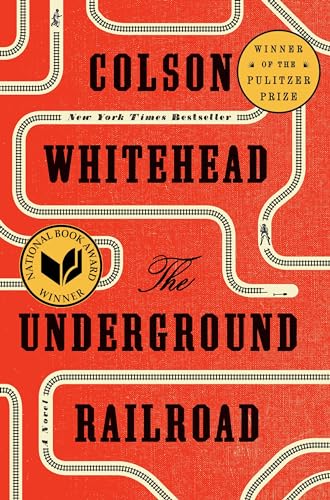 The Underground Railroad by Colson Whitehead on Amazon
Paul Auster, The New York Trilogy (1987)
Three novellas, City of Glass, Ghosts, and The Locked Room, that use detective fiction conventions to investigate questions about identity, surveillance, and the relationship between the writer and the world. In City of Glass, a crime novelist named Quinn is mistaken for a private detective named Paul Auster and takes the case. The investigation goes nowhere in narrative terms and everywhere in philosophical terms.
Auster was working in the tradition of French postmodern fiction, particularly Beckett, and the Trilogy is the most accessible entry point into that tradition for English-language readers. It is also genuinely readable in a way that much postmodern fiction is not. The formal games serve the books' emotional core rather than replacing it.
Jonathan Franzen, The Corrections (2001)
Alfred Lambert is a retired engineer in the Midwest whose Parkinson's disease and cognitive decline are forcing a reckoning within his family. His wife Enid wants one last family Christmas. Their three adult children are managing their own failures in Philadelphia, New York, and Lithuania. The novel tracks all five characters with clinical precision and uncomfortable intimacy.
Franzen's prose is the most conventionally novelistic here, which is not a criticism. He is working in the tradition of the great American family novel and doing it better than almost anyone since Updike. The book's anger at both its characters and the culture that produced them is controlled and specific. The Christmas section at the novel's end is one of the most formally accomplished set pieces in recent American fiction.
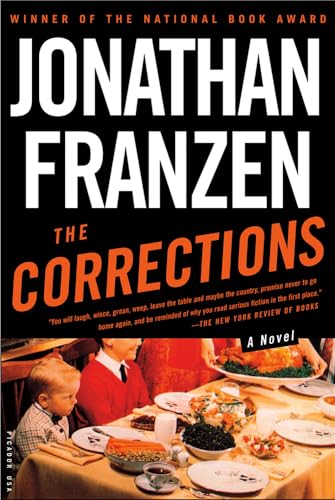 The Corrections by Jonathan Franzen on Amazon
Zadie Smith, White Teeth (2000)
Two families, the Anglo-Jamaican Joneses and the Bangladeshi Iqbals, are linked by a friendship formed on New Year's Day 1975 that runs through the novel's three decades. Smith's debut novel is the most socially panoramic book here, covering race, religion, immigration, genetics, and the specific texture of North London with a confidence unusual in a first novel written at twenty-four.
The prose is warm and comedic in a way that most literary fiction avoids, which made it more controversial than its reception suggested: some critics argued that its pleasurability was suspicious, as though a serious novel should not also be fun to read. The argument for White Teeth is that it takes the comedy seriously and the seriousness comically, which is a hard balance to maintain over 500 pages and Smith maintains it throughout.
 White Teeth by Zadie Smith on Amazon
Jennifer Egan, A Visit from the Goon Squad (2010)
A record executive and his assistant appear and reappear across multiple chapters told from different perspectives, in different time periods, and in different formal modes: one chapter is a PowerPoint presentation. The novel's subject is time and how it passes through people, the way a career or a relationship or a life looks completely different depending on when you examine it.
Egan won the Pulitzer Prize. The PowerPoint chapter, which should not work at all and does, became one of the most discussed formal experiments in recent American fiction. The novel is the most formally playful title on this list and the one most clearly invested in the question of what form itself can mean.
Karl Ove Knausgaard, My Struggle: Book 1 (2009, English translation 2012)
Knausgaard's six-volume autobiographical novel begins with his father's death and the events that led to it. The prose is deliberately anti-literary in texture: long, discursive, apparently unedited, tracking memory and consciousness without the organizing intelligence that conventional literary fiction imposes. This is a formal choice that divides readers sharply. Those who are carried by it report an experience unlike any other novel. Those who are not find it unreadable.
The first volume is the easiest entry point and functions independently of the series. It covers Knausgaard's childhood in Norway, his relationship with his father, and the specific shame and clarity of grief. If you can read it without impatience, the other five volumes are waiting.
Sally Rooney, Normal People (2018)
Connell and Marianne are classmates in rural Ireland. Their relationship, which runs through the novel's four years, is not a romance in the genre sense: it is an examination of power, communication, and the specific social dynamics of intelligence and class in contemporary Ireland. The prose is clean and precise, the dialogue often written without quotation marks, and the emotional intelligence operating at a level that most commercial fiction does not attempt.
Rooney became the most argued-about literary novelist of her generation partly because of the quality of the work and partly because of the critical reaction to her age and speed of output. The argument about whether she is as good as her reception suggests has largely been won by the books themselves. Normal People does exactly what it sets out to do and does not do anything extraneous.
Normal People by Sally Rooney on Amazon
Toni Morrison, Beloved (1987)
Sethe escaped from slavery in Kentucky in 1873 and is living in Ohio with her daughter Denver. The house is haunted by the spirit of her dead baby, who was killed by Sethe herself to prevent her from being returned to slavery. Morrison's narrative moves between the present and the past, between the literal and the metaphorical, with a structural fluidity that matches the psychological material.
Beloved is the most formally complex and the most emotionally demanding novel on this list. Morrison won the Nobel Prize in 1993 and described this as the central work of her career. It is also the most direct account of what slavery did to the interior lives of enslaved people ever put into fiction.
W.G. Sebald, The Rings of Saturn (1995, English translation 1998)
Sebald walks through Suffolk and reports on what he sees, which becomes an occasion for extended digressions on Thomas Browne, the slave trade, Roger Casement, the herring industry, Rembrandt, and the decay of the English landscape. Black-and-white photographs are embedded in the text without captions. The narrator's voice is melancholic, precise, and unusually patient.
Sebald invented a form that has been widely imitated and never equalled: the essay-novel, or the prose meditation that is not quite fiction and not quite non-fiction. The Rings of Saturn is the most accessible of his four major works and the best starting point. It rewards slow reading more than almost anything else on this list.
Kazuo Ishiguro, The Remains of the Day (1989)
Stevens, an English butler, drives through the West Country in 1956 on a road trip to visit a former colleague. He is the most unreliable of unreliable narrators: methodical, self-deceiving, emotionally suppressed. What he represses, his feelings for the housekeeper Miss Kenton and his complicity in his former employer's appeasement politics, is visible to the reader on every page while remaining invisible to Stevens himself.
Ishiguro won the Booker Prize and later the Nobel Prize. The Remains of the Day is his most technically accomplished novel and the best example of the unreliable narrator technique in contemporary fiction. The final scene in Weymouth is one of the most quiet and devastating in modern literature.
Three Reads to Start With
- The Underground Railroad by Colson Whitehead. Formally ambitious and narratively clear. The best starting point for readers who are not sure whether literary fiction is for them.
- White Teeth by Zadie Smith. The most socially generous novel on this list. Warm, intelligent, and never dull across 500 pages.
- Normal People by Sally Rooney. The most recent title here and the clearest example of what contemporary literary fiction looks like now: precise, emotionally intelligent, and concerned with power in intimate relationships.
What Literary Fiction Is Actually Doing
The ten novels on this list take different approaches to the same underlying project: using language with enough precision that the form itself carries meaning. Egan's PowerPoint chapter makes an argument about how we understand time. Sebald's photographs make an argument about memory and documentation. Knausgaard's deliberately unpolished prose makes an argument about sincerity and self-exposure. Morrison's structure makes an argument about how trauma reorganizes consciousness.
None of these decisions could be made in genre fiction without destroying the genre contract. Thrillers need pace. Romances need emotional resolution. Literary fiction has no contract except that the choices made on the page should be worth making. The books on this list meet that standard in different ways and at different levels of difficulty. The difficulty is not the point. The precision is.
For related reading, see our guide to the best books about manipulation for the psychology that runs through several of these titles, and best serial killer books for literary crime that operates at a comparable level of prose seriousness. For the novel that pushed this list's commitment to unflinching prose to its limit, see our guide to books similar to A Little Life.
Your next good book, in your inbox
We only write when we find a book worth your time. Hand-picked recommendations across history, mythology, true crime and more.
Are you an author?
Get your book in front of readers like these, for free.
- Free book listing →Your own book page with an Amazon button
- Author page →Photo, bio and links to your site
- Featured placement →A spot in our best-of lists, from €29
Free tools we recommend
Get free honest reviewsReview exchange on iWrity, free to join
Books You Might Like

It Ends with Us: A Novel
Colleen Hoover

The Seven Husbands of Evelyn Hugo: A Novel
Taylor Jenkins Reid

The Song of Achilles
Madeline Miller
