Best Horror Books of All Time: 10 That Will Make You Sleep With the Lights On
Horror fiction does one thing better than any other genre: it makes the reader feel something they did not ask to feel. Not the controlled emotion of a drama or the managed excitement of a thriller, but genuine dread, the kind that follows you into the next room after you put the book down. The ten novels below are the ones that have done this most effectively, across more than two centuries of the genre's history. Some are literary. Some are pulp. All of them work.
1. It by Stephen King
King's largest and most ambitious novel is the one that codified the shape of modern horror. Pennywise the Dancing Clown is the famous surface, but what It is actually about is how childhood fear works, how a group of children can collectively confront something that adults cannot perceive, and what it costs to carry that experience into adulthood. The Losers' Club is one of fiction's great ensemble casts, and the novel's structural device of alternating between 1958 and 1985 gives every scare a doubled weight. It is very long and earns every page. Buy It on Amazon.
2. The Haunting of Hill House by Shirley Jackson
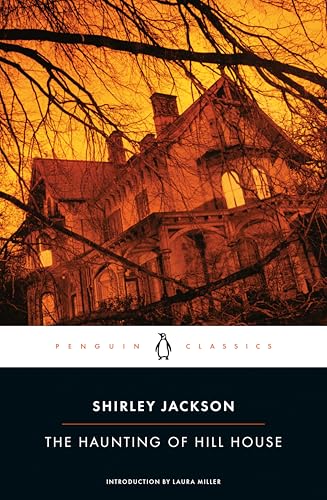
Jackson's novel opens with one of the most celebrated paragraphs in American fiction, establishing Hill House as a place that is wrong in ways that resist description. Four characters spend time in the house as part of a paranormal study, and the horror that follows is brilliantly ambiguous. Is the house supernatural? Is Eleanor, the most vulnerable member of the group, experiencing something real or experiencing a breakdown? Jackson never resolves the question, and that refusal is what makes the book last. It was published in 1959 and has not aged a day. Buy The Haunting of Hill House on Amazon.
3. Ghost Story by Peter Straub
Five elderly men in a small Upstate New York town share a guilty secret from their youth and have told each other ghost stories for decades, perhaps to process what they did or perhaps to keep the real story at bay. When something begins picking them off, Straub builds his horror slowly and literarily, drawing on ghost story traditions from Hawthorne to James while pushing the genre forward. Ghost Story is one of the best-written horror novels ever published and one of the most under-read. If you care about the genre's literary potential, this is essential.
4. A Head Full of Ghosts by Paul Tremblay
Tremblay sets his story against the backdrop of a family that agrees to document their teenage daughter's apparent demonic possession for a reality television show. The novel is narrated fifteen years later by the younger sister, now an adult, and filtered through a true-crime blogger's commentary. The layering of perspectives, the found-footage aesthetic applied to prose, and the refusal to confirm or deny whether anything supernatural is happening make this one of the most formally interesting horror novels of recent years. It is also genuinely frightening. Buy A Head Full of Ghosts on Amazon.
5. NOS4A2 by Joe Hill
Hill's novel follows Victoria McQueen, who discovers as a child that she can find lost things by riding her bicycle across a bridge that should not exist. Charlie Manx, her antagonist, drives a 1938 Rolls-Royce Wraith and takes children to a place called Christmasland, where they are transformed into something that was once human. Hill inherits his father Stephen King's gift for rooting supernatural horror in specific American geography and in the textures of working-class life, and NOS4A2 is the book where that gift is most fully displayed. The confrontation between Victoria and Manx across two time periods is structurally elegant and emotionally brutal.
6. The Silence of the Lambs by Thomas Harris
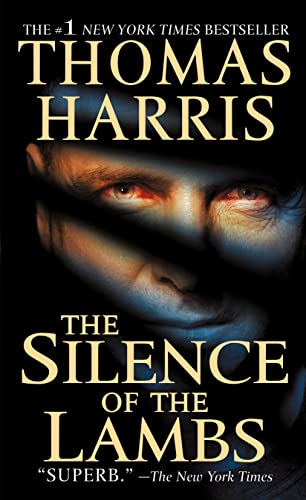
Hannibal Lecter is the most famous villain in thriller fiction, and the novel that made him famous is tighter and more controlled than its reputation suggests. Clarice Starling, a trainee FBI agent, is sent to interview Lecter in his cell to extract insight into a serial killer called Buffalo Bill. Harris structures the book as a series of controlled exchanges between Clarice and Lecter that gradually escalate in intimacy and danger, while the Buffalo Bill case builds to a parallel horror. The book works because Clarice is a genuine protagonist with her own arc, not just a foil for the monster. Buy The Silence of the Lambs on Amazon.
7. Frankenstein by Mary Shelley
Shelley wrote the foundational text of science fiction and horror simultaneously, at nineteen, on a dare. Victor Frankenstein creates a living creature and immediately abandons it out of horror at what he has made. The creature, eloquent and genuinely sympathetic in the novel in ways that the film adaptations suppress, then proceeds to force Victor to confront the consequences of creation without responsibility. The novel's horror is not the monster but the scientist, and the question it asks about what we owe to the things we bring into existence is still unanswered. Everything in the genre traces back here.
8. The Exorcist by William Peter Blatty
Blatty's novel about the possession of a twelve-year-old girl and the two priests who attempt to help her was a cultural phenomenon when it was published in 1971 and remains one of the most effectively disturbing horror novels ever written. What separates it from lesser possession stories is Blatty's genuine engagement with faith. Father Karras is a Jesuit psychiatrist struggling with doubt, and the possession forces him toward a confrontation with belief that is not resolved cheaply. The horror is real but the theological stakes are real too, and that combination is what the novel's imitators have never managed to replicate.
9. We Have Always Lived in the Castle by Shirley Jackson
Jackson's second entry on this list is a different kind of horror: quieter, more psychological, told by an unreliable narrator who lives in a house with her sister and uncle following a mass family poisoning. Merricat Blackwood is one of fiction's great disturbing voices, matter-of-fact about things that should disturb her and deeply invested in rituals that keep the outside world at bay. The horror here is cumulative and social rather than supernatural. By the end of the novel, who the monster is has become genuinely complicated.
10. Bird Box by Josh Malerman
Malerman's debut novel solves a difficult horror problem: how do you sustain terror across a full-length novel when the source of fear cannot be described? His solution is that looking at the creatures that have overrun the world drives the viewer instantly and permanently mad, so all action takes place blindfolded. The constraint generates extraordinary tension. Malorie, navigating a river in a blindfold with two small children, is one of horror fiction's great set pieces. The novel was written before the Netflix adaptation existed, and the book is considerably darker than the film.
Which One to Read First
If you want literary horror that will change how you think about the genre, start with The Haunting of Hill House. If you want the genre's most sustained and ambitious achievement, It is the answer. If you want something more recent that demonstrates how much the form still has to offer, A Head Full of Ghosts or Bird Box. All ten of these books do something that most fiction never attempts: they make you afraid. That is a harder trick than it looks.
Your next good book, in your inbox
We only write when we find a book worth your time. Hand-picked recommendations across history, mythology, true crime and more.
Are you an author?
Get your book in front of readers like these, for free.
- Free book listing →Your own book page with an Amazon button
- Author page →Photo, bio and links to your site
- Featured placement →A spot in our best-of lists, from €29
Free tools we recommend
Get free honest reviewsReview exchange on iWrity, free to join
Books You Might Like

The Hiding Place
Elizabeth Sherrill, John Sherrill Corrie ten Boom

Helter Skelter: The True Story of the Manson Murders
Curt Gentry Vincent Bugliosi
Cultish: The Language of Fanaticism
Amanda Montell