Best LGBTQ+ Books of All Time: 10 That Opened Doors and Changed Minds
Updated June 2026. The books below were not all published as LGBTQ+ literature. Several were published under pseudonyms or in small runs specifically to avoid the consequences of being visible. Patricia Highsmith published The Price of Salt under a pen name in 1952 because her publisher refused to print it under her own. The fact that the novel has a happy ending was itself an act of defiance: the convention at the time required that gay characters either die or be saved by heterosexuality. These books break that convention or predate it or argue directly against it or quietly ignore it as though it were never a rule at all.
The list is ordered to give a sense of how the tradition developed. It starts with Baldwin and Highsmith writing under pressure in the 1950s and ends with Carmen Maria Machado's 2019 memoir, which operates in a literary environment that earlier writers on this list made possible.
The Novel That Should Have Been Impossible to Write
Giovanni's Room by James Baldwin. David, a young American in Paris, is engaged to a woman named Hella and in love with an Italian barman named Giovanni. The novel is about David's refusal to acknowledge what he is, and the cost of that refusal to everyone around him. Baldwin published it in 1956 and his publisher pressured him not to. He published it anyway. The prose is among the most precise in American fiction: every sentence is controlled, nothing is wasted, and the emotional argument accumulates with the logic of a proof. Baldwin was Black and gay and wrote a novel with an all-white cast because he knew that combining both identities in a single protagonist would make the book impossible to market. That calculation, made in 1956, tells you something specific about the literary economy of the time.
The Happy Ending That Was Not Supposed to Exist
 The Price of Salt by Patricia Highsmith. Therese Belivet, a young woman working in a department store, falls in love with an older married woman named Carol. They drive across America together. The novel ends without punishment, without death, without a return to heterosexuality. Highsmith published it in 1952 under the pseudonym Claire Morgan, partly because her publisher refused to attach her name to it, and partly to protect herself. It sold nearly a million copies in paperback. She acknowledged authorship under her own name in 1990, three years before her death. The novel was adapted as the film Carol in 2015. Read the book first: it is drier and stranger and more honest than the film.
The Founding Document of the Modern Gay Novel
A Boy's Own Story by Edmund White. A nameless narrator looks back on his adolescence in the American Midwest in the 1950s, his growing awareness of his sexuality, and the compromises he made to survive a world that had no language for what he was. White published it in 1982 and it is the first volume of a loosely autobiographical trilogy. The novel is important for the same reason as Baldwin's: it named an experience that had been visible only in pathology, punishment, or farce. White named it in literature, with full literary seriousness, and the book's influence on gay writing in the following two decades is difficult to overstate.
The Lesbian Novel That Sold Everywhere
Rubyfruit Jungle by Rita Mae Brown. Molly Bolt grows up poor in rural Florida, figures out she is a lesbian at an early age, and refuses to apologize for it at any point. Brown published the novel herself in 1973 through the feminist small press Daughters, Inc., and it sold 70,000 copies before Bantam bought the rights and sold another million in mass-market paperback. It is the funniest novel on this list and the most direct: Molly is not confused, not ashamed, and not interested in the perspective of anyone who thinks she should be. The novel's commercial success proved that there was a mass readership for explicitly lesbian fiction, which was not widely understood before 1973.
The Memoir That Invented a Form
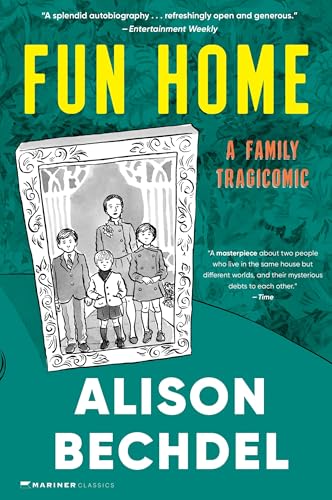 Fun Home by Alison Bechdel. Bechdel published this graphic memoir in 2006 and it recounts her childhood in a funeral home in rural Pennsylvania, her father's hidden gay life, and his death, which may have been suicide, two weeks after she came out to her parents by letter. The book is formally unusual: Bechdel structures it around her reading of literary texts, particularly Ulysses and the myth of Daedalus and Icarus, using them as frameworks to understand her father and herself. The result is a work that operates simultaneously as memoir, literary criticism, family history, and coming-of-age narrative. The Broadway musical adaptation is excellent. The book, which preceded it by a decade, is richer.
Memory, Summer, and the Thing You Cannot Name
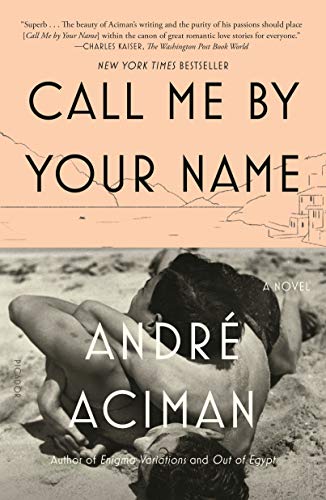 Call Me By Your Name by Andre Aciman. Elio is seventeen and spending the summer at his parents' villa in northern Italy when Oliver, an American graduate student, arrives to work with Elio's father. The novel is the account of that summer. Aciman published it in 2007 and it is the most lyrical book on this list: the prose is dense with memory and self-analysis, structured around the narrator's uncertainty about what is happening and what it means. The Luca Guadagnino film from 2017 is the reason most readers come to the book now, and the film is beautiful, but the novel contains considerably more of Elio's interiority than any film could carry. Aciman published a sequel, Find Me, in 2019; read this one first.
Call Me By Your Name on Amazon
Class, Empire, and Desire in Thatcher's Britain
The Line of Beauty by Alan Hollinghurst. Nick Guest moves into the London townhouse of a Conservative MP's family in 1983, the year after Thatcher's first election victory. The novel follows him through the decade as the world changes around him. Hollinghurst won the Booker Prize for it in 2004 and the novel is the definitive literary account of gay life in Britain in the 1980s: the money, the cocaine, the AIDS crisis arriving like weather at the edge of a party that has not yet acknowledged it. The prose is Henry James rewritten for a world James could not have imagined, which is deliberate: Nick is a James scholar and the novel is partly about the incompatibility between the aesthetic values Nick inherited from literature and the political and sexual reality he is actually living in.
The Memoir That Refuses to be Tidy
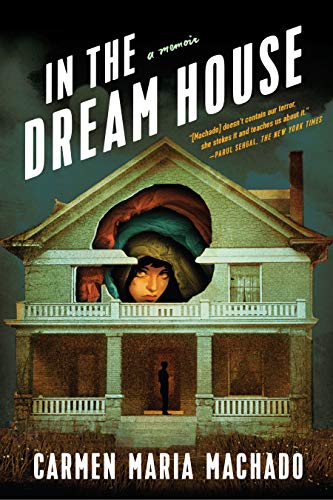 In the Dream House by Carmen Maria Machado. Machado recounts an abusive relationship with a woman in a series of chapters, each of which uses a different genre or narrative framework: the choose-your-own-adventure, the haunted house, the fairy tale, the villain's monograph. Published in 2019, the book addresses something the existing literature on domestic abuse had largely ignored: that abuse in same-sex relationships exists, that it operates differently from heterosexual domestic violence, and that the cultural invisibility of the abuser's gender was one of the tools the abuse used. The formal experimentation is not decorative. Each genre frame illuminates a different aspect of an experience that resists linear narration.
Two More Worth Reading
Oranges Are Not the Only Fruit by Jeanette Winterson. Winterson published this semi-autobiographical novel in 1985. Jeanette grows up in a Pentecostal family in northern England, is being raised to become a missionary, and falls in love with a girl named Melanie. The collision between institutional religion and personal desire is the engine of the novel, and Winterson handles it without sentimentality in either direction. The book won the Whitbread Prize for a first novel and Winterson adapted it for BBC television in 1990.
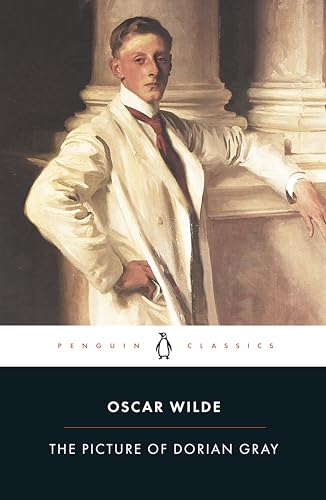 The Picture of Dorian Gray by Oscar Wilde. Wilde published the novel in 1890 and it was used as evidence against him at his trial for gross indecency in 1895. The homoeroticism is not coded, exactly, but it is layered inside aestheticism and the story of a portrait that ages while its subject does not. Dorian's corruption is inseparable from his beauty and his beauty is inseparable from the desire of the men who look at him. The novel is the earliest entry on this list and the only one where the author paid a direct legal price for writing it.
The Picture of Dorian Gray on Amazon
Where to Go After This List
Several books on this list connect to the Skriuwer dark-history and banned-books threads. Wilde's trial and Highsmith's pseudonymous publication both appear in the context of the most banned books in history. For the psychological portrait of desire and self-concealment that runs through several of these novels, the best books about manipulation cover the same mechanisms from a nonfiction angle. And for the broader literary tradition these writers were working inside or against, the best magical realism novels and best poetry collections are the natural companion reading.
Your next good book, in your inbox
We only write when we find a book worth your time. Hand-picked recommendations across history, mythology, true crime and more.
Are you an author?
Get your book in front of readers like these, for free.
- Free book listing →Your own book page with an Amazon button
- Author page →Photo, bio and links to your site
- Featured placement →A spot in our best-of lists, from €29
Free tools we recommend
Get free honest reviewsReview exchange on iWrity, free to join
Books You Might Like

It Ends with Us: A Novel
Colleen Hoover

The Seven Husbands of Evelyn Hugo: A Novel
Taylor Jenkins Reid

The Song of Achilles
Madeline Miller
