Best Norse Mythology Books: 12 Picks From the Eddas to Modern Retellings (2026)
The best Norse mythology books fall into three groups, and most reading lists make the mistake of mixing them up. There are the primary sources written down by medieval Icelanders. There are scholarly retellings that organize the myths into a coherent reading order. And there is modern fiction that uses Norse material as raw clay for new stories. All three are worth reading, but in a specific order. Pick wrong and you will spend a year confused about who Loki is and whether Thor really fought a giant cat.
This list of 12 books gives you the ones that hold up. Three primary sources, four scholarly or accessible retellings, and five novels and series readers actually finish. Where there is a clearly better starting book, the list says so directly.
Where to Start: One Book to Read First
The honest one-book recommendation for almost every reader is Neil Gaiman's Norse Mythology (2017). Gaiman picks the strongest myths from the Prose Edda and the Poetic Edda, retells them in modern English, and arranges them in roughly chronological order from creation to Ragnarok. It is short, faithful where it can be, and never confused.
If you want something even shorter, the D'Aulaires' Book of Norse Myths is technically a children's book but is the same retelling that introduced an entire generation of writers, including Gaiman himself, to Norse material.
The Primary Sources Worth Reading
If you want to read the Norse myths the way they came down to us, three primary sources matter.
Snorri Sturluson's Prose Edda, written around 1220 in Iceland, is the closest thing to a single coherent narrative the Norse tradition ever got. Snorri organized the myths to teach skaldic poetry to 13th century Icelandic poets, so it reads like a textbook with brilliant stories embedded in it. The Jesse Byock translation in Penguin Classics is the standard.
The Poetic Edda is the older, weirder, harder source. Anonymous poems collected in the Codex Regius around 1270, but composed earlier and orally transmitted. Carolyne Larrington's translation in Oxford World's Classics is the cleanest English version. Read the Voluspa first if you only read one poem.
Snorri's Heimskringla, the saga of the Norwegian kings, is technically history rather than myth, but the early sections include the legendary descent of the Ynglings from the god Freyr and are core Norse material.
Best Scholarly Introductions
For readers who want context for the primary sources, three books are unbeaten.
H.R. Ellis Davidson's Gods and Myths of Northern Europe (1964) is dated in places but still the most cited general scholarly introduction. Carolyne Larrington's The Norse Myths: A Guide to the Gods and Heroes is the modern equivalent, written by the leading living English-language Eddic scholar. Daniel McCoy's The Viking Spirit is the most accessible recent introduction, with footnotes pointing to the primary text for every claim.
Kevin Crossley-Holland's The Norse Myths from 1980 is in a category of its own, a literary retelling with serious commentary, often used as a university text.
Norse Mythology vs Viking History
A point of confusion worth addressing: Norse mythology is not the same as Viking history. The myths were written down two centuries after the Viking Age ended, by Christian Icelanders working from oral tradition. If you want the actual Vikings, Neil Price's Children of Ash and Elm is the current best general history, and our guide to the best Viking books ranks both history and fiction across the whole Viking Age. Read mythology and Viking history side by side and they illuminate each other, but do not expect them to overlap completely.
The Best Norse Mythology Fiction
Five novels and series consistently get strong reader reviews and stay close enough to the source material to feel real.
Joanne Harris's The Gospel of Loki retells the entire myth cycle from Loki's point of view. Sharp, funny, and faithful to the underlying stories. Genevieve Gornichec's The Witch's Heart tells the story of Angrboda, mother of Loki's monstrous children, who barely appears in the original sources. Francesca Simon's The Monstrous Child does the same for Hel.
For epic fantasy that draws on Norse material rather than retells it, John Gwynne's Bloodsworn Saga (starting with The Shadow of the Gods) is the strongest current series. For younger readers, Rick Riordan's Magnus Chase and the Gods of Asgard is the same formula that worked for Greek mythology in the Percy Jackson books.
The Norse retelling boom has not slowed going into 2026. Publishers continue to push new editions and visual companions, including Milivoj Ćeran's heavily illustrated Norse Mythology art book, a recent option for readers who want the world rendered as much as narrated. The takeaway has not changed: start with the faithful narrative retellings below, then branch into whichever new release catches your eye, because the source material is fixed even when the packaging is not.
Three Norse Mythology Reads to Add to Your List
Three concrete shortlist picks, all with strong reader review counts and easy to find on Amazon today:
- Norse Mythology by Neil Gaiman. The most read modern retelling and a near unanimous starting recommendation. Short, well paced, faithful to the Eddas.
- The Prose Edda by Snorri Sturluson (Jesse Byock translation). The single most important primary source for Norse mythology. Read after Gaiman, not before.
- Children of Ash and Elm by Neil Price. Not strictly mythology, but the best current Viking Age history and the necessary historical companion to any serious mythology reading.
Reading Order That Actually Works
The order most readers eventually wish they had followed is: Gaiman first for the narrative shape, Snorri second for the primary text, then either Larrington or McCoy for academic context. From there, branch into Crossley-Holland's literary retelling, Joanne Harris's Loki, and Neil Price for the historical Vikings. Save the Poetic Edda for when you are already comfortable with the names and the basic stories, otherwise the kennings and abrupt poetic shifts will lose you.
For more curated reading lists, see our Norse mythology books for beginners guide for an even shorter starter list, our best books about Alexander the Great for the parallel Greek angle, and the wider mythology category. There is also a related sleep listening guide at Celtic mythology sleep stories.
Your next good book, in your inbox
We only write when we find a book worth your time. Hand-picked recommendations across history, mythology, true crime and more.
Books You Might Like

The Song of Achilles
Madeline Miller

Circe
Madeline Miller
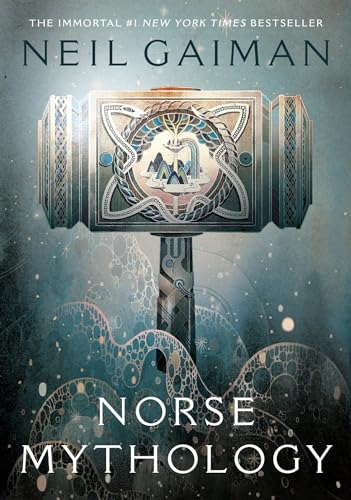
Norse Mythology
Neil Gaiman

Heroes
Unknown Author