Best Self-Help Books About Habits in 2026: 10 That Actually Change Behavior
Most behavior change fails not because people lack willpower but because they misunderstand how habits work. The books on this list are the ones that got the research right and translated it into something usable. Some are grounded in neuroscience, some in behavioral economics, some in clinical psychology. What they share is a focus on mechanism rather than motivation. They explain the machinery rather than just telling you to try harder.
1. Atomic Habits by James Clear

Clear's book has sold over fifteen million copies and earned that number. The central argument is that habits are the compound interest of self-improvement: small changes, consistently maintained, produce dramatic results over time because of compounding. Clear synthesizes research from psychology, neuroscience, and behavioral economics into a four-step framework: cue, craving, response, reward. He then builds a practical system around manipulating each step. The book's particular strength is its focus on identity rather than outcomes. Clear argues that lasting behavior change requires changing how you see yourself, not just what you do. Buy Atomic Habits on Amazon.
2. The Power of Habit by Charles Duhigg

Duhigg's book predates Clear's by several years and does something different: it roots habit formation in specific neuroscience (the basal ganglia's role in habit storage) and then traces the implications across individual behavior, organizational behavior, and social movements. The habit loop, cue, routine, reward, is the same basic structure Clear uses, but Duhigg explores it at more depth and with more historical case studies. The chapters on Alcoa's safety turnaround under Paul O'Neill and on the Montgomery Bus Boycott are among the most interesting in the business-science genre. Buy The Power of Habit on Amazon.
3. Tiny Habits by B.J. Fogg
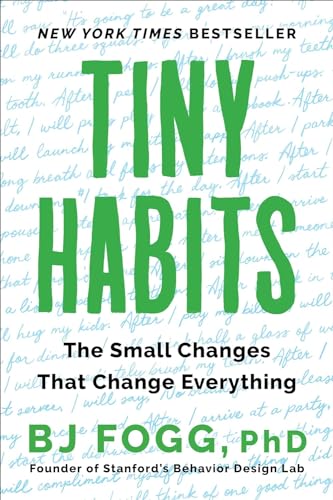
Fogg is a Stanford behavioral scientist who spent twenty years running habit-formation programs before writing this book, and his approach is the most systematically research-grounded of any on this list. His central insight is that motivation is unreliable and the best behavior change strategy removes reliance on it entirely. Instead, start with the smallest possible version of the habit you want, attach it to something you already do, and celebrate immediately when you complete it. The celebration part sounds silly until you understand why it works: emotion is what wires behaviors into long-term memory. Fogg's Tiny Habits method has a strong evidence base and is genuinely different from the standard advice. Buy Tiny Habits on Amazon.
4. Hooked by Nir Eyal
Eyal's book is technically about product design, specifically how technology companies build products that form habits in their users, but it is one of the most illuminating books about habit mechanics written from any angle. The Hook Model, trigger, action, variable reward, investment, explains why apps like Instagram and TikTok are hard to put down, but the same framework applies in reverse to anyone trying to build positive habits deliberately. Understanding why you compulsively check your phone is the first step toward applying the same design principles to the behaviors you actually want. Eyal's later book Indistractable is a direct response to Hooked from the user's side of the same equation.
5. The Willpower Instinct by Kelly McGonigal
McGonigal is a Stanford psychologist whose popular course on the science of willpower became this book. Her central argument runs against the grain of most self-help: willpower is not a moral quality but a biological resource that can be measured, depleted, and recovered. The book covers the neuroscience of self-control, why stress and sleep deprivation undermine it, why the "what the hell" effect causes one lapse to cascade into many more, and what strategies actually help rather than simply appealing to motivation. Each chapter ends with exercises drawn from the original course, and readers who work through those exercises report substantially better results than those who just read.
6. The 5 Second Rule by Mel Robbins
Robbins's book is the most accessible on this list, which has made it both popular and dismissed by people who prefer their psychology served with more academic apparatus. The core idea is simple: the moment you feel an impulse to do something that aligns with your goals, count backward from five and move. The delay breaks the brain's habit of defaulting to the comfortable and familiar. Robbins grounds this in neuroscience (the prefrontal cortex's role in interrupting automatic behavior) but does not belabor the research. The book works because the rule is actually useful, not because the explanation is elaborate. Millions of people report using it daily.
7. Better Than Before by Gretchen Rubin
Rubin's contribution to the habits literature is the idea that people fall into different tendencies when it comes to responding to expectations, inner and outer, and that different habit strategies work for different tendency types. The four tendencies (Upholder, Questioner, Obliger, Rebel) are a rough but genuinely useful framework for explaining why identical advice produces different results in different people. If you have tried the standard habit advice and found it does not work for you, Rubin's framework is worth reading because it shifts the question from "what is the right method" to "what is the right method for how I am wired."
8. Deep Work by Cal Newport

Newport's book is not primarily a habits book but belongs here because its central argument, that the ability to concentrate on cognitively demanding work without distraction is both increasingly rare and increasingly valuable, requires the kind of habitual, protected practice that the other books on this list describe. Newport provides a systematic approach to building a deep work habit: choosing a depth philosophy, ritualizing practice, and scheduling recovery. It is one of the few productivity books that takes seriously both the research on cognitive limits and the practical constraints of modern work.
9. Switch by Chip Heath and Dan Heath
The Heath brothers' framework for behavior change draws on Jonathan Haidt's Rider and Elephant metaphor: the rational mind (the Rider) knows what to do but cannot force the emotional mind (the Elephant) to do it. Change requires directing the Rider with clear instructions, motivating the Elephant with emotional appeal, and shaping the path to make the desired behavior easier. Switch is particularly useful for anyone trying to change behavior in groups or organizations rather than just themselves, because it takes seriously the role of environment and social context in habit formation rather than treating change as a purely individual project.
10. Good Habits, Bad Habits by Wendy Wood
Wood is the psychologist whose research on habits is most frequently cited by the other authors on this list, and her book is the most research-grounded of any here. Her central finding, that roughly 43% of our daily behaviors are habitual, performed in the same context with minimal conscious thought, reframes how we should think about change. Wood argues that context, not motivation, is the primary driver of habit, which means that the most effective behavior change strategy is redesigning your environment rather than trying to override it with willpower. This is the most academic of the books on this list but also the one with the most direct implications for how to actually set up your life.
The Honest Summary
If you read only one book from this list, Atomic Habits and Tiny Habits are the two most practically useful starting points, and they complement rather than duplicate each other. Clear gives you the full system; Fogg gives you the lowest-friction entry point. If you want to understand the science underneath the advice, The Power of Habit and Good Habits, Bad Habits are the most research-grounded. If you want to understand why digital products are designed to be hard to stop using, and apply that knowledge in reverse to your own life, Hooked is the book that will change how you see every app on your phone.
Your next good book, in your inbox
We only write when we find a book worth your time. Hand-picked recommendations across history, mythology, true crime and more.
Are you an author?
Get your book in front of readers like these, for free.
- Free book listing →Your own book page with an Amazon button
- Author page →Photo, bio and links to your site
- Featured placement →A spot in our best-of lists, from €29
Free tools we recommend
Get free honest reviewsReview exchange on iWrity, free to join
Books You Might Like
The Psychology of Money
Morgan Housel

Thinking, Fast and Slow
Daniel Kahneman

Man's Search for Meaning
Viktor E. Frankl

The Body Keeps the Score
M.D. Bessel van der Kolk