Best Stoic Philosophy Books in 2026: 12 That Show How the Ancient Greeks and Romans Found Peace
Stoic philosophy survived the fall of Rome, the burning of libraries, the long centuries when ancient thought went mostly dark in Western Europe, and the general drift of modern culture toward distraction. It is now, by most measures, the most widely read ancient philosophy in the English-speaking world. That is partly Ryan Holiday's doing, and partly the fact that the problems stoicism addresses have not changed in two thousand years: how to handle what you cannot control, how to avoid being swept away by opinion, how to face mortality without becoming useless beforehand.
This list covers the best stoic philosophy books in 2026, from the primary texts in their best modern translations through to the scholars, philosophers, and writers who have done the most to make this tradition livable rather than merely admirable. The books are organised by what kind of reader each one suits, because the right entry point matters enormously with ancient philosophy.
The Primary Texts: Where Stoicism Actually Lives
Stoicism is a philosophy built for practice, not for study. The original texts are personal notebooks, letters, and transcribed lectures, not academic treatises. That makes them more readable than most ancient philosophy and more directly useful.
1. Meditations by Marcus Aurelius (Gregory Hays translation)
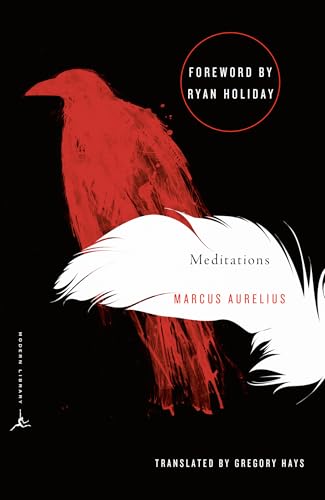
Marcus Aurelius was Roman emperor from 161 to 180 AD. He also wrote what became the most widely read work of ancient philosophy in modern history, a collection of private notes he kept to remind himself how to behave. There is no audience in mind, no argument to win, no disciples to impress. That nakedness is what makes it so affecting. You are watching a man with absolute power talk himself down from pride and irritation on a daily basis.
The Gregory Hays translation, published by Modern Library in 2002, is the version most serious reading lists direct beginners to. Hays writes modern English without sacrificing fidelity. The older Staniforth and Long translations are more literal but read like nineteenth-century sermons. Hays is the one to start with.
Meditations, Gregory Hays translation is the starting point for anyone approaching stoicism for the first time.
2. Discourses by Epictetus (Robin Hard translation)
Epictetus was born a slave in the first century AD and became one of the most influential teachers in the ancient world. His lectures were transcribed by his student Arrian and collected into the Discourses, four books of direct, sometimes combative philosophical instruction. The central idea is the dichotomy of control: there are things within your power (your judgements, intentions, responses) and things outside it (your body, your reputation, other people's behaviour). Confusing the two categories is the source of most human misery.
The Discourses are harder to read than Meditations because Epictetus is unsparing. He has no patience for self-pity or philosophical window dressing. Read him after Marcus Aurelius, not before.
3. Letters from a Stoic by Seneca (Penguin Classics, Robin Campbell translation)

Seneca was a Roman senator, playwright, and Nero's tutor who spent the last years of his life writing letters to his friend Lucilius about how to live. The letters cover money, grief, time, anger, old age, death, and the temptation to perform virtue rather than practise it. Seneca knew he was not living up to his own philosophy (he was famously wealthy for a man who wrote about the worthlessness of wealth), and the tension gives the letters an honesty that more consistent thinkers lack.
Letters from a Stoic, Penguin Classics edition is the best Seneca to start with and one of the most re-readable books in the stoic canon.
The Modern Interpretations: Stoicism Made Usable
The primary texts assume a shared cultural context most modern readers do not have. Modern interpreters exist to supply it. These are the ones that do that job well.
4. The Obstacle Is the Way by Ryan Holiday

Ryan Holiday's first explicitly stoic book takes Marcus Aurelius's idea that "the impediment to action advances action; what stands in the way becomes the way" and builds it into a usable framework for obstacles in work and life. The book is short, punchy, and built around historical examples (Demosthenes, Abraham Lincoln, Ulysses Grant, Thomas Edison) that illustrate the argument without becoming a history lesson. It is the book that brought stoicism back to a popular audience and it holds up better than its detractors admit.
5. Ego Is the Enemy by Ryan Holiday
The companion to The Obstacle Is the Way, this one draws on stoic thought to examine how ego undermines achievement at every stage: aspiring, succeeding, and failing. It is more psychologically nuanced than his first book and more willing to sit with failure rather than reframe it immediately as useful. Read it after The Obstacle Is the Way if you want a darker and more honest companion to it.
6. How to Be a Stoic by Massimo Pigliucci
Pigliucci is a philosopher and biologist who structures his book as a series of imagined dialogues with Epictetus across modern-life situations. The value of the book is its intellectual honesty: Pigliucci is explicit about where stoicism holds up under modern scrutiny and where it does not. He does not sell stoicism as a self-help system; he examines it as a philosophy with genuine strengths and real limitations. That makes it more trustworthy than most popular treatments.
7. A Guide to the Good Life by William B. Irvine

Irvine is a philosophy professor who wrote this book because his students kept asking how to apply ancient stoicism in contemporary life. The book is best known for its treatment of negative visualisation (the stoic practice of mentally rehearsing loss before it happens, in order to break the habit of taking things for granted) and for its honest engagement with the differences between what Zeno and Chrysippus originally taught and what modern readers actually need. It is academic without being inaccessible, and it covers the intellectual history of stoicism as well as its applications.
The Scholars: Stoicism Taken Seriously
Beyond the self-help applications, there is a tradition of serious scholarship on stoicism that most popular reading lists ignore. These two titles are essential if you want to understand the philosophy rather than just extract usable techniques from it.
8. Philosophy as a Way of Life by Pierre Hadot
Pierre Hadot was a French philosopher and classicist who argued that ancient philosophy was never primarily a theoretical system but a set of practices for transforming the self. His concept of "spiritual exercises" (the daily practices by which ancient philosophers tried to make their beliefs part of how they actually lived) changed how serious scholars think about Stoicism, Epicureanism, and Platonism. This book is harder to read than anything by Ryan Holiday, but it is the most intellectually important work on why stoicism matters as more than a productivity framework.
9. How to Think Like a Roman Emperor by Donald Robertson
Robertson is a cognitive-behavioural therapist who has spent his career mapping the overlap between stoic practice and CBT. His book uses the life of Marcus Aurelius as a through-line and works through the stoic techniques Marcus used to manage anxiety, anger, desire, and the fear of death. The biographical framing makes abstract ideas concrete, and Robertson's clinical background means he never overpromises what stoic practice can deliver. This is the most psychologically grounded popular stoicism book in print.
The Primary Text Worth Seeking Out
10. The Complete Works of Musonius Rufus (Cynthia King translation)
Musonius Rufus was Epictetus's teacher, a first-century Roman Stoic whose lectures survive in fragmentary form and who almost never appears on popular reading lists. He is worth finding because his concerns are more practical than the better-known Stoics: he wrote about food, physical training, marriage, the education of women (arguing that women were equally capable of virtue), and why philosophy must be lived rather than merely studied. The Cynthia King translation collects all surviving fragments in a short, readable volume.
Two Translations Worth Owning
11. Meditations by Marcus Aurelius (Martin Hammond translation)

The Gregory Hays translation is the best entry point. The Martin Hammond translation, published by Penguin Classics, is the one to read afterwards. Hammond is more literal than Hays and includes useful notes on the philosophical terms Marcus uses. Having both translations is worth it: seeing the same passage rendered two different ways forces you to think about what Marcus actually meant rather than just accepting one reading.
12. Enchiridion by Epictetus (Nick White translation)
The Enchiridion is the short summary of Epictetus's philosophy compiled by Arrian from the Discourses. It is about fifty pages. If you want to understand the core of stoic thought without reading everything else on this list, read this and Meditations. The Nick White translation in Hackett's edition is the most commonly recommended for modern readers.
Three Stoic Books Worth Buying Today
These are the titles that consistently hold the highest review counts in Amazon's philosophy and stoicism category:
- Meditations by Marcus Aurelius, Gregory Hays translation — the essential starting point, in the translation that reads like modern English without losing fidelity to the original.
- Letters from a Stoic by Seneca (Penguin Classics) — Seneca's letters on grief, time, money, and how to live, honest about the gap between what he preached and how he lived.
- The Obstacle Is the Way by Ryan Holiday — the book that brought stoic ideas back to a popular audience, built around Marcus Aurelius's core idea that obstacles are the work.
For the full ranked list of philosophy books by verified reader count, see our philosophy collection. If you want the broader ancient context, our guide to ancient Greek philosophy covers the schools stoicism came from and competed with.
Your next good book, in your inbox
We only write when we find a book worth your time. Hand-picked recommendations across history, mythology, true crime and more.
Are you an author?
Get your book in front of readers like these, for free.
- Free book listing →Your own book page with an Amazon button
- Author page →Photo, bio and links to your site
- Featured placement →A spot in our best-of lists, from €29
Free tools we recommend
Get free honest reviewsReview exchange on iWrity, free to join
Books You Might Like
Meditations
Marcus Aurelius

The Power of Now
Eckhart Tolle

The Daily Stoic: 366 Meditations on Wisdom, Perseverance, and the Art of Living
Stephen Hanselman Ryan Holiday

12 Rules for Life: An Antidote to Chaos
Jordan B. Peterson