10 Best True Crime Books That Read Like Fiction
What Makes True Crime Literature Different
Most true crime is consumed as podcast content or docuseries. The best true crime books are something else entirely. They are reported over years, not weeks. They give you the texture of a place, the psychology of the people involved, and the systemic context that a podcast episode cannot hold. They change what you think about crime, justice, and the people who commit or survive it.
These ten books are the ones that have stayed with readers longest and are most frequently cited when people talk about the genre at its best.
1. In Cold Blood by Truman Capote

The book that invented narrative nonfiction. Capote spent six years reporting the murder of the Clutter family in Holcomb, Kansas and the investigation and execution of the two men convicted of it. The result reads like a novel in voice and structure while being entirely reported. Find In Cold Blood on Amazon.
What distinguishes it is Capote's dual focus: he gives equal weight to the Clutter family and to the killers Perry Smith and Dick Hickock. His portrait of Smith in particular is so humanizing that readers have argued about it for decades. Whether that humanization was artistically justified or journalistically irresponsible remains a live debate in nonfiction writing circles.
2. Columbine by Dave Cullen
Cullen spent ten years reporting on the 1999 Columbine High School shooting, and the result dismantled almost every widely held belief about what happened and why. The shooters were not bullied loners seeking revenge. They were not targeting athletes or Christians. The cafeteria bombs, which were supposed to kill hundreds, failed to detonate. Find Columbine on Amazon.
Cullen's reconstruction of the psychology of the two killers, based on journals and videos they left behind, is the most careful and responsible analysis of a mass shooter's thinking that has been published. The book is also a portrait of grief and recovery for a community and a country that got the story wrong from day one.
3. Devil in the Grove by Gilbert King
In 1949 in Groveland, Florida, four young Black men were falsely accused of raping a white woman. Two were shot by a sheriff's posse before they could be arrested. One was lynched by a mob after being returned to the county for a retrial. The fourth served years in prison before being exonerated decades later. Find Devil in the Grove on Amazon.
Gilbert King won the Pulitzer Prize for this book, which documents both the case and Thurgood Marshall's effort to defend the men. It is a book about the architecture of white supremacy in the American South and about what it cost individuals to fight it.
4. Just Mercy by Bryan Stevenson
Bryan Stevenson is a death row attorney who founded the Equal Justice Initiative in Montgomery, Alabama. This memoir, built around his efforts to exonerate Walter McMillian, a Black man sentenced to death for a murder he did not commit, is the most direct account available of how wrongful convictions happen and what it takes to undo them. Find Just Mercy on Amazon.
The book is written without the distance that characterizes most true crime. Stevenson is a participant. His descriptions of visiting clients on death row, of the fear and the bureaucratic humiliation of the process, are unlike anything else in the genre.
5. I'll Be Gone in the Dark by Michelle McNamara
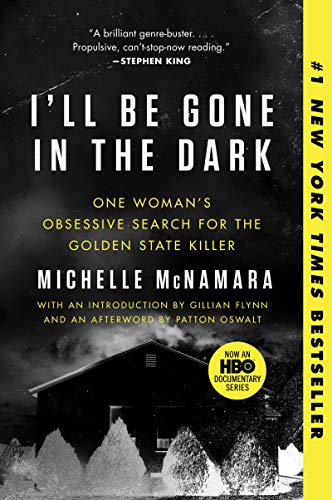
McNamara spent years investigating the Golden State Killer before she died unexpectedly in 2016. Her husband and her research team completed the book posthumously. It was published in 2018, six weeks before Joseph James DeAngelo was identified and arrested through DNA genealogy. Find I'll Be Gone in the Dark on Amazon.
The book is two things at once: a rigorous investigation of an unidentified serial killer's crimes across California in the 1970s and 1980s, and a memoir about obsession. McNamara was unusually self-aware about what drew her to true crime and what it cost her. That self-awareness makes it a more complex book than most in the genre.
6. Say Nothing by Patrick Radden Keefe
This book follows the 1972 abduction and murder of Jean McConville, a mother of ten taken from her Belfast home by the IRA. But it expands from that case into a full portrait of the Troubles in Northern Ireland, told through the lives of several people who were involved in IRA violence in the 1970s and have now aged into middle life. Find Say Nothing on Amazon.
Keefe is one of the best writers working in narrative nonfiction, and this is his best book. The structural decision to follow multiple lives across fifty years gives the book a scope that makes it feel more like a novel than a crime report.
7. Lost Girls by Robert Kolker
Robert Kolker investigated the murders of five women whose bodies were found along a stretch of beach on Long Island's South Shore in 2010. The case has never been solved. But Kolker's book is not primarily about the killer. It is about the five victims: who they were, how they ended up doing sex work, and how America's systems failed them. Find Lost Girls on Amazon.
The book was one of the first to argue explicitly that true crime's focus on killers over victims is a moral problem. The women in Kolker's book are fully drawn people with complicated lives, not case numbers.
8. The Monster of Florence by Douglas Preston
Preston moved to Florence, Italy and discovered that he had bought a farmhouse near where the Monster of Florence, an unidentified serial killer who murdered couples in the Florentine countryside between 1968 and 1985, had committed one of his crimes. The book he wrote with journalist Mario Spezi became the center of a serious legal battle when the Italian prosecutor investigating the case began pursuing Preston and Spezi as suspects. Find The Monster of Florence on Amazon.
The book is simultaneously a true crime investigation, a portrait of Italian legal culture, and a genuine thriller. It reads faster than almost any other nonfiction book in the genre.
9. Midnight in the Garden of Good and Evil by John Berendt
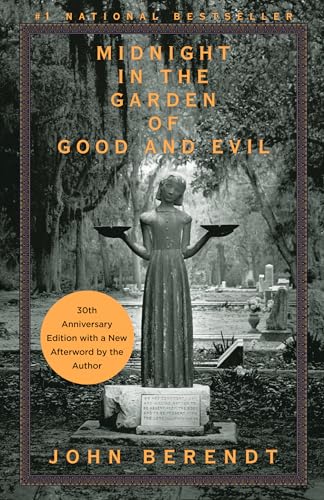
Berendt spent years living in Savannah, Georgia and wrote this account of the 1981 murder of Danny Hansford and the trial of Jim Williams, the antiques dealer accused of the killing. What made the book unusual is its structure: Berendt spent the first half building a portrait of Savannah's eccentric characters before the murder even occurs. Find Midnight in the Garden of Good and Evil on Amazon.
The result is less a crime book than a portrait of a place where the social rules are different from anywhere else in America. It spent more than four years on the New York Times bestseller list.
10. We Need to Talk About Kevin by Lionel Shriver
This is technically fiction, not true crime. It is included here because it remains the most psychologically penetrating examination of school violence available in any medium. Eva Khatchadourian writes letters to her absent husband in the aftermath of a school massacre committed by their son Kevin. Find We Need to Talk About Kevin on Amazon.
Shriver refuses to provide a satisfying explanation for Kevin's violence. The book argues that the desire for a clear cause is itself part of how we misunderstand violence. Every parent, teacher, and journalist who has covered a school shooting and asked why should read this book.
Your next good book, in your inbox
We only write when we find a book worth your time. Hand-picked recommendations across history, mythology, true crime and more.
Are you an author?
Get your book in front of readers like these, for free.
- Free book listing →Your own book page with an Amazon button
- Author page →Photo, bio and links to your site
- Featured placement →A spot in our best-of lists, from €29
Free tools we recommend
Get free honest reviewsReview exchange on iWrity, free to join
Books You Might Like


Mindhunter: Inside the FBI's Elite Serial Crime Unit
Mark Olshaker John E. Douglas

Helter Skelter: The True Story of the Manson Murders
Curt Gentry Vincent Bugliosi