Cleopatra: Seduction, Politics, and Ancient Egypt's Final Queen
Cleopatra: Seduction, Politics, and Ancient Egypt's Final Queen
Cleopatra VII Philopator remains one of history's most captivating and misunderstood figures. Born around 69 BCE, she ruled Egypt during one of its most turbulent periods, navigating the treacherous waters of Roman politics with intelligence, charm, and unprecedented diplomatic skill. Far from being merely a seductress, Cleopatra was a polyglot scholar, a shrewd political operator, and the last active ruler of Ptolemaic Egypt. Her life story encompasses ambition, love, betrayal, and ultimately, tragedy—elements that continue to fascinate historians and readers alike.
The Ptolemaic Dynasty and Egypt's Political Turmoil
To understand Cleopatra's significance, we must first examine the context of her rise to power. Egypt in the first century BCE was no longer the mighty ancient superpower of pharaonic times. Instead, it had become a Hellenistic kingdom ruled by the Ptolemaic dynasty—descendants of one of Alexander the Great's generals. The Ptolemies were Greeks who adopted Egyptian customs and ruled from Alexandria, the magnificent city that served as a beacon of learning and culture.
When Cleopatra was born, Egypt faced mounting pressure from Rome, whose legions were expanding their dominion throughout the Mediterranean. Internally, the kingdom suffered from civil unrest, economic strain, and dynastic conflict. Her father, Ptolemy XII, struggled to maintain Egypt's independence against both internal rivals and Roman interference. This volatile environment shaped young Cleopatra's political education, teaching her that survival required intelligence, adaptability, and strategic alliances.
Education, Languages, and Intellectual Prowess
One of the most remarkable aspects of Cleopatra that often gets overshadowed by popular culture is her extraordinary intellect. Unlike many depictions suggesting she relied solely on beauty and seduction, historical evidence indicates she was exceptionally well-educated. She reportedly spoke between eight and nine languages, including Egyptian, Greek, Latin, Hebrew, Aramaic, and several others. This linguistic mastery was not merely impressive—it was politically invaluable.
Cleopatra studied mathematics, astronomy, philosophy, and rhetoric. She understood Greek culture intimately and patronized scholars and artists. Her court in Alexandria became a center of intellectual discourse, continuing the legacy of the Ptolemaic dynasty's support for the famous Library of Alexandria. For readers interested in exploring her intellectual world, Cleopatra: A Life by Stacy Schiff offers meticulous research into her education and scholarly pursuits alongside her political achievements.
Rise to Power and Political Strategy
Cleopatra's path to the throne was not straightforward. When her father died in 51 BCE, she initially ruled jointly with her younger brother-husband, Ptolemy XIII, according to Egyptian custom. However, her brother's advisors soon conspired to remove her from power, forcing her into exile around 48 BCE. Rather than accept defeat, Cleopatra raised an army and prepared for civil war—demonstrating the political determination that would define her reign.
This is where Julius Caesar enters her story. The Roman general arrived in Egypt in 48 BCE, ostensibly to resolve a dispute between Cleopatra and her brother. However, their meeting would change both their fates. Cleopatra's approach was calculated: she needed Caesar's military support to reclaim her throne, and Caesar needed Egypt's wealth to fund his political ambitions in Rome. Their alliance—romantic, political, and mutually beneficial—resulted in Cleopatra regaining power and bearing Caesar a son, Caesarion, whom she proclaimed as the rightful heir to Egypt.
The Roman Connection and Mark Antony
After Caesar's assassination in 44 BCE, Cleopatra faced a new Rome—one divided by civil war. She skillfully navigated the conflict between competing Roman factions, eventually aligning herself with Mark Antony, one of Rome's most powerful military leaders. Unlike her relationship with Caesar, which was initially transactional, Cleopatra and Antony developed a genuine partnership that combined romance with ambitious political goals.
Together, they envisioned an alternative power structure for the Mediterranean world, with Cleopatra as the centerpiece of a great Eastern empire. Antony provided military might; Cleopatra provided wealth, resources, and strategic vision. She bore him three children and they married according to Egyptian law, though the marriage was not recognized in Rome. Their relationship represented one of antiquity's greatest love stories, but it was equally a calculated political alliance against Octavian (the future Emperor Augustus), Caesar's adopted heir.
The political dimensions of their partnership are thoroughly explored in Antony and Cleopatra: Power, Love, and Politics in the Ancient World and Colleen McCullough's historical fiction novel Antony and Cleopatra, which bring their complex relationship to vivid life.
Economic and Cultural Achievements
Beyond politics and romance, Cleopatra was an effective administrator who revitalized Egypt's economy. She traveled throughout her kingdom, devalued currency strategically to combat inflation, and reformed tax collection systems. She was also a skilled propagandist, commissioning coins and monuments bearing her image to reinforce her authority and legitimacy as a ruler.
Her patronage of the arts and sciences rivaled that of any great ruler. She supported temples, maintained the intellectual traditions of Alexandria, and presented herself as a living embodiment of the Egyptian goddess Isis—a powerful symbol that resonated deeply with her subjects and enhanced her cultural authority.
The Fall and Legacy of Egypt's Final Queen
The final chapter of Cleopatra's life came when Octavian defeated Mark Antony's forces at the Battle of Actium in 31 BCE. Antony's suicide and Octavian's occupation of Egypt marked the end of both their dreams and Egypt's independence. Rather than submit to capture and humiliation, Cleopatra chose to end her life, reportedly by allowing a poisonous asp to bite her—though historical accounts vary.
With her death in 30 BCE, Egypt became a Roman province, and three centuries of Ptolemaic rule ended. Yet Cleopatra's legacy endured, inspiring countless artistic, literary, and historical interpretations. She transformed from a desperate exile into one of history's most influential women, whose intelligence, political acumen, and determination shaped an era.
Conclusion
The true story of Cleopatra transcends the romanticized myths. She was neither the simpering seductress of popular imagination nor a tragic heroine consumed by love. Instead, she was a brilliant political strategist, a polyglot intellectual, and a ruler who fought fiercely for Egypt's independence in an age increasingly dominated by Rome. Her life demonstrates how intelligence, education, and strategic thinking could elevate a woman to unprecedented power in the ancient world.
If you're captivated by Cleopatra's remarkable story, discover more engaging historical narratives at Skriuwer.com, where you'll find curated recommendations for books about ancient Egypt, classical history, and the lives of history's most fascinating figures. Whether you prefer rigorous historical scholarship or compelling historical fiction, Skriuwer.com has the perfect reads to deepen your understanding of this extraordinary queen and her era.
Your next good book, in your inbox
We only write when we find a book worth your time. Hand-picked recommendations across history, mythology, true crime and more.
Books You Might Like

The Song of Achilles
Madeline Miller

Sapiens: A Brief History of Humankind
Yuval Noah Harari
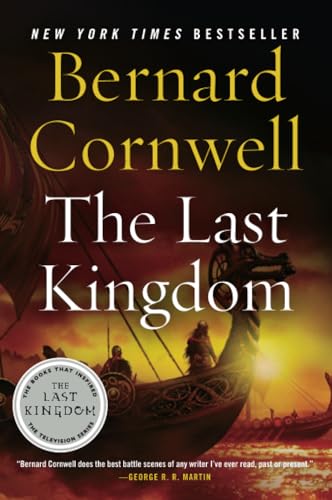
The Last Kingdom (The Saxon Stories, Book 1)
Bernard Cornwell

Circe
Madeline Miller