Lost Kingdoms Sleep Stories: 7 Forgotten Civilizations to Fall Asleep To (2026)
Some of the most interesting civilizations in history are also the most obscure — not because they were minor, but because their destruction was thorough enough to erase most of the record. The Indus Valley civilization built cities with sophisticated sewage systems before Rome existed, then vanished so completely that we still cannot read their script. The kingdom of Aksum minted gold coins and corresponded with Byzantium, then collapsed and was largely forgotten by the outside world for centuries. Carthage was not just defeated — it was demolished and salted. These are not footnotes. They are entire worlds that history misplaced. Lost kingdoms sleep stories give you access to that buried material in the most accessible format possible.
The Learn While You Sleep channel has a dedicated three-hour sleep story covering dark lost kingdoms and forgotten empires — civilizations that dominated their regions and then disappeared, leaving behind ruins, myths, and unanswered questions.
3 Hours: Dark Lost Kingdoms and Forgotten Empires
Why Lost Civilizations Make Perfect Sleep Content
There is a quality to these stories that is different from conventional history. When you listen to content about Rome or Egypt, you are navigating a familiar map — you know the names, you know roughly how it ends, you have reference points. With lost civilizations, there are no reference points. The Hittites. The Minoans. The Sea Peoples who brought the Bronze Age to an abrupt end. These are genuinely unknown territories, and the brain responds differently to unknown territories in the half-sleep state: less analysis, more absorption, more dreaming.
The three-hour format also works particularly well for this content. Each civilization gets enough time to be rendered in detail — the geography, the political structure, the cultural achievements, the circumstances of collapse — without the narrative becoming so dense that it keeps you awake.
If you want the background before you listen, our explainer on what counts as a lost civilization sets out the difference between a kingdom that vanished and one that was simply absorbed, and the ancient civilizations timeline places these forgotten empires next to the famous ones. For the earliest states of all, see our piece on the earliest civilizations in the world.
Related Dark and Ancient History Content
- 8 Hours of Dark Ancient History Facts — the broader context in which these lost kingdoms existed
- 6 Hours of Ancient Egyptian Pharaohs — a civilization that almost became a lost kingdom several times and survived
- 1 Hour: The Weirdest Kings in History — rulers who nearly brought their own kingdoms to ruin
Books on Lost Civilizations
The archaeology and history of lost civilizations has produced some excellent popular writing:
- 1177 B.C.: The Year Civilization Collapsed by Eric Cline. The Bronze Age collapse that ended the Hittites, Mycenaeans, and nearly everyone else inside a generation. Still one of the most mysterious events in ancient history and the model for how interconnected systems fail at once.
- The Lost City of the Monkey God by Douglas Preston. A modern archaeological expedition into the Honduran jungle in search of a lost pre-Columbian civilization. Reads like an adventure novel because it is one, complete with a parasitic disease the expedition members picked up.
- Collapse by Jared Diamond. Why civilizations fail. Controversial in parts but still essential reading for thinking about the patterns that recur across the Easter Island, Greenland Norse, Maya and Anasazi collapses.
- Magicians of the Gods by Graham Hancock. The fringe end of the lost-civilizations shelf. Not orthodox archaeology, but the book that has driven more readers into the subject than any peer-reviewed monograph of the last decade. Worth reading if only to argue with.
The Civilizations That Almost Made It
Some kingdoms are not so much lost as suppressed. Carthage was a Mediterranean superpower for centuries, founded by Phoenician traders and run as a maritime republic. Rome systematically destroyed it, killed or sold its population into slavery, and then wrote the history. Almost everything we know about Carthage is filtered through the people who annihilated it. The same pattern repeats with the Etruscans, whose civilization preceded Rome on the Italian peninsula and whose alphabet is the ancestor of the Latin one, but whose own writings barely survive. The Olmecs, the parent civilization of Mesoamerica, are known only through their colossal heads and the cultures that succeeded them. History is written by the survivors, and what survives is often a thin slice of what was once there.
Why Lost Kingdoms Are a Reading List Not a Bedtime Story
The risk with sleep-format content is that it can feel like passive infotainment. The trick is to use the long-form videos as an index, not a destination. While you are listening you will hear the name of an empire that catches your attention. Aksum. Nabataea. The Khazar Khaganate. The Srivijaya thalassocracy. Write it down in the morning, then go and read a real book about it. The audio format does the discovery work that day-to-day reading routines tend not to do, because nobody sits down at 9pm and thinks "I will now learn about the Sea Peoples." Lying in the dark while a calm voice does it for you is a workaround that genuinely works.
Find these books and more in the history category on Skriuwer, with detailed reviews to help you choose the right starting point.
Your next good book, in your inbox
We only write when we find a book worth your time. Hand-picked recommendations across history, mythology, true crime and more.
Are you an author?
Get your book in front of readers like these, for free.
- Free book listing →Your own book page with an Amazon button
- Author page →Photo, bio and links to your site
- Featured placement →A spot in our best-of lists, from €29
Free tools we recommend
Get free honest reviewsReview exchange on iWrity, free to join
Books You Might Like

Sapiens: A Brief History of Humankind
Yuval Noah Harari
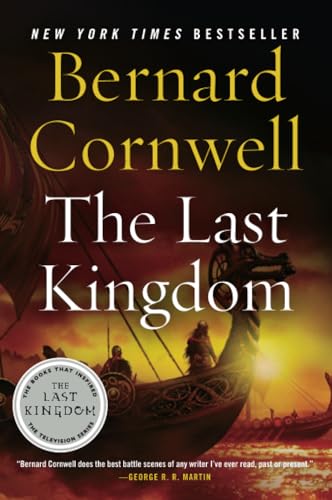
The Last Kingdom (The Saxon Stories, Book 1)
Bernard Cornwell

Meditations
Marcus Aurelius

The Hiding Place
Elizabeth Sherrill, John Sherrill Corrie ten Boom