Queen Elizabeth I Sleep Story: 5 Hours of Tudor History to Fall Asleep To (2026)
Elizabeth I ruled England for 44 years without marrying, without producing an heir, and without being deposed. For a female monarch in the sixteenth century, that was not just an achievement but something close to a miracle. She inherited a country fractured by religious conflict, financially exhausted, and surrounded by hostile powers. She left it a maritime force with a flourishing arts culture and a settled (if fragile) religious settlement. She also, despite the mythology that would later grow up around her, was not a particularly sentimental ruler. She executed her cousin. She let her favourite come close enough to treason that execution became unavoidable, then agonised over signing the warrant. She played her marriageability as a diplomatic instrument for decades without ever intending to honour the transaction. Queen Elizabeth I sleep stories let you absorb the full complexity of her reign without the simplified version that textbooks tend to offer.
The Learn While You Sleep channel has a five-hour sleep story covering Elizabeth's world: the Tudor court, the religious settlement, the Spanish Armada, the cultural flowering of her later reign, and the women behind the legend.
Fall Asleep to the World of Queen Elizabeth I | 5 Hours
What Five Hours Can Cover
The appeal of long-form sleep content is that it can do justice to a complicated subject. Five hours on Elizabeth I is enough to cover:
- Her childhood during the reign of Henry VIII and the precarious years after his death
- The reigns of Edward VI and Mary I that preceded her, and what she learned from watching them both fail
- The early years of her reign, the religious settlement, and the political maneuvering required to hold it together
- The question of marriage and succession: who wanted her to marry, why she refused, and what the real calculation was
- Mary Queen of Scots: the long, strange diplomatic chess game that ended on the scaffold
- The Spanish Armada and what its defeat actually meant militarily versus what it meant symbolically
- The Essex rebellion and the loneliness of her final years
The Dark Side of the Virgin Queen
The channel also covers Elizabeth's less flattering qualities. A separate video in the dark history playlist explores the real conditions of her court, including the hygiene habits that the mythology of the "Gloriana" figure tends to obscure. The gap between the portrait and the person is always wider than the propaganda suggests, a pattern our dark history sleep stories guide returns to again and again.
Watch: The Disgusting Hygiene Habits of Elizabeth I
Books on Elizabeth I and the Tudors
- Elizabeth: The Struggle for the Throne by David Starkey. The definitive account of Elizabeth's early life and how she survived the Tudor court to reach the throne at all. Starkey is the best on the politics of Henry's last years.
- The Life of Elizabeth I by Alison Weir. Thorough, readable, balanced. The best single-volume biography for most readers and the one to give a friend who has never read a Tudor book before.
- Wolf Hall by Hilary Mantel. Fiction, set in the reign of Henry VIII, but so deeply researched that it constitutes one of the finest pieces of Tudor historical writing in any form. Read Bring Up the Bodies and The Mirror & the Light right after.
- The Six Wives of Henry VIII by Alison Weir. Essential for understanding the dynastic context that shaped everything Elizabeth did. The story of her mother Anne Boleyn alone explains a great deal of Elizabeth's later character.
The Religious Settlement That Defined Her Reign
The single hardest political problem Elizabeth inherited was the religious question. Henry had broken with Rome and made himself head of the Church of England. Edward had pushed England into hardline Protestantism. Mary had reversed the direction and burned around 280 Protestants in the attempt to restore Catholicism. By the time Elizabeth took the throne, English subjects had been told what to believe by four successive monarchs in roughly thirty years, and many of them had watched neighbours executed for getting the answer wrong. The Elizabethan religious settlement, codified in the Act of Supremacy and the Act of Uniformity of 1559, was a deliberate piece of pragmatic engineering: Protestant doctrine, Catholic-flavoured ritual, and a refusal to inquire too closely into what anyone privately believed. Elizabeth famously said she had no desire to "make windows into men's souls." That phrase, more than the Armada, is the real Elizabethan achievement.
Why the Tudor Era Endures in Popular Culture
No royal house has been adapted more often. Wolf Hall, The Tudors, Elizabeth (the Cate Blanchett film), Mary Queen of Scots, A Man for All Seasons, Becoming Elizabeth, the BBC's Shakespeare adaptations. The reason is that the Tudor story has every element a dramatist wants in concentrated form: a court whose internal politics could end in execution, an unresolved succession question that ran for decades, a religious schism that produced martyrs on both sides, and a woman at the centre of all of it whose private life was a permanent state secret. Sleep stories about Elizabeth I are popular for the same reason: the material is inexhaustible. You can listen to five hours, learn a great deal, and discover there are five more hours of equally interesting material you have not yet touched.
Find these and more biography and history titles in Skriuwer's history collection. If the wider sixteenth century interests you, our medieval history sleep stories guide covers the centuries that shaped the Tudor world, and the British Empire history sleep story picks up the story England built after Elizabeth.
Your next good book, in your inbox
We only write when we find a book worth your time. Hand-picked recommendations across history, mythology, true crime and more.
Are you an author?
Get your book in front of readers like these, for free.
- Free book listing →Your own book page with an Amazon button
- Author page →Photo, bio and links to your site
- Featured placement →A spot in our best-of lists, from €29
Free tools we recommend
Get free honest reviewsReview exchange on iWrity, free to join
Books You Might Like

Educated: A Memoir
Tara Westover

Sapiens: A Brief History of Humankind
Yuval Noah Harari

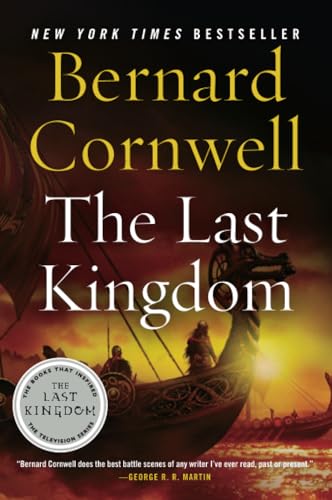
The Last Kingdom (The Saxon Stories, Book 1)
Bernard Cornwell