The Best Way to Learn Russian as an English Speaker
Russian (русский, russkiy) is spoken by about 250 million people, in Russia and across the former Soviet states. Here is what makes it hard, what makes it easier than it looks, and the plan that works.
The short answer
Learn the Cyrillic alphabet in your first week, then focus on high-frequency vocabulary and lots of listening. Learn the six cases gradually through example sentences, and start speaking with a tutor within the first month or two.
Is Russian hard to learn?
The US Foreign Service Institute, which trains American diplomats, puts Russian in Category III, the harder group (about 1,100 class hours). Russian is Slavic, part of the Indo-European family like English, and it uses Cyrillic, 33 letters.
What makes it hard
- Russian has six grammatical cases, so the ending of a noun changes depending on its role in the sentence.
- Every verb comes in two aspects (complete and ongoing action), and you have to learn both forms.
- Stress is free and not marked in normal text, and it changes how vowels sound. You often have to learn the stress of each word separately.
- Verbs of motion (going on foot, by vehicle, one way, round trip) have their own system that takes time.
What works in your favour
- Cyrillic looks scary but takes about a week. Several letters work like Latin ones, and the rest map neatly onto sounds.
- Spelling is close to phonetic once you know where the stress falls.
- There are no articles (no a or the), and the present tense of 'to be' is usually left out.
- Huge amounts of free Russian content exist: films, YouTube, podcasts and classic literature in the public domain.
How long does it take to learn Russian?
Professional working level takes about 1,100 hours of study for an English speaker, according to the FSI. Those are hours in small, intensive classes. On your own, count on more.
At one hour a day, 1,100 hours is about 36 months. At 30 minutes a day, double it. You will hold simple conversations long before that: most learners manage everyday topics after three to six months of daily practice with a tutor.
The best way to learn Russian for free
- OpenRussian.org: a free dictionary that shows stress, cases and conjugations for every word.
- Wiktionary: full declension tables and stress marks for most Russian words.
- Russian films and series with Russian subtitles: many Soviet classics are free on the studios' own YouTube channels.
Free material covers reading and listening well. Speaking is the gap: you need someone who answers back.
The best way to learn Russian online
One-on-one lessons with a native tutor are the fastest way to start speaking. You get corrected on the spot, you hear real pronunciation, and the lesson goes at your pace. Many tutors offer a cheap trial lesson, so you can try two or three before you pick one.
A beginner plan for your first month
- Week 1: Learn the Cyrillic alphabet before anything else. Practise by reading words you already know, like кофе (kofe), такси (taksi) and ресторан (restoran).
- Weeks 2 to 4: learn the 300 most common words and the basic sentence patterns, 20 to 30 minutes a day with flashcards and a course.
- Every day: 15 minutes of listening, even if you understand little. Your ear needs time before your mouth.
- From week 3: one or two short lessons a week with a native tutor, and easy reading at your level.
Can you learn Russian on Duolingo?
Yes, Duolingo offers Russian for English speakers. It helps with the alphabet and basic vocabulary but explains little grammar, and the cases need a proper explanation from a book or a teacher.
Read Russian from the first week
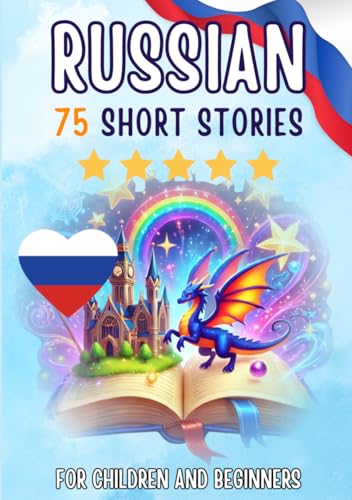
Short stories with the English text next to the Russian let you read real sentences before you could manage them alone. You check the meaning without a dictionary and keep going.
Questions about learning Russian
What is the best way to learn Russian?
Learn the Cyrillic alphabet in your first week, then focus on high-frequency vocabulary and lots of listening. Learn the six cases gradually through example sentences, and start speaking with a tutor within the first month or two.
Is Russian hard to learn for English speakers?
The US Foreign Service Institute puts Russian in Category III, the harder group (about 1,100 class hours). The main hurdle: Russian has six grammatical cases, so the ending of a noun changes depending on its role in the sentence.
How long does it take to learn Russian?
Reaching professional level takes about 1,100 hours of study for an English speaker. At one hour a day that is roughly 36 months. Basic conversation comes much sooner, usually within the first few months of daily practice.
What is the best way to learn Russian for free?
Start with OpenRussian.org, Wiktionary, Russian films and series with Russian subtitles. Add free native listening every day, and read easy texts at your level. Free resources cover reading and listening well; speaking is where a tutor or a language partner makes the difference.
Can you learn Russian on Duolingo?
Yes, Duolingo offers Russian for English speakers. It helps with the alphabet and basic vocabulary but explains little grammar, and the cases need a proper explanation from a book or a teacher.
Is Russian or Ukrainian easier to learn?
For an English speaker they are about equally hard. They share the same grammar ideas (cases, aspect) and a lot of vocabulary. Pick the one you will actually use, because learning one makes the other much easier later.
Learn another language
Looking for reading material? See the best language learning books.