Best Beat Generation Books in 2026: 12 Works That Refused to Conform and Changed American Literature
THE BEAT GENERATION LASTED ROUGHLY a decade as a coherent movement. Its influence has lasted seventy years and counting. Every American counterculture since, the hippies, punk, hip-hop, the internet underground, draws on what the Beats established: the road as a spiritual metaphor, the rejection of middle-class propriety, the idea that authentic experience matters more than social respectability, the belief that art should be immediate and honest rather than polished and careful.
But the standard Beat canon is incomplete. It celebrates the canonical three, Kerouac, Ginsberg, and Burroughs, and leaves out the women and minority writers who were equally part of the movement and equally important to its success. These 12 books give you the full picture, the work the Beats are famous for and the work that was systematically erased from the official narrative. Read them in order or dip in anywhere. The point is to see the Beat Generation not as it invented itself but as it actually was.
On the Road by Jack Kerouac (1957)
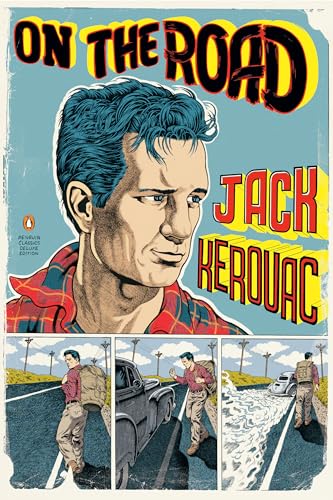
Jack Kerouac's founding document follows Sal Paradise and Dean Moriarty across America in a series of increasingly frantic journeys. The story is simple. Kerouac's method changed literature. He called it "spontaneous prose," writing fast and without revision, trying to capture the rhythm of speech and thought rather than the careful constructions of literary fiction. The book reads like jazz: propulsive, digressive, alive. Sixty-eight years later it still moves. This is the book that made readers believe that the road and the journey and the search for authentic experience could be the substance of a novel. Find On the Road on Amazon.
Howl and Other Poems by Allen Ginsberg (1956)
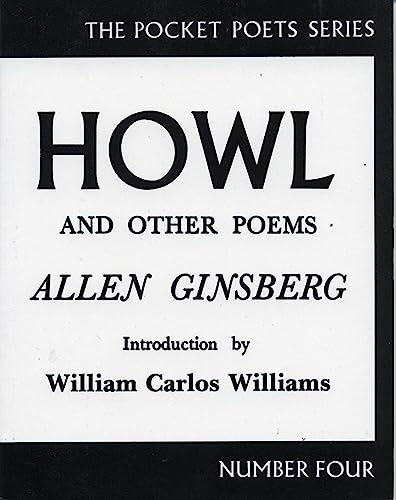
Allen Ginsberg's Howl is the Beat Generation's greatest poem. It begins with the line that defined the movement: "I saw the best minds of my generation destroyed by madness, starving hysterical naked." The poem was the subject of an obscenity trial in 1957. The City Lights bookshop that published it was raided. The case was eventually dismissed, but the scandal made Ginsberg famous. Howl has three parts: the first catalogs the destroyed minds of Ginsberg's generation, the second attacks Moloch, his name for the industrial-capitalist machine that destroys human souls, the third is a declaration of solidarity with Carl Solomon, a friend Ginsberg met in a psychiatric hospital. The other poems in the collection, "A Supermarket in California," "America," "Sunflower Sutra," are among the best American poems of the twentieth century. Find Howl and Other Poems on Amazon.
Naked Lunch by William S. Burroughs (1959)
William S. Burroughs's Naked Lunch is structured as a series of hallucinatory set pieces about addiction, control, and the manipulation of consciousness. There is no conventional plot. The book is organized by theme and image instead. Burroughs used the "cut-up technique," literally cutting up typed pages and rearranging them. The effect is disorienting in ways that are entirely deliberate. If Kerouac is jazz and Ginsberg is blues, Burroughs is noise music. The book was banned in the United States until 1966 and was the subject of the last major literary obscenity trial in American history. It remains the most radical formal experiment the Beats attempted, the moment when literature stopped trying to represent reality and started trying to destroy the machinery of representation itself. Find Naked Lunch on Amazon.
The Dharma Bums by Jack Kerouac (1958)
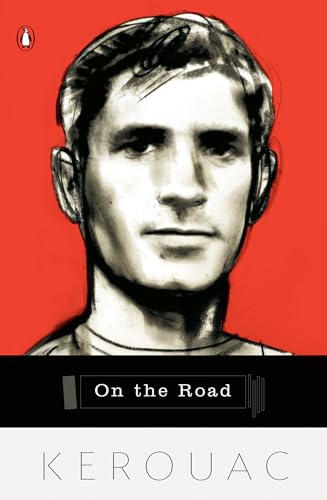
Kerouac's second novel is less famous than On the Road but arguably more interesting. It follows Japhy Ryder, who is based on the poet Gary Snyder, as he and Kerouac's narrator climb mountains in the Sierra Nevada and study Buddhism. The book is Kerouac's most explicitly spiritual work, the moment when the Beat search for authenticity explicitly embraces Eastern philosophy. The prose is looser and freer than On the Road, more confident in its method. Ryder is a character of genuine spiritual practice, not just rebellion for its own sake, and the novel is better for it. Find The Dharma Bums on Amazon.
Riprap and Cold Mountain Poems by Gary Snyder (1959)
Gary Snyder studied Zen Buddhism in Japan and worked as a trail crew laborer in the Sierra Nevada. His poetry brought a precision to the observation of the physical world that had nothing to do with the urban frenzy of the other Beats. His poems are short, spare, and exact. He can describe a landscape in four lines and make you feel like you are standing in it. Ginsberg dedicated Howl to Snyder. Snyder went on to win the Pulitzer Prize and become one of the central figures in the American environmental movement. But Riprap shows where it started, the quiet poetic method that influenced everyone who came after. Find Riprap and Cold Mountain Poems on Amazon.
A Coney Island of the Mind by Lawrence Ferlinghetti (1958)
Lawrence Ferlinghetti's collection is the best-selling poetry collection in American history. Ferlinghetti ran City Lights bookshop in San Francisco and was Ginsberg's publisher, but he was also a significant poet in his own right. His poems are accessible and political without sacrificing intelligence. Where Ginsberg howls, Ferlinghetti observes with a kind of wry precision. The poems are about the gap between America's self-image and its reality, the same gap Ginsberg attacked, but approached from a different angle. Find A Coney Island of the Mind on Amazon.
Gasoline by Gregory Corso (1958)
Gregory Corso grew up in New York orphanages and prison. He brought a street-level energy to Beat poetry that distinguished him from the more literary Ginsberg and Ferlinghetti. His poems are funny, strange, and often suddenly moving. His most famous poem is "Bomb," typeset in the shape of a mushroom cloud, managing to be both satirical and genuinely terrified. Corso never got the recognition the others did, which is one of the injustices of literary history. His wildness and humor and the raw force of his language deserve to be known better.
The First Third by Neal Cassady (1971, posthumous)
Neal Cassady was the real Dean Moriarty, the magnetic, reckless figure at the center of On the Road. He was not primarily a writer. He was a talker, a driver, a presence. But the unfinished memoir he left behind reveals the childhood that made him, a Denver street kid who never had a stable home. Reading Cassady in his own voice changes how you read Kerouac. The energy that Kerouac tried to capture on the page comes through even more vividly in Cassady's own prose, which moves fast and digresses constantly. Find The First Third on Amazon.
Minor Characters by Joyce Johnson (1983)
Joyce Johnson's memoir is the essential corrective to the canonical Beat narrative. Johnson was Kerouac's girlfriend when On the Road was published in 1957. She watched him become famous overnight from a payphone booth. Her memoir, which won the National Book Critics Circle Award in 1983, asks the question the standard Beat histories do not ask: what was it like to be a woman in a movement that celebrated male freedom and treated women as supporting characters at best? The title is the answer. But Johnson is not a bitter witness. She writes with clarity and a kind of rueful affection. It is one of the most honest books about the era. Find Minor Characters on Amazon.
The Portable Beat Reader by Ann Charters (1992)
Ann Charters's anthology is the collection that the others assume. If you want to read widely across the movement, including figures like Philip Whalen, Diane di Prima, Bob Kaufman, and Amiri Baraka alongside the canonical names, this is the place to start. Charters's introduction is one of the best short histories of the movement in print. She traces how the Beats emerged from the postwar period, how they saw themselves as a response to the conformity and spiritual emptiness of 1950s American life, and how they succeeded in changing literature and culture even as they failed to change society in the ways they hoped. Find The Portable Beat Reader on Amazon.
Scratching the Beat Surface by Michael McClure (1982)
Michael McClure's essays are a series of reflections on what the movement looked and felt like from the inside. McClure was present at the Six Gallery reading in 1955 where Ginsberg first read Howl. His account of that night, and of the cultural context that made it possible, is invaluable primary source material. McClure was also a significant poet in his own right, and his essays move between memoir, criticism, and poetic reflection. They give you the feel of the moment in a way that no historical summary can capture. Find Scratching the Beat Surface on Amazon.
Jack Kerouac: King of the Beats by Barry Miles (2002)
Barry Miles's biography is the best single biography of the movement's central figure. Miles, who knew many of the principals personally, traces Kerouac from his French-Canadian Catholic childhood in Lowell, Massachusetts through the Columbia years where he met Ginsberg and Burroughs, through the composition of On the Road and the fame that destroyed him, to his death in 1969 at forty-seven, alcoholic and living with his mother in Florida. The story is genuinely tragic. Miles tells it without sentimentality. Find Jack Kerouac: King of the Beats on Amazon.
Big Sur by Jack Kerouac (1962)
Kerouac's novel that few people read is the sequel to On the Road that nobody asked for. It follows Jack Duluoz, Kerouac's fictional self, after he has become famous, and shows the cost of that fame and the hollowness it contains. Big Sur is the dark side of the Beat mythology, the moment when the search for authentic experience produces not enlightenment but breakdown. The prose is rawer and more urgent than On the Road, the vision darker and more desperate. It is Kerouac's most honest book because it refuses to maintain the mythmaking of the earlier novel. Find Big Sur on Amazon.
Where to Start
If you are new to the Beats, start with On the Road and Howl. They are the foundation. Read them and then read Joyce Johnson's Minor Characters to hear the voice that was left out. If you want to understand the movement's formal innovation, read Burroughs's Naked Lunch. If you want to understand its spiritual aspirations, read The Dharma Bums and Gary Snyder's poems. If you want to understand its costs, read Big Sur. The Beat Generation was not perfect. But it changed American literature and culture in ways that still matter, and that deserves to be remembered fully and honestly.
Your next good book, in your inbox
We only write when we find a book worth your time. Hand-picked recommendations across history, mythology, true crime and more.
Are you an author?
Get your book in front of readers like these, for free.
- Free book listing →Your own book page with an Amazon button
- Author page →Photo, bio and links to your site
- Featured placement →A spot in our best-of lists, from €29
Free tools we recommend
Get free honest reviewsReview exchange on iWrity, free to join
Books You Might Like

Sapiens: A Brief History of Humankind
Yuval Noah Harari
The Last Kingdom (The Saxon Stories, Book 1)
Bernard Cornwell

Meditations
Marcus Aurelius

The Hiding Place
Elizabeth Sherrill, John Sherrill Corrie ten Boom