The 10 Most Controversial History Books That Were Actually Right
Why Controversial Books Are Often the Most Important
The history books that generated the most controversy at publication are disproportionately the books that reshaped how we understand the past. This is not a coincidence. A book that argues for a comfortable restatement of established consensus generates no controversy. The books that generate controversy are the ones making arguments that challenge what people in power prefer to believe.
This list covers books that were attacked, dismissed, or banned when published, and that time has proved substantially correct.
1. The Guns of August by Barbara Tuchman (1962)
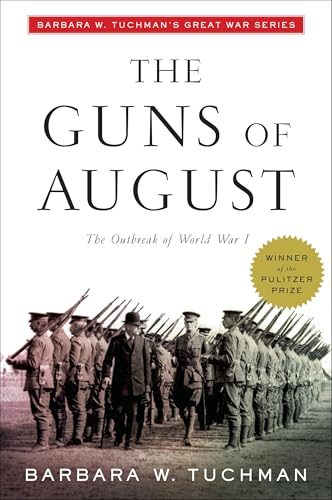
Tuchman argued that World War One was caused by the rigidity of military planning and the failure of political leaders to understand what they were setting in motion. Professional military historians attacked it for oversimplifying causation and for being written by a woman without academic credentials. It won the Pulitzer Prize and is now considered one of the essential accounts of the war's origins. Find The Guns of August on Amazon.
President Kennedy reportedly read it during the Cuban Missile Crisis and told his advisors he did not want to be the leader who sleepwalked into catastrophe the way the leaders of 1914 had done. The book's influence on Cold War policymaking is well-documented.
2. A People's History of the United States by Howard Zinn (1980)

Zinn's decision to tell American history from the perspective of the colonized, enslaved, and working poor rather than from the perspective of presidents and generals made it one of the most attacked history books of the twentieth century. Conservative critics called it propaganda. Academic historians questioned its methodology. State legislatures have periodically tried to ban it from schools. Find A People's History of the United States on Amazon.
It is now one of the most widely assigned history books in American universities and has sold over three million copies. The core argument, that official historical narratives serve the interests of the powerful and systematically exclude the experiences of the majority, is now mainstream in academic history even when Zinn himself remains contested.
3. Hitler's Willing Executioners by Daniel Goldhagen (1996)

Goldhagen argued that ordinary Germans, not just the Nazi leadership and SS, actively participated in the Holocaust with genuine enthusiasm rooted in a specifically German eliminationist antisemitism. Professional Holocaust historians, including Christopher Browning, whose research Goldhagen had directly contradicted, attacked it ferociously. The debate in academic journals was unusually personal. Find Hitler's Willing Executioners on Amazon.
Many of Goldhagen's specific claims about the uniqueness of German antisemitism remain disputed. But his core argument, that historians had underestimated the degree of ordinary participation in the Holocaust and had too easily absolved ordinary Germans through narratives of coercion and ignorance, has been largely vindicated by subsequent scholarship.
4. Bury My Heart at Wounded Knee by Dee Brown (1970)

Brown's account of the systematic destruction of Native American civilizations in the American West told the story entirely from the Native perspective using contemporary Native accounts. When published, it was attacked by some historians as sentimental and one-sided. It became a bestseller and a cultural turning point. Find Bury My Heart at Wounded Knee on Amazon.
The book's impact on how American history is taught is difficult to overstate. The argument that the westward expansion of the United States involved deliberate genocide against Native populations, which the book made accessibly for a general audience for the first time, is now standard in academic history.
5. The Clash of Civilizations by Samuel Huntington (1996)
Huntington predicted that after the Cold War, the primary axis of global conflict would shift from ideology to cultural and religious identity, with the greatest tensions occurring along the fault lines between Western, Islamic, and Chinese civilizations. He was attacked from both the left (for reifying cultural categories) and the right (for suggesting the West was not universally triumphant). Find The Clash of Civilizations on Amazon.
After September 11, 2001, the book was suddenly treated as prophetic. Its framework remains contested, but its central prediction that cultural identity would be the primary driver of twenty-first century conflict looks substantially more correct than the "end of history" alternative that dominated elite Western thinking in the 1990s.
6. Orientalism by Edward Said (1978)
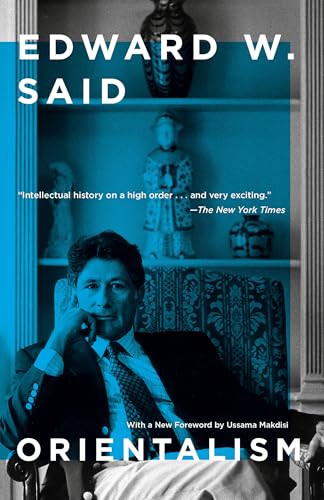
Said argued that Western academic scholarship on the Middle East and Asia was not neutral knowledge-production but a system of representation that served colonial power by constructing non-Western cultures as primitive, irrational, and in need of Western control. Orientalist scholars attacked it as distorting their work and applying contemporary political frameworks to historical scholarship. Find Orientalism on Amazon.
The book essentially created postcolonial studies as an academic discipline and permanently changed how Western scholars approach the study of non-Western cultures. Its core argument, that the production of knowledge about dominated peoples is entangled with the exercise of power over them, is now foundational in multiple humanities and social science disciplines.
7. The Anatomy of Fascism by Robert Paxton (2004)
Paxton argued that fascism could not be understood primarily through its ideology because fascism's defining feature was its willingness to use violence to achieve power rather than any coherent philosophical system. He also argued that fascism was not uniquely European or historically finished. Academic reviewers initially found the argument imprecise. Two decades of far-right politics in established democracies have made Paxton's framework look prescient. Find The Anatomy of Fascism on Amazon.
8. Sapiens by Yuval Noah Harari (2011)
Harari's synthesis of human history was attacked by academic historians for oversimplifying, by anthropologists for speculative claims about prehistoric cognition, and by philosophers for making broad claims without adequate argumentation. It became one of the most widely read history books ever published. Find Sapiens on Amazon.
The specific criticisms are often valid. But Harari's core argument, that shared myths (religious, national, economic) are what allow large human groups to cooperate and that these myths are constructions rather than facts, has been borne out by subsequent social science research and has influenced how a generation of policymakers and technologists think about social cohesion.
9. The Great Transformation by Karl Polanyi (1944)
Polanyi argued that the self-regulating market economy was not a natural outgrowth of human nature but a political construction, and that its attempt to make land, labor, and money into pure commodities would inevitably produce social disintegration and political backlash. The book was ignored for decades during the postwar consensus on market economics. Find The Great Transformation on Amazon.
After the 2008 financial crisis and the subsequent rise of economic nationalism and populist backlash against free trade, Polanyi's argument became required reading among political economists trying to understand what was happening. The book is now considered one of the most important works in economic history.
10. The Gulag Archipelago by Aleksandr Solzhenitsyn (1973)
When Solzhenitsyn published his account of the Soviet forced labor camp system, Western intellectuals who supported the Soviet Union attacked it as anti-communist propaganda and a Cold War weapon. The breadth of the system it described, and the argument that the gulag was not a Stalinist deviation from Leninism but a structural feature of the Soviet system from its founding, were rejected by sympathetic Western scholars. Find The Gulag Archipelago on Amazon.
The opening of Soviet archives after 1991 confirmed and in some cases exceeded Solzhenitsyn's numbers. The argument about the systemic rather than incidental nature of Soviet repression is now historical consensus. The book is considered one of the most consequential works of nonfiction of the twentieth century.
Your next good book, in your inbox
We only write when we find a book worth your time. Hand-picked recommendations across history, mythology, true crime and more.
Are you an author?
Get your book in front of readers like these, for free.
- Free book listing →Your own book page with an Amazon button
- Author page →Photo, bio and links to your site
- Featured placement →A spot in our best-of lists, from €29
Free tools we recommend
Get free honest reviewsReview exchange on iWrity, free to join
Books You Might Like

Sapiens: A Brief History of Humankind
Yuval Noah Harari
The Last Kingdom (The Saxon Stories, Book 1)
Bernard Cornwell

Meditations
Marcus Aurelius

The Hiding Place
Elizabeth Sherrill, John Sherrill Corrie ten Boom