Best Afrofuturism Books in 2026: 12 That Imagine Black Futures Beyond the Margins
WHAT DOES THE FUTURE LOOK LIKE for people whose past includes the Middle Passage? That question sits at the center of Afrofuturism, and it is not a comfortable one. Mainstream science fiction spent decades imagining futures populated by white astronauts and alien civilizations without stopping to ask whose future it was actually imagining, or whose history it was quietly erasing to get there. Afrofuturism answers back. It takes the tools of science fiction and fantasy, time travel, alternate history, space opera, magical realism, and uses them to work through histories that conventional narratives prefer not to examine too closely.
The term was coined by cultural critic Mark Dery in 1993, but the tradition is much older. It runs from Sun Ra performing in space costumes in the 1950s to Octavia Butler writing about slavery and biological control in the 1970s to N.K. Jemisin winning the Hugo Award three years in a row between 2016 and 2018. What unites these writers is not a single aesthetic but a shared question: if your history has been one of systematic dispossession, what does it mean to imagine a future at all? And what kind of imagination does it take?
The answers these writers produce are stranger, darker, and more inventive than anything the genre produced while pretending those histories didn't exist. Here are twelve books that define what the tradition has done and where it is going.
Kindred by Octavia Butler
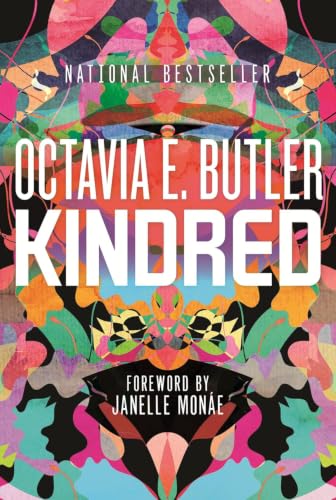
The most powerful Afrofuturist novel is also one of the most important American novels of the twentieth century. Dana, a Black woman living in 1976 Los Angeles, is pulled back in time repeatedly to an antebellum Maryland plantation. She has to keep her white ancestor alive long enough for him to father the child who will eventually be her ancestor, which means protecting a man who owns and brutalizes enslaved people. Butler does not flinch. The time travel mechanism strips away any comfortable distance from the history. This is not the past as backdrop but the past as physical reality, as something that grabs you and drags you back whether you want to go or not.
Parable of the Sower by Octavia Butler
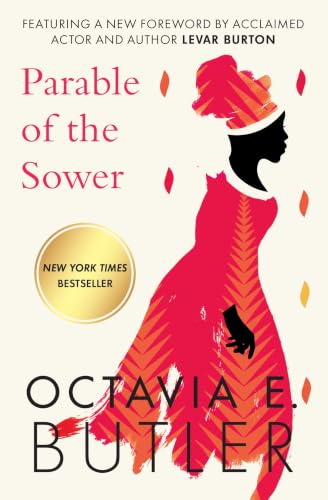
Written in the early 1990s, set in the 2020s, Butler's near-future California has collapsed: water is scarce, companies have turned towns into company stores, and the highways are full of desperate people going nowhere. Lauren Olamina, a Black teenager with hyperempathy syndrome who literally feels other people's pain, starts writing down a new religion and building a community around it. The novel is not optimistic in any simple sense. Community is survival, not comfort. Butler understood that the future is not something that happens to you but something you build, under conditions you didn't choose.
Find Parable of the Sower on Amazon
The Fifth Season by N.K. Jemisin
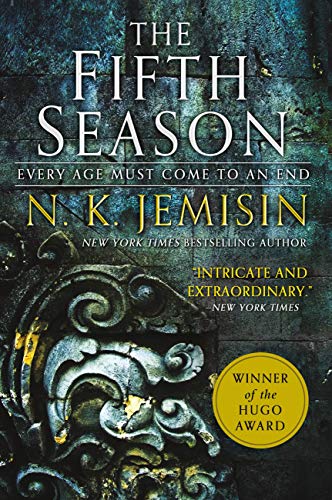
The first volume of the Broken Earth trilogy won the Hugo Award in 2016. The second volume won it in 2017. The third won it in 2018. No author has ever won three consecutive Hugo Awards for novels before. The books deserve every one of them. The Fifth Season takes place on a continent called the Stillness, wracked by periodic geological catastrophes called Fifth Seasons. Certain people, called orogenes, have the ability to manipulate these forces and are kept in a brutal state of control by the society that depends on them. The parallel to systemic oppression is not subtle, and it is not meant to be. The prose is formally innovative, shifting between second person and third, between past and present, in ways that enact the fractured experience of trauma. These are not comfortable books. They are great ones.
Find The Fifth Season on Amazon
A Master of Djinn by P. Djeli Clark
1912, alternate Cairo, where djinn and magical creatures are part of daily life after a man opened a portal between worlds forty years earlier. Fatma el-Sha'arawi is a special agent for the Ministry of Alchemy, Enchantments, and Supernatural Entities, and she is investigating a mass murder with ties to the mysterious figure who opened the original portal. Clark's alternate Egypt is one of the great recent achievements in Afrofuturist world-building: a non-Western country that was never colonized, that is modern and powerful on its own terms, that has a magical ecosystem rooted in Islamic tradition rather than European fantasy conventions. The mystery plot is solid. The world is better.
Binti by Nnedi Okofor
A novella, which means it can be read in a few hours, and it will stay with you longer than most novels. Binti is the first of the Himba people to be accepted to Oomza University, the finest university in the galaxy. To get there, she has to leave her family and her culture behind. Then the ship is attacked. Okofor is careful to distinguish her work as African Futurism rather than Afrofuturism, emphasizing its roots in specifically African cultures rather than the broader diaspora tradition. But the themes converge: what does a young woman from a marginalized culture have to give up to enter the dominant world's institutions, and what can she carry with her?
Babel-17 by Samuel R. Delany
Delany is the foundational figure in Afrofuturist science fiction, publishing groundbreaking work in the 1960s and 1970s when virtually no Black writers appeared in mainstream SF. Babel-17 is built around a Sapir-Whorf hypothesis taken to its extreme: Babel-17 is not just a language but a weapon, a system of thought so perfectly structured that thinking in it turns you into an agent of the enemy without your knowing. The protagonist is Rydra Wong, a poet and spaceship captain who has to decode the language before it consumes her. The novel is brilliant, difficult, and unlike anything else in the genre.
Mumbo Jumbo by Ishmael Reed
Published in 1972, this is the satirical founding text of Afrofuturism before anyone had the word. The novel takes place in 1920s New York, during the Harlem Renaissance, and concerns a mysterious disease called Jes Grew that is spreading across America. Jes Grew is essentially jazz and Black culture, infectious, unstoppable, terrifying to the forces trying to contain it. Reed's novel is fragmentary, playful, and furious, mixing narrative with found documents, photographs, and footnotes. It is not always easy to follow, but it is always doing something interesting, and its central insight, that Black cultural expression has always been treated as a pathology to be cured by the dominant culture, still lands.
Children of Blood and Bone by Tomi Adeyemi
The YA entry on this list, and the one that introduced Afrofuturism to the widest audience. Zelie lives in a world where the king has stripped magic from the people it once belonged to, the Kosidan, who are also systematically oppressed as a class. She gets a chance to bring magic back. Adeyemi's world is built from West African mythology rather than the European fantasy template, and the magic system, the gods, and the culture all reflect that origin. The politics are not subtle, and they don't need to be. This is a book for readers who are sixteen and figuring out that the world is not fair, and it meets them there honestly.
An Unkindness of Ghosts by Rivers Solomon
A generation ship, the HSS Matilda, is traveling to a promised land that may not exist. The ship is organized as a literal plantation society, with dark-skinned passengers confined to the lower decks as a laboring underclass and light-skinned passengers ruling from above. Aster, a healer from the lower decks, discovers information about the ship's original mission that could change everything. Solomon writes with what can only be called a refusal to look away. The violence is not gratuitous but it is not prettified either. This is one of the most relentless novels in the genre, and one of the most original.
Brown Girl in the Ring by Nalo Hopkinson
Hopkinson's 1998 debut novel is set in a near-future Toronto where the wealthy have abandoned the city center, leaving it to the poor and marginalized. Ti-Jeanne is trying to survive in this landscape while her grandmother, a Caribbean folk healer, is pulled into a conflict with a crime lord who wants her spiritual power. Hopkinson brought Caribbean folklore and obeah tradition into science fiction at a time when the genre had almost no such presence. Brown Girl in the Ring remains one of the most important debuts in Afrofuturist and speculative fiction.
The Immeasurable Equation by Sun Ra
The original Afrofuturism, before the word existed, before it was a literary category, before anyone had worked out its coordinates. Sun Ra was a jazz musician from Birmingham, Alabama who claimed to be from Saturn, changed his name from Herman Blount, built a mythology around space, ancient Egypt, and Black cosmic identity, and spent decades performing in elaborate costumes with his Arkestra while writing a body of poetry and philosophy that said, essentially: if this planet has treated you as subhuman, then perhaps you don't belong to this planet. The Immeasurable Equation collects his written work. It is not always coherent. It is always visionary. Without Sun Ra, there is no Afrofuturism as we understand it.
Where to Start
If you have read none of these: start with Kindred. It is the most accessible, the most powerful, and the one that will make all the others make more sense. If you want something lighter as an entry point, Binti is short and beautiful. If you want the full scope of what the genre can do, read The Fifth Season and commit to all three volumes of the Broken Earth trilogy.
What these books share is not a utopian vision. They do not imagine a future where the history of slavery and colonization has been neatly resolved. They imagine futures where that history is still present, still active, still shaping who has power and who doesn't, and they imagine people who navigate that reality with intelligence, fury, grief, and sometimes joy. That is a more honest kind of science fiction than most of what the genre has produced. It is also, increasingly, the most interesting kind.
Your next good book, in your inbox
We only write when we find a book worth your time. Hand-picked recommendations across history, mythology, true crime and more.
Are you an author?
Get your book in front of readers like these, for free.
- Free book listing →Your own book page with an Amazon button
- Author page →Photo, bio and links to your site
- Featured placement →A spot in our best-of lists, from €29
Free tools we recommend
Get free honest reviewsReview exchange on iWrity, free to join
Books You Might Like

Sapiens: A Brief History of Humankind
Yuval Noah Harari
The Last Kingdom (The Saxon Stories, Book 1)
Bernard Cornwell

Meditations
Marcus Aurelius

The Hiding Place
Elizabeth Sherrill, John Sherrill Corrie ten Boom